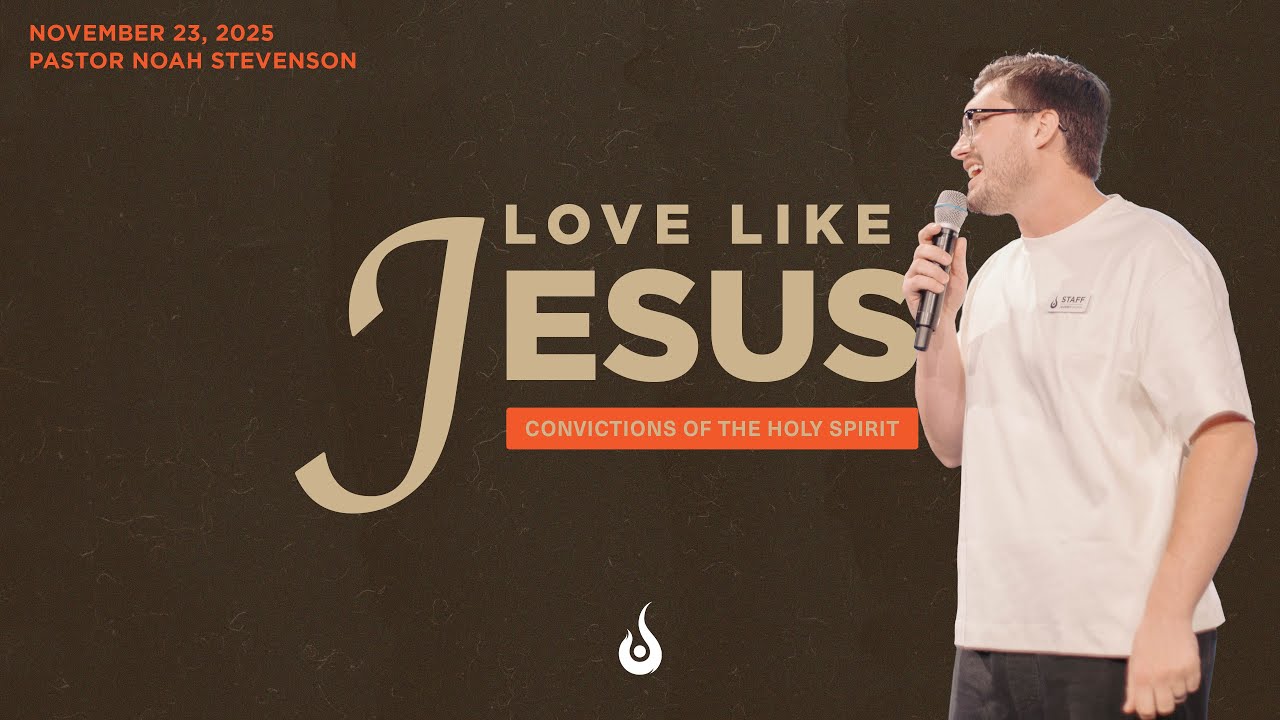

Go a little deeper
Pastor Keith Kirkpatrick builds this message around John 13:21-35, where Jesus announces that one of his disciples will betray him, Judas leaves the table, and Jesus gives a new commandment to love one another as he has loved them. Using an extended comparison to cell phone upgrades, he argues that Jesus is not doing away with God's law but upgrading the standard of love. The old measure was to love your neighbor as yourself; the new measure is to love as Jesus loved.
The sermon contrasts Judas walking out into the night with Jesus speaking about glory and giving a new commandment. Pastor Keith observes that Jesus loved his betrayer so consistently that the other disciples could not tell who it was, and he sets that beside a cancel-culture response of public exposure. He reads John's reference to nighttime as more than a timestamp, a spiritual picture of darkness, and he argues that God is glorified through the cross. He defines glory as whatever a person celebrates and gives energy and resources to.
The final movement explains why the commandment is new. Pastor Keith points to the 613 commandments, the two greatest commandments Jesus names in Matthew 22, and the command in Leviticus 19 to love your neighbor as yourself. He argues that our flawed self-understanding makes that old standard unreliable, so Jesus changes the measure to his own love. Turning to 1 Corinthians 13, he describes love as patient, kind, truthful, and enduring, and as something that matures over time. The message closes with a prayer and an invitation to receive God's love.
Take this with you
A new standard, not a new suggestion
Pastor Keith insists that Jesus' words in John 13 are a commandment, not advice. The upgrade is not in the feeling of love but in its measure: the old standard was to love your neighbor as yourself, and the new standard is to love as Jesus has loved us.
Love is tested in the dark
In John 13:21-30 the message names betrayal, church hurt, and disappointment as the real proving grounds of love. Jesus' response to Judas—quiet and continuous, without public exposure—becomes the pattern Pastor Keith holds up against a cancel-culture response of reviews and public shaming.
Glory is what you celebrate
Pastor Keith defines glory as whatever gets your energy, resources, and focus, using everyday examples of brands and possessions. From John 13:31-32 he argues that God is glorified through the cross, and that a person's deepest pain can become a place where God's glory is displayed.
Love that matures
In John 13:33 Jesus addresses grown disciples as children, and Pastor Keith connects that to their incomplete understanding. He ties it to Paul's picture in 1 Corinthians 13:11 of growing beyond childhood thinking, and explains that love matures as we learn more of how God loves us.
Love gives rather than gets
Drawing on 1 Corinthians 13:4-8, the message defines agape love as giving without expecting return. It is patient, kind, not self-seeking, rejoicing with truth and enduring, and Pastor Keith ties it to John 13:35, where Jesus says love for one another is the mark by which the world will know his disciples.
The conversation,
in their words.
Transcript from the recording’s captions. Select any timestamp to hear the original audio.
Well, hey, uh just real quick before we get into the word, uh congratulations to you guys. Baby number 500, uh number five. So exciting. Uh we're going to grow our kids ministry one way or another. Thank you to you guys. Uh uh I just want to say this this is just a exciting days. I love love love what God's doing. And uh today we're going to get into God's word. If you brought a Bible, would you just wave it in the air like you care? Uh last week I saw a lot of digital Bibles go up in the air. So, if you don't uh have a Bible app on your phone, you should get one. We're going to get into this book because it's alive. It's active. God wants to say something to you. Why Why don't we all on the count of three shout word? Every single one of us. Here we go. 1 2 3. Word. We're getting into God's word so that God's word gets inside of us. We've been talking all year about what it
means to love like Jesus. Sounds really good. It makes good for church merch to wear love like Jesus all over. Earlier this week, I went and got a root canal. Those are fun, huh? And uh I I wore my sweatshirt that said, "Love like Jesus." And I just put it there just so that Indodonis would see, "Hey, treat me like you would, Jesus." All right? Like just love on me, okay? Like make sure you're taking care of me. We've been we've been loving like Jesus this year. But what does that really mean? Today, we come to the pinnacle. We come to the point of where we we actually got that theme for this year. It's in the text we we're at today in John chapter 13. So this is huge. This is great news for you today because God has a really good message for you to love like Jesus. It's not my idea. It was his idea. And he actually doesn't tell us it's a good suggestion. He actually tells us it's a commandment.
God's commanded you to love like Jesus. And we're going to look more at that in just a moment. I'm I'm at that age now that I look back at my life and I start to say things like, "Oh, when I was a kid, or you know, things used to be like, let me tell you about this." And I'm starting to say those things more. And let me tell you one of those times when I was a kid, we didn't have cell phones. No one did. No one has cell. Even as a teenager, we didn't even have cell phones. We didn't text message each other. We actually called each other on phones. I mean, it was a big deal when I was a teenager if you had a phone that was just uh wireless in your house. You all know what I'm talking about. Like if it didn't have that cord like this that you wrapped yourself around when you're talking to your crush, right? I mean, it's just a wireless phone. I mean, that was a big deal in my day. But then eventually, I I I graduated high school.
I became a youth pastor. And that's when cell phones became a big deal when I was a youth pastor. And I remember it was a big deal. I think we have a picture of of a flip phone like they used to be when I was a youth pastor. All the kids had a phone like this. And this was this was revolutionary because prior to this era you would have to be in your home to make a call or in the 80s you would watch those movies and people had the big brick phones in the cars but it was unrealistic. Nobody had those until all of a sudden the the late 90s the early 2000s everyone had these flip phones. And I remember as a youth pastor it was a really big deal because parents were upset because their cell phone bills got big because the kids were text messaging so much. Because when cell phones first came out, it was 10 cents a text message to receive one or to send one. And so
teenagers back in the day, when I I remember way back in the day, teenagers, they would text like crazy. I don't think they do that anymore, but back in the day, they would send these text messages. But here's the deal. There was no keyboard on it. There was no screen as a keyboard. So if you wanted to write a message, you would hit the number and there would be a letter associated to that number. So for like number one, you had A, B, and C. So if you want to detect somebody, do you guys remember this at all? You'd have to like hit all that. And so the teenagers created their own language like LOL instead of having to type out laugh out loud because that would take like 30 minutes, right? So I'm actually giving y'all some history of how these things came about. And that was a big deal. It was a really, really cool thing to have a cell phone. I mean, eventually they'd even
get cooler. Like they'd be the same phones, but you would you would upgrade and pay way more money for the Razer. Do you remember those? Or you all this like you'd you'd pay for this, but it did the same thing. You could only receive a call or you could send a text or receive a text message. That's about all they did. They did have cameras, but it was like like a half of a megapixel, you know? So, like it really doesn't do any good. Nobody's actually showing pictures of the pictures they took on those flip phones. But here's the deal. We now live in an age that I have to talk about what was because today cell phones do everything. You've got a computer in your pocket. You can you can film movies. You can make movies. You can edit movies. You got AI on your phone. You got every single app possible. We got a Journey Church app if you want to download that. You can give financially to the church on the app on your phone.
It's got a a Bible on there. So, if you go to the Journey Church app, you got a Bible. You could follow along. you you can see our all on your phone right there on your phone. I mean, the iPhone 17 just came out and uh by the time my my grandkids come around, it's going to be like iPhone 233. Uh we we've got these these devices now that can do absolutely everything. Now, when I got my first cell phone, I thought it was great. It was awesome. But now I look back and say the upgrades are so much better. Now we don't charge for text messages or else it'd be like $2 million a phone bill, right? I mean thankfully it's like unlimited text messages and that doesn't
seem like a very big deal to you today but that was a very big deal 20 years ago because there's been an upgrade. Now today we come to a text where Jesus lets us know you've known about love which was a command of God. He commands us to love but he comes onto the scene and says I want to give you an upgrade. I I know it's good when you get into the law of God and you see that God has a good and perfect plan for your life which is what the Bible's all about. It's God's story and he's a God that is love and he tells us that we should love. But Jesus steps onto the scene and says, "I actually want to give you a massive upgrade. My love will do things that the old love could never do." Are you guys still tracking with me? I remember in the
early 90s there was a a song that that proposed the question, "What is love?" And you would have to bob your head as you like asked that question. And and then the statement followed that question. What is love? Baby, don't hurt me. Baby, don't hurt me no more. And there's an implication here that love can hurt. And Jesus is going to show up on the scene and he's going to show us that actually, even when you're hurt, this is a love that's greater than your betrayal. This is a love that's bigger than than the knives that stab you in the back. This is a love that's bigger than what you go through. Because this love is God.
There are many different words in the Greek for love. We only have one in English. So, it's pretty pathetic. We use the same word for I love tacos as I love my wife. That's like not cool. Uh Hollywood uses the same word for uh the flippency of uh the sexual design that God created that's meant to be between a husband and a wife and says yet when two people come together, they make love. And it's like it completely confuses this idea of love. So it's no wonder we sing this song. What is love? Because we're not quite sure what it is. And the in the Greek they've got all these different words. For example, a family love. The the family that you don't get to choose, but you still have to love. That's called in Greek sto. There's a family love. Sto or if if you're attracted to somebody romantically or sexually, the the Greek word is aeros.
It's where we get our English word erotic, but it's it's actually just a a chemical love that that that God put inside of our hearts that's not meant to be misused, but the devil perverts it and twists it and does all kinds of wrong things with it. But in the Greeks, they they understood there's a different love for family than there is for romantic. And then and then there's this word in the Greek called fileo, which is a brotherly love. It's it's I like to hang out with you because you do things for me and I do things for you and we're bros and uh we've got this brotherly love. That's where Philadelphia is the city of brotherly love. Philadelphia. It's comes from that Greek word fileo. And then there's this word that that Jesus brings alive and it's it's a word for love that is not like the word we use for tacos.
It's the word in Greek agapa. It's that's the verb for loving without expecting anything in return. In the old English, that word translated agapa to the English is charity. I'm giving you something and I'm not asking you to pay it back. The noun for this word that God is love. It's agape. Agape. It's it's it's who God is. It's a it's an expectation that he loves you not because you're a better person, not because you're kind and nice to him. God agape. He loves because it's who he is. So now we come to a text today where Jesus wants to give you a massive upgrade on your understanding of love. Are you ready to go from a flip phone to an iPhone 17? Here we go. This is real love.
If you thought love was good, now you're going to your mind's going to be blown by Jesus. Here we go. And would you stand for the reading of God's word? I'm going to read this to you. Then we'll break it down to understand it today. John 13 21-35. John 13 21-35. After saying these things, Jesus said, "Just wash the disciples feet." Then he said, "Now you go wash one another's feet just as I wash yours." Jesus was troubled in his spirit. And he testified, "Truly, truly, I say to you, one of you will betray me." The disciples looked at one another, uncertain of whom he spoke. One of his disciples whom Jesus loved was reclining at the table at Jesus side. So Simon Peter motioned to him to ask Jesus of whom he was speaking. So that
disciple leaning back against Jesus said to him, "Lord, who is it?" Jesus answered, "It is he to whom I will give this morsel of bread when I have dipped it." So when he had dipped the morsel, he gave it to Judas the son of Simon a scariot. Then after he had taken the morsel, Satan had entered into him, Jesus said to him, "What you are going to do, do quickly." Now no one at the table knew why he had said this to him. Some thought that because Jesus had the money bag, Jesus was telling him, "Buy what we need for the feast or that he should give to the poor." So after receiving the morsel of bread, he immediately went out and it was night. When he had gone out, Jesus said,"Now is the son of man glorified, and God is glorified in him." If God is glorified
in him, God will also glorify him in himself and glorify him at once. Little children, yet a little while I am with you. You will seek me. And just as I have said to the Jews, so now I also say to you, where I am going, you cannot come. A new commandment I give to you, that you love one another. Just as I have loved you, you also are to love one another. By this all people will know that you are my disciples if you have love for one another. This is the word of the Lord. You may be seated. Love, we see, is tested not in the light, but in the dark. That's where we really get to see what love is. when when you have to love someone in the dark. The Bible says in John 13:21 that Jesus was troubled in his spirit. What I
love about Jesus is he's just like you and that he knows what it's like to go through hard times. He knows what it's like to be anxious in the soul because this is his hour. This is the last day where he's about to be crucified. John spends a great deal of time in these last hours of Jesus life. He's troubled in his spirit because he knows that Judas is going to betray him. In fact, as we look at the life of Jesus, he's known for a long time Judas is going to betray him. But the hour has come. He's going to do it. Now is the time he's about to betray him. Back in John chapter 6, we were about a year away from this time period. Jesus said, "Did I not choose you, the 12? And yet one of you is a devil. And over all this time, over an entire year, no one seemed to
know whom Jesus was talking about. The disciples in John 13:22, when Jesus said, "One of you is about to betray me." They looked around at each other and said, "Who could it be?" I imagine they started pointing fingers at one another. It's got to be Thomas. No, it's Bartholomew. No, it's got to be Andrew. And and they they they had no clue who it was. And if we look carefully at Jesus, he loved so well that they didn't even know it was Judas. Jesus loved his betrayer so well that not even those closest to him knew that it was Judas. Jesus knew it was Judas, but he loved him like everyone else. And Peter wanting to take matters into his own hands because that's what Peters do. He wanted to fix the solution. He
wanted to fix the problem with the solution. Any other fixers out there? There's a problem and let me just tell you how to fix it. This is what you got to do. Peter tells John and we presume it's John because he says the one whom Jesus loved was leaning into him. John when he writes this book about Jesus life, he's he's elderly. He's at the end of his life and he looks back at his life and he's like, I was really loved by Jesus. That's what you want to be able to say at the end of your life. I am the one whom Jesus loved. I like how Pastor Connor teaches all of our youth. Who are you? A beloved child of God. When you understand your identity, it changes everything. And John simply says, I am the one whom Jesus loved. And he was leaning into Jesus. So if I could teach you one thing today, lean into Jesus.
And Peter tells John, "Hey, ask Jesus who it is." Now, Peter's not asking him this because he thought he was the one that betrayed him. You know, he wants to take this guy out. Hey, let's step outside for a moment. So, hey, John, find out who it is for me. I'll fix this, bro. I'll take care of this. So, he asked Jesus, "Jesus, who is it?" He whispers in his ear, "Who is it?" And Jesus answered in verse 26, "It is he whom I I give this bread to. I'm going to dip this bread and whoever takes this bread, that's who it is. And he dips it and he gives it to Judas. But this is my Jesus. He still doesn't give it away. John says at that moment, Satan entered into him. That's some weird stuff, isn't it?
It seems like almost like a Hollywood thriller, like Satan enters into Judas. His head starts spinning and crawls up the wall. No, that's actually we're told Satan entered into him and nobody even knew it. That's the subtlety of Satan. Which tells us that once again John ha once again Judas had the opportunity to trust in Jesus to turn to Jesus. He could have turned away from the treachery of betraying Jesus right there. Time and time again, Jesus gives grace upon grace. But there comes a moment that you've got to recognize that your hour has come. When you read the last book of the Bible, Revelation, there's some really intense stuff. Like these
seven plagues where God pours out his judgment upon the people here on earth, those people that have rejected him. And every single plague is an opportunity to trust God, to believe in him, to repent of your sins, to receive the free gift of grace. But over and over again, people turn their hearts away from God. They reject the free gift of grace. A God that is love gives the opportunity. But here we see in God's sovereignty. We have a free will. So what will you do with it? Judas in this moment decides, I'm sticking with my plan. I'm taking matters into my own hands. And Jesus tells him, what you're going to do, do quickly. And then John notes this. After receiving the bread, just as Jesus said, he immediately went out and it was
night. This is not just a time stamp on the time of the day. When you read about night in the Bible, it's often a description of of something spiritual. It's dark. There's a contrast in this world of light and darkness. Darkness represents the enemy, Satan. Light always represents Jesus Christ. In fact, in John's prologue when he was describing Jesus at the beginning of this book, he said, "The light shines in the darkness," he's referring to Jesus, the light of the world, stepped into our world, and it looks like the darkness was going to win, but the darkness has not overcome it. Jesus is the light of the world. And here you have Judas who is operating in darkness. And what does he step into?
The dark goes into the dark. And Jesus is now left alone. Not with the 12 any longer, but now he's with the 11. My friends, when when your family does not behave the way they ought to, when your friends walk out out on you, when your family disappoints you, when the church hurts you, here's the opportunity to see that there is only one that is perfect, and it's Jesus. He is the light of the world. And I want to encourage you today as we look at who Jesus is. Love looks like Jesus. You ought not put all your hope in a preacher because he's going to let you down. You should not make your spouse your savior because they're going to let you down. Your parents are not God. They're
going to let you down. Come on, somebody. But Jesus will never let you down. Love looks like Jesus. Say that with me. Love looks like Jesus. Which is so important that we read this story because Jesus is betrayed by Judas. And we've we've got to look in the story say, what did love do? How does love respond? What's Jesus going to do in this moment? Because today when people walk out of our lives, today when we experience church hurt, today when we experience someone close to us do something they ought not do, well, this is what we do. We live in a cancelled culture. I'm going to leave a one-star review so everybody knows how bad they are. I'm going to tell all my friends how bad they are. I'm going to post it on social
media. I'm going to let people know who this person is and how bad they actually are. And when you see Jesus, he doesn't respond that way. Judas walks out of his life and what does Jesus do? Verse 31, when he had gone out, that's Judas. When darkness goes into the dark, Jesus said, "Now is the son of man glorified and God is glorified in him. And if God is glorified in him, God will also glorify him in himself and glorify him at once." Five times Jesus uses the word glory. Someone shout glory. Glory. He says, "Now is the son of man glorified." which means this. He's going to the cross and he's simply saying that even in your pain, God has a purpose and he's glorified.
Too many times when we go through difficult days, we question God. We turn against God. We wonder where God is. And Jesus w was simply pointing us to his mission. He came not just to do miracles, not for powerful preaching, but he willingly laid down his life on the cross. That's his purpose. He who was without sin took our sin. And he shows us that even when betrayal happens, even when hurt happens, even when heartbreak happens, Jesus shows us that the cross proves to us that God gets the glory.
Jesus came for the cross and he knew it would not be easy because when you truly surrender your life to the Lord, it's hard. And he calls you into this story. You pick up your cross daily and follow him. My friends, giving God the glory is not comfortable. Glory is all about giving God the honor that's due his name. The cross was never failure. The cross was the victory of giving the father glory. The son was obedient even to the cross. So you better understand what glory is. Let's just look at some current context. Glory is whatever you celebrate. It's it's what you give energy, resources, focus on. In Central Oregon, there's a lot of men that give glory to
trucks or hunting. I'm not a hunter, so I don't really understand it, but men will show me pictures of their animals that they've killed, and I totally go with it, cuz I just want to be like, I get it. I get it. Yeah. But then I'll say things like, "Hey, I hope you catch a deer." You know, they're like, "You've never really done this, have you? I ain't catching anything. He's coming back dead." But it's not just the men. I mean, we we go to the shopping areas of our town, whether it's the Old Mill or north of town, and you see women will put a lot of glory in what they put on their faces and their bodies and uh their skin
products. I mean, a lot of money goes into that stuff. They're willing to invest. They're they're willing to to show that when you wear clothing, you're simply saying, "This brand is so valuable to me. They get the glory in my life." If you don't agree with the brand, you won't wear it. I remember when I was a kid, my my sister, she wanted guest jeans so badly, but we couldn't afford guest jeans. But that's the brand. When you're wearing Jordans, you're simply saying, "He is the GOAT. I'm willing to wear Jordans. I'm willing to represent Nike. I'm willing to say they get the glory in my life wherever I go." Because you're not going to wear the brand that you don't want to get the glory.
You're celebrating this. You're saying it's worth my investment. You're going to sport their fashion because you believe in it. That's why we wear this shirt. Best day ever. Why do I wear a t-shirt to church? Because it says something and it makes a statement. That's why. Okay, if you go to work and you have a desk and you got a picture on your desk that you stare at all day, you're saying, "This person gets the glory in my life." Hopefully, if you're married, it's your spouse. People walk by and they they see this is what you value. This is what's going to take up the real estate on your desk. Or you got a cell phone and every time you hit the button and it goes to the screen saver and you've got the picture of your kids, your kids get the they get the glory.
And Jesus says now God gets the glory. How is he going to get the glory? Through the cross. betrayal, hurt, he's going to take your sin on the cross and he gets the glory. So if you you sport a cross around your neck or you see a cross at church or you see a cross in someone's life, is it is it just an emblem or is it pointing towards the glory of God? And what if God looks at your life and says, "Your deepest pain is actually meant to be the place where God displays his glory." That wound in your life is meant to be your testimony to say that God is greater than anything you've been through.
God didn't destined you to have an easy, comfortable life. God destined you so that you would reflect his glory. And I tell you today, if you were to look at God's cell phone, he's got a picture of you on it. You go to his desk up in heaven. He's got your picture on it. He loves you. He's willing to take off his clothes and grab the towel, which is a reflection of the Torah, and say, "I'm going to clean up your life with the law. You couldn't do it, but I did it for you." God has come down to show you love. Love is in the flesh, and his name is Jesus. The Bible says he's Emmanuel. God is with us. And what does God do? He's glorified. John 13:31, "Now is the Son
of Man glorified." Somebody say, "He gets the glory." So when people look at your lives, you're meant to reflect his glory. Lean in for just a moment. Look what Jesus says. Little children, little children, little children. This is either tender or it's totally offensive. I don't know how you respond, but these are a bunch of grown men sitting around the table with Jesus, calluses on their hands, big beards, looking at Jesus. And he says, "Little children. I'm only with you a little bit, and I'm going to a place you can't go." And he he he calls them little children because at this moment, they're not going to understand this. And I I need you to remember this little children for just a moment because it has everything to do with love.
Little children. Because you know when you're a child you have it figured out like why do your parents do the dumb things they do? Like when you're a child it's like hey this is not how I would spend the money. Mom and dad we should go to Hawaii more and more Disneyland trips. This whole paying the bills thing is overrated. You know like when you're a kid you you got it all figured out. And when you're an adult you realize that your children don't know they don't know it all yet. And so Jesus calls them little children. Remember that. Okay. little children. And he says, "A new commandment, look at verse 34. A new commandment I give to you. A new commandment I give to you that you love one another. Just as I have loved you, you also are to love one another." Everyone shout, "New. New." Now shout
commandment. Commandment. Jesus does not give us a really good suggestion. He does not give you a good idea. Today Jesus says this is a new commandment. Now, what makes this so new? Well, first you have to understand this book. This is God's story. And God gave us a story so that we'd have a right relationship with him and with each other. And in the Old Testament, when the Israelites were set free from slavery and on a journey to the land God promised, that's the land Israel today, he gave them laws. And when you go to the Torah, that's another way of saying the law. When you go to the instructions of God, there are 613 commandments of God. 613 commandments. That's a lot of commandments to memorize. And once Jesus was challenged, he was trapped by a
lawyer who came to Jesus and said, "Of all the commandments, how many are there again? 613. Of all the commandments, this is the question that was asked. Matthew 22 verse 36. Matthew 22:36. Teacher, which is the greatest commandment in the law?" So, of the 613, which is the most important? Total trick question, but you're coming to Jesus, the great teacher, and he said this, "You shall love the Lord your God with all your heart, with all your soul, with all your mind. This is the great and first commandment." And the lawyer was like, "Ah, shucks. You got it right." Okay. But then Jesus answered and he says, "And the second, there's another one. The second is like it. You shall love your neighbor as yourself." And then Jesus said, "On these two commandments depend all the law and the prophets." So of all those 613
commandments, you can actually find them in those two. The the word depend here is actually the word in the Greek for a hook. They everything else hangs on these two, which means it doesn't mean they're invalid. Jesus did not come to break the law. He fulfilled it, but he fulfilled it through loving God and loving your neighbor. Everything else goes underneath it. Now, we can also say that all of the ten commandments are found in those two. The ten commandments today, you've may have heard of them. There's a lot of arguments. Should they be in courouses or schools? The ten commandments. You find those two things. You love God. That's the first commandment. You shall have no other gods. The second is you shall not make an idol. You shall not use the Lord's name in vain. All that is loving the Lord. But then there's also love your neighbor, which is honor your mother and father. You shouldn't murder people.
You find all of these things, these two commandments in the ten commandments, and Jesus comes alongside and says, "If you got these two, you got the other 613." Wouldn't that be cool if all of life worked like that? Like you had a test with 613 questions. As long as you get those two right, you just passed the whole test. That's a good deal. So Jesus comes onto the scene and says, "As long as you get those two right, you got it. All right? You get these two, you got it all. That's the law. The second, which is like the first, which the first is to love God. The second is if you love God, you're going to love your neighbor, which is Leviticus 19:18. It's in the law. The Lord says, you shall love your neighbor as yourself. Now Jesus steps onto the scene and says, "Listen, I'm going to give you something new." It's the only
commandment he added. I'm going to give you something new. You understand it as love your neighbor as yourself. How many of you ever heard that before? Love your neighbor as yourself. Now Jesus knew we weren't doing very well at that because all of us will interpret that in a totally different way. God gave us a perfect law but the problem is we have all sorts of flaws in our hearts. So the way I interpret the perfect law may get messed up and it was misinterpreted for a very long time. Let me just give you a quick example of my own life. For me personally, I'm an extroverted introvert. So I'm an extrovert. I can come before you. I like being in front of you. It gives me energy. But the truth is the way I get filled up is to be alone. So you you want to love me, just leave me alone. Uh that's the way I get filled up. I'm an extroverted introvert. That's my life. I'm a total weirdo, but that's how it works. And
when I have a need in my life, you probably won't see me ask you for help. If I'm sick, I'm probably not going to tell you, "Bring me over some chicken noodle soup." If I move, I'm probably not going to call you unless you have a truck. if if I need help, there's a likelihood I'm not going to ask you for help because that's just the way I'm I'm kind of wired. It's the way I was raised. It's the way my wife and I are. So therefore, if I'm going to love you the way I love myself, I'm going to assume you're like me. If you're sick, you want to be left alone. If you move, you don't need my help because I'm going to treat you the way that I want to be treated. And Jesus comes along the line and says, "Listen, we've got some problem here because some of you are overly needy and some of you aren't needy enough and some of you we
we've got some big problems here. If you love each other the way you love yourself, you've misunderstood what love is because you're still writing songs about it. What is love?" So Jesus said, "Let me just clarify here. Here's a brand new commandment. Here's an upgrade. You know love, which is good. It's commanded by God. Leviticus 19, love one another. You I'm going to upgrade this. Here's the new upgrade. Love one another. It doesn't sound new until you hear this part. As I have loved you. Okay, this changes everything. When you've been betrayed, you keep loving the people other others don't love, you love them.
And if this doesn't sound revolutionary, we look at the early church. Do you know why we're here today? They got it. When Jesus says, "Go wash one another's feet." He wasn't talking about washing one another's feet because we don't hear that in the early church. But you know what they did do after hearing Peter preach in Acts chapter 2 a message of Jesus crucified, risen from the grave, 3,000 people get saved that day. And when someone had need, they sold what they had and gave to one another. They started washing one another's feet and then the Roman Empire saw this movement happening at the early time. The church was called the way and the way was growing. And so what they tried to do was stop the way. How are we going to do that? Let's just throw the Christians in arenas to get ripped apart by lions. Let's throw some oil on them and light them on fire while they're still alive. That just shut them up. No, it didn't.
It just spread the message. And so Christians went to other towns and they told other people about the good news of Jesus Christ who loved us so much. He died for us on the cross for our sins and he rose from the grave, defeated the devil, forgives us of our sins and the message spreads. So much so that by the time you get to Acts 7, you see a guy named Stephen who's getting put to death for his faith, what does he do? He loves them to the very end. He's wanting God to be glorified even though he's dying. That's love. It's not retaliating. is not calling other people's names. It's not vengeance. It's loving like Jesus. And so we see this message spread in the early church. But just like the church today, it was full of people. And
wherever there's people, there are problems. When Paul was writing a letter to the church in Corinth, he's like, "Hey, can I just give some sound advice here? Hey, don't sleep with your mother-in-laws. Don't get drunk at communion. And uh by the way, this is really in this book. You should read the Bible. 1 Corinthians. Uh, and he says, "By the way, certain people in the church aren't better than others because they have one spiritual gift and another person has another spiritual gift. A preacher is no better than someone who's got the gift of hospitality and serving." And so, he's trying to explain this to the church. And he comes to 1 Corinthians 13 and he's simply saying, "Listen, if you have the spiritual gifts of tongues and you can talk like an angel and no one understands you and you don't love, that's like a resounding gong. Nobody likes it.
If if you don't love, it doesn't matter what kind of a gift you have. And this is some of the tension we have in the church today. People are like, I see the church. I see you represent Jesus, but do you love? So then he says this, love is patient and kind. Love does not envy or boast. Now, if we just stop here, we could already say that no one really does this well except for Jesus. So if we replace the the word love with Jesus, we could say Jesus is patient. Jesus is kind. Come on, somebody. So if you believe in Jesus and you have his spirit within you, what's inside of you? Now you start to love and now you could put your name there. Love is patient and kind. Love does not envy or boast. It is
not arrogant or rude. Which means when you love people and you tell them the truth, you don't have to be mean. It does not insist on its own way. It is not irritable or resentful. Come on, somebody. You need the help of the Holy Spirit here. Love, it says in verse 6, it does not rejoice at wrongdoing, but rejoices with the truth. We can just stop right there today. And the devil's trying to silence that love today. We have people putting yard signs that says love is love. And what the devil's trying to say is you go ahead and leave up that interpretation of what love is to somebody else. Nope. Love looks like Jesus. And love will say hard things, do hard things, and let you know that this is what the truth is. It rejoices with the truth. Here's what love does in verse 7.
that bears all things, believes all things, hopes all things, endures all things. This is what God's doing through the church today. Verse eight, love never ever ends. Amen. See, we a lot of times have conditions to love, and it's understandable. You've been through some hard stuff. A lot of times we call those conditions boundaries. And I I will just let the Holy Spirit speak to you today. But this is a love that looks like Jesus. And Jesus was God. He is God and will forever be God. And this God is love. And he loved you at your worst. Just think about this. He loved you at your worst.
He now says, "If I can do that to you, that's what love looks like." Now, if that messes with you a little bit, let me just say this, little children because that love has to mature and grow. You don't always just get it. Paul says in verse 11 of the same text, he says, "When I was a child, I spoke like a child. I thought like a child. I reasoned like a child. When I became a man, I gave up childish ways." John 13 gives us the rawest, most real picture of what love actually is. And like the disciples that were around the table the first day they heard it, Jesus called them little children.
Meaning, you don't have the full picture right now. You're getting it, but you don't got it yet. When you get it, you realize how far you've come. Do you all know what I'm talking about? Like when I was a kid, I really thought I had the world figured out. And then I I got saved. I became born again. And I've now been saved for so long, over 30 years, and I keep learning more about God. I'm like, I'm not even sure I was saved. I'm born again again. I'm still working out my salvation. And what I mean by that is I can't believe how greatly I'm loved by God. I'm just overwhelmed. And if God loves me this much, I'm like, I have not been loving my wife the right way. I've not been loving my kids the right way. My love keeps maturing.
My my love keeps growing. And I'm like, "Oh, I thought I had it, but I didn't have it because I was thinking like a child." And the more you grow up in love, the more you repent of what you thought love was, which now you kind of understand it better. That was called lust. You got your understanding of love from Hollywood, which just totally messed up. Maybe get in this book a little more than you do Netflix. And then you start to understand that love is not about what you get because that's not agape. Love is what you give. And this love changes the world. But the world will say, "Oh no, if you give that love, what's going to happen?" Well, actually, if you go through pain and people betray you, even when you love, God is glorified because you look like him. You didn't take vengeance like the devil wants you
to. You didn't lose your salvation by cursing and looking dumb and doing what Satan wants you to do. You loved like Jesus by this verse 35. All people will know. All everyone shout all. All people will know that you are my disciples if here's the condition. You have love for one another. Now if you take that verse out of context of verse 34, which is love like Jesus, you'll come up with your own understanding of what that is. So, where has betrayal tested your love? Has darkness stepped into the dark in your life? If so, you're giving God an opportunity to turn your pain into his glory. John 13 gives you an opportunity that when you're Judas's walk out of your life, that you still have a love that's greater. His name is Jesus. And
if you're ready to be marked by his love, you're ready to give that love away. Therefore, you'll start to say in your own heart, I will love when it's hard. I will love when it costs me. I will love. And here's why. Because he first loved me. That's right. The world does not need another cold church that knows all the commandments. And we miss this new commandment. You see, we can say we love God, but until we love like Jesus, the world will not know we're truly his. So I want to ask you today if if you need to be loved by Jesus for the first time, you can do it right now. Why don't we all close our eyes and I want to just give you that invitation. If you want to be forgiven of your sins today, if you want to start following Jesus from this day forward, the Bible says all you got to do is believe in
your heart that he did die on the cross for your sins. And if you're willing today to confess it with your mouth, you will be saved. Doesn't mean you're perfect, but you've got a perfect God. So I want to just give you an opportunity right now if you would like to be saved. If you want to receive the love of God, and let me just tell you, there's no greater love than this. Jesus died for you. If you want that love, would you just raise your hand nice and high right where you are? Just say, "Yes, that's me. I need that love." Praise God. I see you back there. Anyone else? Just raise your hand nice and high. You could keep it up. We'll give you a booklet that shows you your next steps. You're not alone. This is your day of salvation. Come on, raise your hand if that's you saying, "Yes, I want to be loved. I want to be forgiven. I want to be set free." anyone else today. Praise God. Yes. Amen. Praise be to God.
See, God has been chasing you down. He's been loving you since you were in your mama's womb. He didn't stop when you did something dirty or something you shouldn't have done. Sin does not stop the love of God. He died to forgive you of your sin. And if you want to be forgiven today, just raise your hand nice and high. I want to make sure that you leave differently than the way you came in today. changes everything. Anybody else? Praise God. You're never too young to say yes to Jesus. You're never too old. There's no sin so great that he won't set you free. You want to be reconciled with Jesus, he'll give it to you. You want to be reconciled with your worst enemy, he'll give it to you. Let's pray together. Lord Jesus, you your love never ends.
Forgive me of my sins. So I can forgive others. So I can forgive others. You died for me. You rose from the grave. I receive the Holy Spirit. In Jesus name. In Jesus name. Amen. And amen.
Read · talk · practice
Keep growing.
Together.
The Measure of Love
Jesus does not merely repeat the Old Testament command to love; he changes the standard. This section looks at what it means that our love is now measured by how Jesus loved us rather than by how we would want to be treated.
John 13:34 · Leviticus 19:18
- Where have you measured your love by your own preferences rather than by what Jesus did for you?
- What is one relationship where loving as you love yourself has been a faulty standard because of your own wiring or preferences?
- How does the cross shape your picture of a love that costs something?
Love That Gives, Not Gets
The message uses Paul's description of love in 1 Corinthians 13 to show that love gives without demanding return. This section asks how that love challenges our irritation, resentment, and self-seeking in daily life.
1 Corinthians 13:4-8
- Which part of Paul's description of love is most difficult for you to practice?
- How does love that rejoices with the truth differ from love that avoids hard conversations?
- What would it mean to love someone with no expectation of return in your current circumstance?
Answers from this recording
Start a conversation.
What does the new commandment in John 13:34 actually change?+
Pastor Keith argues that the command to love was not new, but the standard became new. The Old Testament in Leviticus 19 said to love your neighbor as yourself. In John 13:34 Jesus says to love one another as he has loved them. The difference is the measure: relying on your own instincts about what love means is flawed, but looking at Jesus gives an accurate picture. He also stresses that this is a commandment, not a suggestion, and that the law and the prophets hang on love of God and neighbor.
Where in your own life is the difference between loving as yourself and loving as Jesus most costly?
Why does the sermon make so much of Jesus loving Judas?+
In John 13:21-30, Jesus said one of the twelve would betray him, and yet the other disciples could not identify Judas. Pastor Keith takes that as evidence that Jesus loved his betrayer so consistently that nothing about his behavior gave it away. Rather than publicly exposing Judas, Jesus dipped the bread and handed it to him. Pastor Keith sets that against a culture of reviews and posting people's failures publicly, and asks what love should look like when someone betrays us.
What would you want to be true of your behavior toward someone who has betrayed you?
What does John 13:30 mean when it notes that Judas went out at night?+
Pastor Keith says the phrase is not only a timestamp. He treats night as a spiritual description, connecting it to John's language about light and darkness and to Jesus as the light of the world. In his reading, Judas leaves the light and steps into darkness, and Jesus is left with the eleven. The sermon's theme that love is tested in the dark turns this detail into a picture of betrayal and of Jesus' steadiness in it.
Where has darkness entered your life, and how do you see the light of Jesus responding there?
How is the sermon defining glory?+
In John 13:31-32 Pastor Keith defines glory as whatever you celebrate and give your energy, resources, and focus to. He uses everyday examples of brands and possessions to show that glory is not a religious word reserved for worship. Then he says God gets glory through the cross, and that a person's deepest pain can become a place where God displays his glory.
What is one thing that gets your attention in a way that competes with giving glory to God?
What does the Bible mean when it describes love maturing?+
Pastor Keith points to Jesus calling grown disciples children in John 13:33, which he connects to their incomplete understanding, and to 1 Corinthians 13:11, where Paul describes growing beyond childhood thinking. He explains that love matures as a person learns more of how greatly God loves them, and that this growing understanding changes how they love the people closest to them.
What is one thing you would ask God to grow in the way you love others?