
Go a little deeper
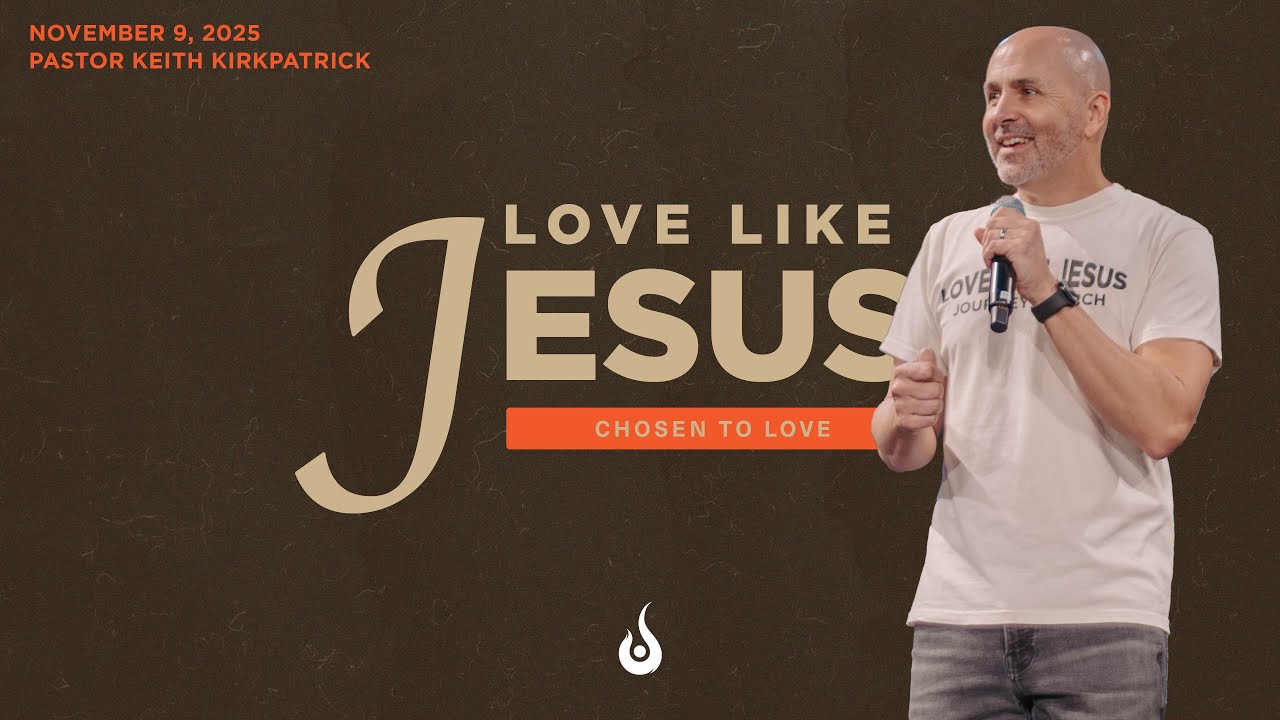
Pastor Keith Kirkpatrick opens by noting that everyone goes through sorrow, then reads John 16:16-24, where Jesus tells his disciples that in a little while they will not see him and again in a little while they will. The disciples puzzle over the phrase among themselves. Pastor Keith highlights how honest the Bible is about their confusion, and observes that Jesus, knowing what they wanted to ask, answers them without shaming them. From this he draws the message's central claim: sorrow is not the end of the story, and God does not merely remove sorrow but transforms it into joy.
Pastor Keith treats "a little while" as the ordinary tension of following Jesus—between prayer and answer, obedience and fruit, promise and fulfillment, and between God's seeming silence and the work he is doing. He reads the childbirth metaphor in John 16 as showing that pain is real and intense yet not pointless, and that the joy Jesus gives is resurrection joy, rooted not in circumstances but in who Jesus is. He also turns to 1 Thessalonians 5 for the practices of rejoicing always, praying without ceasing, and giving thanks in all circumstances, and to Philippians 3 for counting all things as loss compared with knowing Christ.
The message closes with Jesus's promise that asking the Father in his name leads to full joy, five summary points, and an invitation to believe in Jesus, followed by a prayer and an invitation to baptism. The recording ends with worship and celebration.
Take this with you
Your "little while" is not forever
In John 16:16-22, Jesus tells his disciples that their sorrow over his absence is real but will not last. Pastor Keith frames the season of confusion, silence, or sorrow as temporary, and describes "a little while" as the tension of trusting Jesus while he works—not as a guarantee of quick relief.
God transforms sorrow, not merely ends it
Pastor Keith draws a deliberate distinction from Jesus's promise in John 16:20: Jesus does not say he will erase the sorrow but that he will turn it into joy. He argues that God is doing something in the person in the middle of the pain, and cites the pattern of Genesis 50—what is intended for evil, God uses for good.
Pain is not pointless
Drawing on the childbirth metaphor in John 16:21, Pastor Keith says pain has purpose. He insists the pain is real and intense, not something to fake away, and that God is not punishing his people. The joy Jesus describes in the following verse is pictured as beyond the reach of circumstances, people, or the enemy.
Resurrection joy cannot be stolen
Pastor Keith grounds the joy of John 16:22 in Jesus's resurrection rather than in circumstances, which he calls happiness. He also connects it to Jesus's words in John 15:11 about his joy being in his followers so that their joy may be full. Because Jesus defeated death, the message calls hearers to keep coming back to joy.
Rejoice, pray, give thanks
From 1 Thessalonians 5:15-18, the message draws three practices for hard times: choose joy, stay in conversation with God, and give thanks. Pastor Keith presents these as God's will for believers in Christ Jesus and urges them to preach these truths to themselves rather than waiting for someone else to say them.
Prayer is a relationship, not a ritual
Pastor Keith describes prayer as a living relationship with a living God rather than repeated words. Turning to Jesus's promise in John 16:23-24 that asking the Father in his name leads to full joy, he calls the church to ask boldly because of who God is, not as a formula for getting whatever one wants.
The conversation,
in their words.
Transcript from the recording’s captions. Select any timestamp to hear the original audio.
I'm so grateful that God is a God who's for us. And if he's for us, who can be against us? We want to receive the promise of God today. If you brought your Bible, would you hold in the air like you care? This is no ordinary book. God wants to speak to you through this book today. And so, right now, I'm going to ask that everyone join with me and participate. We want to receive a word from God. I'm going to count to three and you shout word on three. Here we go. One, two, three. Word. We're getting into God's word. So God's word gets into us. We want to receive God's word today. The title of today's sermon is your sorrow will turn into joy. Your sorrow will turn into joy. You can write that down or you can just memorize it because the reality is all of us will go through sorrows in life. Every single one of us will have moments where we are filled
with sorrow, sadness. We will be confused. We will have moments when we don't understand what God's doing in our lives. We will have moments that maybe you you're questioning what God's saying to you or who he is or or what's happening in your life right now. But I want you to know what we're going to receive from Jesus today is a promise. Your sorrow will turn in to joy. Your sorrow will turn into joy. We're looking at the life of Jesus through the lens of John. John was a disciple of Jesus. He walked with Jesus, talked with Jesus, and he he tells us that in the final moments of Jesus life before he's betrayed, beaten, and crucified. These are the moments that he he's leaving with us the most important teaching.
He's he's telling us who he is so that we can hold on to those promises at just the right time. And as he's sharing these things, I I I love how relentlessly real the Bible is. His very own students are questioning what Jesus is saying. They don't quite get it yet. So, you're in good company. If you if you wonder sometimes, it feels like a mystery of what you're going through. And that's where we pick up today. The disciples are right there. They're receiving from Jesus his words. He gives them a promise, but it seems to be wrapped in a mystery. And if you just get real with God and get real with one another, we will all go through those seasons that you just wonder, "What are you doing, Lord? What are you saying to me, God? Why are you letting me go through this? What is this going to look
like?" And today, Jesus is going to teach you that your sorrow will turn into joy. We find ourselves in John chapter 16. John chapter 16. We're going to start with the 16th verse and work our way to verse 26. Today we're going to work our way to verse 26. Is anybody enjoying the book of John? Uh we've been in John since January and we're going to go into John in the new year in 2026 and we might just be in John in 2027 and 2028 as well. Uh because it's all about Jesus and it's so good. Hey, would you stand for the reading of God's word today? I'm going to read the entire text. So stick with me. I want you to work with me. I'll read the entire text and then we're going to better understand what is Jesus saying to me today. A little while, Jesus says, and
you will see me no longer, and again, a little while and you will see me. So some of his disciples said to one another, what is this that he says to us? A little while and you will not see me. And again, a little while and you will see me because I'm going to the father. So they were saying, what does he mean by a little while? We do not know what he is talking about. Jesus knew that they wanted to ask him. So he said to them, "Is this what you're asking yourselves? What I meant by saying, "A little while and you will not see me, and again, a little while and you will see me. Truly, truly, I say to you, you will weep and lament, but the world will rejoice. You will be sorrowful, but your sorrow will turn
into joy." When a woman is giving birth, she has sorrow because her hour has come. But when she has delivered the baby, she no longer remembers the anguish for for joy that a human being has been born into the world. So also you have sorrow now, but I will see you again, and your hearts will rejoice, and no one will take your joy from you. In that day, you will ask nothing of me. Truly, truly I say to you, whatever you ask of the Father in my name, he will give it to you. Until now you have asked nothing in my name, ask and you will receive that your joy may be full. This is the word of the Lord. You may be seated.
What I love about the Bible is it's so raw, honest, and real. If the authors of the scriptures wanted to cover anything up, they would cover up the reality that they didn't always know what was happening. I'm grateful that these are are real people just like you and just like me so that we could understand that what God did in the past, he he's still doing today. And here we have some guys that are questioning Jesus. There seems to almost be be a a riddle that Jesus is saying in verse 16. A little while and you will see me no longer. and again a little while and you will see me. What What kind of riddle is this? What is Jesus saying? What type of Houdini act is he going to do that that he's going to be gone but then he's going to be there?
And so so his disciples, these are his students. They're they're trying to understand the teacher. Teacher, what are you trying to teach us? You're telling us one thing, but we're not quite getting the subject matter yet. And so they're asking one another, what what does he actually mean by a little while? I don't know if you've ever been confused with what God's doing in your life. What do you actually mean by you love me, Lord? Because it doesn't feel like it or what do you actually mean by by you'll help me or what do you mean by these things? And here as they're questioning these very things, we can find ourselves in the same spots in certain seasons when you're in the middle of a storm. When you're wondering what God's saying, you when you wonder where God is and they they whisper amongst one another without getting real
with Jesus yet, what does he mean? What is he actually saying? They're confused. And in confusion, you can be uncertain of not only what's going to happen, but what you're going through in the present moment. And I tell you, we don't have a God of confusion. We have a God that wants you to understand who he is and what he has to say. And although they're confused with the language, Jesus doesn't leave them there. You can be certain of this. God loves you right where you are, but he loves you too much to leave you there. You can come confused. You can come with your questions. You might even be skeptical today. You might be hurting today. You might be in a place where
you're just wondering what in the world is going on. And I want you to know God loves you, but he's not going to leave you there. He's going to demonstrate for you what he actually means by a little while. And it's in this cryptic phrase that that I'm going to give you a secret to what God's doing even in your deepest sorrow. And that is this. Sorrow is not the end of your story. Sorrow is not the end of the story. Jesus teaches us that where you are is not where you're going to stay. that what you're going through now does not have to be the final say of what God's doing in your life. Sorrow is not the end of the story. Our God is a good author. And you might be wondering where he's going with the story of your life. But Jesus wants you to know that even if you're sad, even if you're going
through sorrow, even if you're weeping, even if you're lamenting, let me just tell you, it's okay. But you're not going to stay in that place. This will not be the end of your story. The entire text today is going to just remind us your sorrow is actually just a setup for God. Your sorrow is just a setup. In fact, what I want you to see clearly today is that God doesn't just take away your sorrow. He doesn't just replace your sorrow. We have a God that's in the business of transformation. That's the mission of this church is that we lead people on a journey of transformation in Jesus. You don't just arrive and say, "I've got God figured out." You don't just arrive one day and say, "Look what God did in my life and and it's all over." I'll tell you, each step of your journey, you need to let
Jesus change you into who he who he's making you to be. And today, we're going to see in this text that God actually transforms. He turns our sorrow, which just reminds us repeatedly in the Bible, nothing in your life is wasted with God. Nothing. No tragedy, no trial, no trouble you've been through, nothing in your life is wasted with God. Amen. I tell you, at times it could be confusing. At times you might have questions, but I want you to know that what happened with Joseph is still true for you in Genesis 50. What the enemy intends for evil, God will use it for good. He's just preparing you for who he is. He's wanting you to trust in him because he never changes. is. And although your circumstances change, God is always good. God is always faithful. God is
always kind. And he wants you to trust in him, to hope in him, and to walk in the authority of everything he's given you once you've believed in him. That doesn't stop because you go through some sorrow. That doesn't stop because you're going through some tough times. He's going to point us through the journey of what he's about to walk through. And he's going to let us know although you don't know the ending, God always does. And so what the Lord wants you to hope in is not what you're going through, but to hope in him. That's why at Journey Church, we believe there's hope for everyone. Doesn't matter who you are. It doesn't matter what family you were born into. Doesn't matter what you're going through right now. God is good and he's for you. There's an author of a book of the Bible called First Thessalonians.
He's writing a letter to the Thessalonians. And he gets to a point that as we read in in 1 Thessalonians chapter 5, he he's teaching them, "Do not repay evil with evil." Because there's a tendency in the human heart that when someone has hurt you, you want to hurt them. This is true in every relationship with a parent, a child, with a spouse against a spouse. This is true with co-workers. It could be true with neighbors. Come on. This is true with driving. You know, someone does something to you, what do you want to do back? you want to do something to them. And the writer comes to this place where he lets us know that once you have Jesus, you don't act like the world any longer. If evil is done to you, you do not repay evil with evil. And so he teaches us in this text, 1 Thessalonians chapter 5, what does this look like in your life?
And this is a principle daily. This is a principle that you ought to preach to yourself. Do you know the greatest preacher in your life is you? I can't follow you everywhere I go. Nor would you want me to. I tell you, it's not some sage on the stage that you're watching on YouTube. The best preacher in your life is you. Which is why you should get into God's word. You should know God's word at just the right time. You got to start preaching it back to yourself. You got to start preaching out loud to yourself. So, he comes to this place when evil is done to you. You're not going to repay evil with evil. But instead, he says in 1 Thessalonians 5:16, two words. He says, "Rejoice always." Wait a second. Evil was just done to me. And he says, "That's not a
reason to allow the enemy to take your joy." Rejoice simply means to choose joy. The prefix re means to come back to come back to joy. And the author is telling us not sometimes, not once in a while, not when times are easy. He says, "Rejoice when?" Always. You choose joy always. You don't let the devil take your joy. You don't let your circumstances take your joy. You're going to keep coming back to joy always because you trust in the Lord. You hope in the Lord. You choose joy because your joy was given by Jesus. But he doesn't stop there. He says, "You keep coming back to joy. You rejoice always." And then he says, "Pray without ceasing." This is incredible. He doesn't
say, "Just pray when you need to ask something." He says, "You're going to pray all the time." Prayer is communion with God. You're going to talk to God anywhere, everywhere, at all times. I pray not because I need something from God. I pray because of who God is. He's faithful. And if I'm rejoicing always, I'm going to pray without ceasing. I'm not going to stop praying. I'm not going to allow my circumstances to stop me from talking to this God. If I need something, I'm going to ask for it. If I if if I want to be know that I'm loved, I'm going to talk to the Lord that loves me all the time. I'm going to pray without ceasing. So, what do we do when we go through tough times? We rejoice always. We pray without ceasing. And then he says something that's so difficult when you're going through a
hard time. He says, "Give thanks in all circumstances, for this is the will of God for you in Christ Jesus." This is God's will that you would be thankful. Not thankful because the times are easy. Not Not thankful because you have everything that you need and you want right now. You're thankful because God's working it out and you don't even know what he's going to do. You're going to give God room to do what only God can do. You're going to thank God because you know that it's not always going to be like where you are right now. You're going to start thanking God because you're holding on right now as Jesus is going to call it today in a little while because you know the joy is coming. You're going to work with God in the waiting. You're going to rejoice always.
Pray without ceasing. And you're going to give thanks not because your circumstances are good and easy, but you're going to give thanks to God because that's your will. God destined you to be a thankful person. You change the atmosphere when you walk into the room with thanksgiving. You change your family when you're thankful. You change your workplace when you're thankful. Ain't nobody love a Debbie Downer. You walk in the room and there's a Eeyore breath just breathing out negativity. There's nothing good that can happen. But I tell you, you're not meant to be you're not meant to be a thermometer that just says what's happening in the room. You're the thermostat. You change it. You rejoice always. You pray without ceasing. And you give thanks. Or when someone looks at you, they know you're doing all that.
Not because life is easy, but God is always good. You're trusting in him. So we say today, my confusion in life is not my conclusion. I've got to hold on to God's promises even when I'm questioning it. I've got to hold on to God's promises even when I don't understand fully what he's doing in my life. God is working. There's a songwriter in the Old Testament that preaches to himself. I'm telling you, the best preacher in your life is you. You've got to understand that what you're going through is not who you are and it's not going to be where you're going to stay. So this writer, he he's just preaching to himself. He's not preaching to someone else. And here's the dialogue. He says, "Why are you cast down, oh my soul? Why are you at turmoil
within me? You can sense the sorrow. You can sense the wrestling of I don't like where I am. I don't like what I'm going through. This these are hard times. Why? Why am I going through this?" And it's right in the middle of this sorrow that he says back to himself. He doesn't wait for a preacher on Sunday. He doesn't wait for some card to come in the mail. He just preaches back to himself and he says, "Hope in God." That's a good sermon. Hope in God. Come on, say it with me. Hope in God. See, you're a good preacher. You got to start telling your soul that. Hey, you don't hope in your circumstances.
You don't hope in other people. You hope in God. You don't hope in your finances. You don't hope in the government. You don't hope in your health. You hope in God. Oh, I hope in God because he shall I shall again praise him. My salvation and my God. I may not feel like it right now, but I know deep down in my soul, he's worthy of praise. So, I'm going to praise him again. I'm not going to stay where I am. I've got to give him the glory even if I don't feel like it. I've got to praise him even if I can't see it right now. Oh, I've got to say he's the one that's going to do it in my life. I tell you, God lets you go through some things sometimes so that you understand he's the God that turns things around.
It's not what you know. It's not what you see. It's not what you feel. It's the promise of God. If Jesus said it, you can believe it. Your sorrow will turn into joy. If you're in sorrow right now, let me just tell you, it's not where God's going to leave you. I don't want to cause any fret in this house, but if you're not in sorrow right now, you're going to be on. And you've got to know confidently in your heart who you hope in because the devil is a deceiver. And if you don't know the word of God, when sorrow comes and something is taken from you, you will mistake that for the character of God.
Let let me just be really clear on this. If you're not confident who God is, you will actually mistake your circumstances for being the character of God. What I mean by that is when times are good, you say God is good. But when times are bad, you actually question the character of God. You wonder where he is. You think he's a distant deity. You think he's a God that's against you and is actually punishing you. But let me just tell you today, we do not have a God that punishes us. He may discipline you. But but I love this about Jesus is he does not shame them. He does not guilt them. He does not condemn them. Because the same promise we read in Romans 8:1 is still our promise today. Therefore, there is now, right now, no condemnation for those who are in Christ Jesus.
Oh, some of us feel so bad when we come before the presence of God. But if you would just know who you are in Jesus, you're a beloved child of God. You're righteous in his eyes. He's not going to hold this against you just because you got some questions just because you're confused. I'll tell you what he'll do. Because he told us earlier in John chapter 14, he says, "I am the way and the truth and the life. There's no other way to the father but by me." You know what Jesus really wants for you to know today? The truth. Not a lie, not confusion. He doesn't leave them in this space or in this place. John 16:1 19. Jesus knew that. They wanted to ask him. I'll just tell you this right now. Jesus knows everything about you. He knows everything.
He knows your confusion, your questions, your doubts, your fears. He knows everything about you. He doesn't just know your past, which is a little scary. He knows your present, but he also knows your future. He's going to tell them what they're about to experience, and they don't even know what they're about to experience. He says, "Are you you guys are questioning right now?" In verse 19, is this what you're asking yourselves? What I meant by saying a little while? Aren't you glad that God not only knows what you're thinking, but he allows you to sit in the tension? He allows you to sit in that place where where I'm not where I want to be.
I don't want to stay in this space in this place, but but he lets us know he's not going to abandon us. He's preparing us. Jesus continually uses this phrase, a little while. A little while, a little while. And it's really clear when we read the whole context of what's about to happen. He's talking about his imminent death. He's been describing it the last three years of his life. He's going to willingly give his life. Not because someone takes it from him, but he's going to lay down his life because he loves you. He who is without sin is about to take our sin on the cross. He's about to be abandoned. He's about to be betrayed. He's about to be beaten. In a little while, you're going to be confused. In a little while, you there's going to be a place where he's buried.
And there's going to be a silence that no one expected, even though Jesus said it. There are times that God's been speaking to you. And then when the silence comes, you wonder where he is. But Jesus is simply saying, "In the little while, something is greater than you can imagine. It's beyond what you could dream or fathom. So, I'm saying this to you right now so that when the silence comes, you're just getting ready for something so great that no one can take what I'm giving from you. And as we read this text, this really just simply describes the Christian life. A little while is the tension of what it really means to trust in Jesus. Because when you pray, it might be a little while before you get the answers.
You don't want to give up prematurely on God when he's actually working in the little while. The little while is the tension between obedience and the fruit. Jesus says, "Dwell in me and you will bear much fruit." But you've got to be obedient to who God is and what he says. The little while is the the tension between the promise and the fulfillment. God said it, but I don't have it yet. Well, it's coming in the little while. The little while is the tension in between where it feels like God is hidden, but really he's just trying to teach you something. He's there all along because Jesus promised, "I will never leave you. I will never forsake you. I will be with you always, even to the end of the age."
Let me just warn you right now. If you're new to the Christian faith or maybe some of you have been journeying with God for a while and you you've actually been confused with this, but this really just describes the life of following Jesus. This is the Christian life. Our God is not a gumball dispenser where you pray and you just get immediately what you ask for. He's a good God that's trying to teach you something. Our God knows what's better for you than even you know. Our God wants you to trust in him. And he wants to teach you something. And and sometimes he does the the deepest work in our lives when we're going through something, when we're sorrowful, when we don't understand what he's doing. And I and I wish it was different. I wish it was easy. I wish it was comfortable. But there is a time coming where there will be no more sorrow. There'll be no more sadness. He will wipe away every one of your tears. He is a God that's so good.
But that time is ahead of us. And right now, we got to trust him in the sorrow. [applause] You got to know that eternal life is real and this life is just a journey. This is just the beginning of greater things. And until we're with him in glory, we've got to trust him for who he says he is. There's another section of a letter that that same author Paul writes to the Philippian church. And he comes to a section where he he he he really has come to the conclusion that that it's not about the things of this world. He says in Philippians 3:8, "Indeed, I count everything as a loss because of the surpassing worth of knowing Christ Jesus, my Lord. For his sake, for Jesus, I've suffered the loss of all things and I count them as rubbish in order that I may gain Christ." He's simply saying, "There's nothing greater than Jesus. You
can have all the things in the world, but if you don't have Jesus, those things are just garbage. If you don't recognize that you don't have the one that made you in your life, the one that saved you in your life, the one that wants to give you a living hope in your life, everything else in this world is just simply rubbish. It's just garbage. But when you have Jesus, you have more than you need. You have more than enough. And so this writer continues and says, "Oh, just to be found in Jesus." What do you get when you're found in Jesus? not having a righteousness of my own that comes from the law, but that which comes through faith in Christ, the righteousness from God that depends on faith. Do you know what you get with Jesus? Righteousness, not because you're good enough, not because you've been going to church.
But it's a righteousness from Jesus. As Pastor Brandon would say, you're righteous and it's not your fault. You see, when you know who you are, it changes who's you are. Oh, my friend, when when you know you're righteous, nothing can stop the joy that's in you. Oh, the enemy will try to strip away all of the things on the outside, but when you know who you are on the inside, like this writer Paul, you could say, "Oh, that I may know him." In verse 10, that I may know Jesus and the power of his resurrection, and may share his sufferings, becoming like him in his death. Why would anybody want to share in the sufferings of the crucifixion until the point of death?
Here's why. Verse 11, that by any means possible, I may attain the resurrection from the dead. Hallelujah. I'm getting the sense the author is just simply saying this. I might be in a little while, but I want what's coming. I might be suffering now, but I know what's coming. I might be dead now, but I know what's coming. So many of us want a miracle. But do you know what it takes to get a miracle? You need a miracle. It means you need God to show up. You want a miracle in your life? I want to warn you, it may not be easy because you need God to do what only God can do. It's not about you. You want a healing? Well, you got to be sick. And Paul says this, you want a resurrection, you have to die.
You have to recognize that your sorrow is not wasted with God. He's actually trying to teach you something. Everything you've ever been through is actually trying to teach you something. That God's actually making you stronger. As I said earlier, your sorrow is just a setup. A setup for what? Look at verse 20. Truly, truly I say to you, another translation, Jesus says, I tell you the truth. It's not that he hasn't been saying the truth, but he's trying to awaken you to the promise that this is what you're to hold on to. You will weep and lament, but the world will rejoice. The devil is real and he's called the prince of this air. He's the prince of this world until one day he will be locked up forever. And when God works in your life, the devil wants to do anything he can to steal, kill, and destroy what God's
doing. And because of that, we learned this a few weeks ago in John chapter 15, the ways of this world, the cosmos, as the Greek would say it, the ways of this world don't understand it. So when you weep, they rejoice. I'm talking about the enemy, evil. And when you rejoice, they weep. So, so Jesus warns there's going to come a time that you're going to hurt and not everyone around you is is going to come alongside and grieve with you. You will be sorrowful. Jesus says in verse 20, you will be sorrowful. He does not deny it. This is the reality. You will be sorrowful, but your sorrow will turn into joy.
Jesus dignifies sorrow. He proclaims a transformation from sorrow, not just a relief. How many times do we suffer and we just simply pray a prayer like this? God, stop the suffering. He doesn't say, I'm just going to stop the sorrow. He says, I'm going to turn the sorrow into joy. This is a transformational journey. I'm actually doing something in you right now that you can't see, but I'm going to turn it around. That's my God. He turns it around. Your sorrow is not going to be replaced by joy. Your sorrow will not be erased by joy. Your sorrow will be turned into joy. You can speak to your own heart, what hurt me won't hold me back. What hurt me won't hold me. What hurt me won't hold
me. that that which the enemy intended for evil, God's just going to bless me beyond my imagination. And so we see the worst of the worst will happen to Jesus. He was crucified on the cross and they were confused. They were sorrowful. And Jesus uses a metaphor that we can relate to. He says you your pain will have purpose. You will have pain with purpose. Your pain will have purpose. John 16 verse 21. Here's a pain with purpose. When a woman's giving birth, is it just easy? You show up and you pick the child that looks the cutest and you you leave the the hospital like it's some type of Target or Walmart.
No. When a woman gives birth, Jesus warns us she has sorrow. I never heard a woman giving birth saying like, "This is the best thing ever. I love this. Let's do it again." Awesome. This is so easy. No, she has sorrow because her hour has come. But when she's delivered the baby, she no longer remembers the anguish for joy that a human being has been born into the world. Here's what Jesus likens this. This is simply a metaphor. He's saying your pain is not just pain for pain's sake. is not God punishing you saying, "Oh, I just hope you just keep hurting." God's not this distant deity with a crooked finger and a a white beard looking down at you saying, "You messed
up again. Here we go. More pain. More pain. More pain." Oh, you think this is rain? Well, let here comes some more rain. No, no. Here's what God does. He says, "Your pain actually has a purpose. The pain is real. You don't have to ignore it and fake it. The pain is intense. The pain is unavoidable. But Jesus says this pain is with purpose. There's a joy that's coming. And he's telling his disciples, there's a joy that's coming. And this joy, verse 22, no one, he says, no one is going to take it from you. So keep pushing through. Don't give up. Don't quit right now. God is doing something in you that no one can steal or rob from you. This is a joy that's not rooted in your circumstances. That's mistaken.
That's called happiness. This is a joy that is a resurrection joy. This is a joy knowing that Jesus defeated the devil. Jesus defeated death. This is a joy knowing that the same power that rose Jesus from the grave, I have through the Holy Spirit. This is a joy untouched by pain, untouched by people, untouched by my circumstances. It's untouched by the season or the storm that I find myself in. This is a joy that not even Satan himself can take from me. So I can tell of Satan, you can't take what God's given me. Jesus said in John 15:11, it's my joy that will be in you and your joy may be full. This is not the joy of the world. This is the joy of Jesus so that you know who God is and you know who you are. That what you're going through will not last. You've got the joy of Jesus.
So I will rejoice always. I will pray without ceasing and I'm just going to keep giving thanks no matter what I'm going through. This is God's will for me. Jesus ends with a stunning promise. And we end our text today. In that day, you will ask nothing of me. That confused me at first because Jesus goes on to say, "Ask anything in my name." What does he mean ask nothing of me? Well, if we look at the original a Greek, it actually means you're not going to ask any more questions of me. All of the questions you have right now, there's going to come a moment when you have a revelation and your mind's going to be blown. That's what it looks like to follow Jesus. You just keep growing. You just keep growing. I I love this about Jesus. I I'll read the same text over and over, year after year, and one year I'll read the same text I've read a million times, and all of a sudden, I'm like, "Wow,
this is a good word. I have an understanding that I didn't have before." So, what Jesus says is at just the right time, you're not no longer going to ask questions or be confused. And now you're going to start asking of God because you know who he is and what he's able to do. Oh my friends, if we as a church really believe Jesus died and rose again and he is alive today and forever more, we'd start asking a little more. We'd start asking for every witch in this city to be saved in Jesus' name. We'd start asking for every addiction to be broken in Jesus' name. We'd start asking that every person that's lost and wandering in this world would be found and saved in Jesus' name. If we know who Jesus is and what he's done for us, we will start asking of God and your joy just increases in Jesus. Hallelujah. He's real.
Listen, this isn't hype. This is the living hope of Jesus Christ. His word is true. It will endure forever. So don't you let some distractions or someone trying to intimidate you stop you from being who God called you to be. He says, "Your sorrow will turn into joy." Prayer is not meant to be a ritual. It's not meant to be a repeating of of words with a beads. Prayer is a living relationship with a living God where you get to ask of him anything. Why? So your joy would be full. So follow with me. Here's five things we learned today. Number one, your little while is not forever. The season you're in, confusion, silence, your sorrow, that's just awaiting. Your little while is not forever. Number two, God transforms sorrow. He transforms it. He does not merely end it. We've got to understand the work of
God. Too many times we want the gumball machine. We want the genie in a bottle. We want God to just get rid of what we're going through and just give us something better. No, he's he's doing something in you. He's turning you into his likeness. The very thing that's breaking you is the very thing that's going to bless you. Number three, pain is not pointless. It is pregnant with purpose. Keep pushing. God does not waste your tears. He sees every tear that comes out of your eyes. The Bible actually tells us with this beautiful picture, God is collecting your tears. He's collecting your tears. So your pain is viewed by God and he's going to do something more. Number four, resurrection joy cannot be stolen. This is no ordinary joy. This is the joy that the tomb is empty. You can go check today. He defeated the grave.
And if he can do that, come on friends, he can do anything. This is resurrection joy. So if you're going through sorrow right now, you don't wallow like an atheist like there is no God that's going to redeem this. You just simply say, "God's doing something. I may not know it right now, but I've got a joy that God's doing something." Finally, prayer is the pipeline of joy. Joy is not meant just to be an emotion, which it can be. But it's something so much more. It's a living relationship with the living God. Trusting that God is supreme over every disaster o o over every uh destruction I've been through, every disappointment. That what I'm going through, God is God. And when I pray, I have joy because I rest in the arms of God. He's going to
turn my sorrow into joy. Today, I want to make sure that you understand this joy can be yours. You see, if you've never had that joy, some of you want it. You don't get this joy by going to church. You don't get this joy just by trying harder. You get this joy by trusting and believing in Jesus. And what happened on that Friday when Jesus died on the cross? He died for your sins. And it was painful. It was hard. And on that Saturday, there was silence. And it was confusing. But let me just tell you today, Sunday is coming. Jesus rose from the grave. No one expected it. He is the God of a great holy expectation. He's going to surprise you with grace upon grace. And
by believing in him today, that same Jesus that rose from the grave can be in your heart today. I want to offer you the free gift of salvation. I cannot give it to you, but Jesus can. You don't get it by just praying a prayer. You get it by believing Jesus in your heart. And it's not just in your heart. The Bible says if you believe Jesus died on the cross, if you believe that in your heart, you've got to also confess it with your mouth. In the seriousness of this moment, would you close your eyes? I want to just ask you today, would you like to receive this joy in Jesus? Would you like to receive the free gift of eternal life, the hope of heaven? If that's you, would you raise your hand nice and high and keep your hand up? Praise be to God. It's yours. From this day forward, all that the devil's tried to steal from you, God's going to
replace it abundantly, more than you can imagine. Praise be to God. Anyone else just raise your hand high. Keep your hand up. We got a booklet for you. Praise God. Yes. Praise God. I see you back there. Praise God. God sees you. He loves you. He doesn't just give you joy. He gives you salvation. He gives you hope. Praise God. All kinds of men's lives are being turned around today. Praise be to God. Anyone else? Just raise raise your hand up high. We got a a booklet for your next steps. You're not alone. You're not alone. Anyone else right where you are? Praise God. You're never too young to receive salvation in Jesus. You know what the Bible says? By believing in Jesus, you receive God himself, the Holy Spirit. Not a child Holy Spirit, not a little Holy Spirit. You get all of God. So every one of you today that raise your hand. You get all of God. The Holy
Spirit. The same power that rose Jesus from the grave is yours in Jesus. That's the power of the Holy Spirit. Anybody else? So many decisions today. So good. I want you to put your hand down now. I want to pray with you. I'm going to just pray a simple prayer. Prayer is talking to God. It's listening to God. You've been instructed today to pray without ceasing. That means pray in your car out loud. Pray in your house. Pray at your work. You can pray silently. You could pray out loud. But I'm going to pray with you just a short prayer. I want you to believe this in your heart. And anyone who's ever believed in Jesus, can you you just join me in this prayer together? So let let's pray this together. Jesus Jesus, I need you. I need you. I trust you. I trust you. Turn my sorrow into joy. Take my sin and set me free.
I receive the Holy Spirit. I receive the Holy Spirit. I receive living hope today. I receive hope today. Jesus, help me follow you. I am a child of God now. I am a child of God. Help me to live like it. Help me in Jesus name. [music] Amen. And amen. Praise be to God. Come on, let's celebrate what the Lord has done today. Praise be to God. Now, [applause] we've got an opportunity today. I've got a tank here filled with warm water. This is symbolic of what Jesus has done. [music] He died. He was buried. And he rose again. Today, if you've never been baptized and you have believed in Jesus, this is your day. Listen, baptism [music] is reserved for those who are saved. You don't get baptized to be saved. You get baptized because you're saved. You don't need to be baptized over and over and
over again when you've made a mistake, but you do need to keep coming back to Jesus. If you want to be baptized today, [music] you come right over here and there's a group of people that will meet with you. And if you're wondering, well, who is this for? This is for those who have believed in Jesus and have not been baptized. Some of you will say, well, I was baptized as a child. I [music] was baptized as an infant. I was baptized and I didn't know what I was doing. Well, that's okay. Now, you could do it because you know what you're doing. This is your chance to make your decision. And I'm just going to ask this of you, Journey Church. We're almost done with the day. Yesterday, I went to a restaurant and it was in the afternoon and there was a duck game on all the televisions in that restaurant and I saw grown adults cheering, grown adults clapping, giving strangers high fives because some young adults were on grass playing with a ball.
We're talking about the hope of heaven. We're talking about crossing over from death to life. We're talking about freedom in Jesus Christ. He doesn't deserve a golf clap. He deserves a scream. [cheering] He turns your sorrow into joy. Listen, this is a privilege we have at church. This isn't a country club. So, I just want you to know a journey. You could just pretend like it's a sports pub if you need to. It's okay to shout in Jesus' name. It's okay to celebrate what God's done. It's okay to tell the devil. He tried to destroy these lives today that are getting baptized, but the devil didn't get the final say. Jesus rescued [music] them from hell. He redeemed them today. So, we get to celebrate and live like it.
Hey, if you've not been baptized, you make your way over here right now. And and we're going to celebrate when every person comes out of the water. We're going to celebrate like like hell lost another one. For thou, oh [music] Lord, are high above all the earth. For thou art exalted, [music] far above
our God, for thou, oh [music] Lord, [singing] are high above all the earth. [singing] [cheering] Thou art exalted [music] far. I exalt thee.
I exalt [singing] thee. I exalt thee. [singing] Oh, [singing] I exalt thee. [singing] I exalt thee. [singing] I exalt thee, oh Lord, [singing]
[music] for thou, [singing] oh [music] Lord, [cheering] are high above all the earth. [music] For thou [music] art exalted [singing] far above our God. For thou, [music and singing] oh Lord, are high [singing] above all the [music] earth.
For thou [music and singing] art exalted far above [music] God. I [music] exalt thee. I exalt [singing] Ade, I adore thee. [applause and music] Oh, I exalt
thee. [singing] I exalt thee. [singing] I exalt thee, oh Lord. [applause and music]
Read · talk · practice
Keep growing.
Together.
When You Don't Understand
The disciples hear Jesus say "a little while" in John 16 and cannot make sense of it, whispering among themselves. Rather than scolding them, Jesus names their question and answers it. Pastor Keith uses their honesty to invite hearers to bring confusion to God instead of hiding it, and to hold onto the promise that sorrow is not the final word.
John 16:16-19
- Where are you currently confused about what God is doing, and what would it look like to bring that question to him honestly rather than only talking about it with others?
- Pastor Keith says God loves you right where you are but too much to leave you there. How does that reshape the way you view a hard season?
- Pastor Keith points to the psalmist who speaks to his own soul and tells it to hope in God. Where would that kind of self-talk meet a struggle you are facing now?
Rejoice, Pray, Give Thanks
From 1 Thessalonians 5, the message draws three practices for hard times: choose joy, pray without ceasing, and give thanks in all circumstances. Pastor Keith presents these not as responses to easy circumstances but as God's will for believers in Christ Jesus, and he urges hearers to preach these truths to themselves rather than waiting for someone else to say them.
1 Thessalonians 5:15-18
- Which of the three—rejoicing, praying, or giving thanks—is hardest for you right now, and why?
- Pastor Keith says the best preacher in your life is you. What would it sound like to speak truth to your own soul this week?
- How might thankfulness change the atmosphere of a relationship or workplace you are part of?
Answers from this recording
Start a conversation.
What does Jesus mean by "a little while" in John 16?+
In this message, Pastor Keith explains "a little while" against the backdrop of Jesus's imminent death, burial, and resurrection. The disciples would soon lose sight of him, grieve, and then see him again. Pastor Keith broadens it into a description of the Christian life: the gap between prayer and answer, obedience and fruit, promise and fulfillment. Rather than a riddle to solve, it is the ordinary space where trust is exercised—where God seems hidden but is still working.
Which "little while" are you currently living in, and what would help you trust God in it?
Does God take away sorrow or transform it?+
In John 16:20-22, Pastor Keith makes a deliberate distinction: God does not merely remove or replace sorrow; he transforms it into joy. Jesus says the disciples will be sorrowful, and he does not deny that reality. Using the childbirth image, the message argues that the pain is real and intense but not pointless. The joy that follows is not the erasure of the hurt but something produced through it—a joy Pastor Keith describes as beyond the reach of circumstances or the enemy.
How would you describe a time when God transformed rather than removed a difficulty in your life?
Why would God allow a person to go through sorrow?+
The message does not treat sorrow as punishment. Pastor Keith says God may discipline his people but does not shame or condemn them, and he points to Romans 8:1 to say there is no condemnation in Christ. Instead, sorrow is framed as a place where God does deep work, teaches trust, and prepares something greater. Pastor Keith is candid that this is uncomfortable and that he wishes it were easier, while insisting nothing in a believer's life is wasted with God.
What might God be teaching you in a difficulty you would not have chosen?
What is the difference between joy and happiness in this sermon?+
Pastor Keith treats happiness as something rooted in circumstances and joy as something rooted in Jesus and his resurrection. Looking at John 16:22 and Jesus's words in John 15:11 about his joy being in his followers, he describes joy as untouched by pain, people, seasons, or storms, and as something even Satan cannot take from a believer. Because it rests on Jesus's victory over the grave, it does not rise and fall with how life is going.
Where in your life have you been measuring God's goodness only by your circumstances?
What role does prayer play in joy, according to this message?+
Prayer is presented as a living relationship with a living God, not a ritual or a formula. Pastor Keith draws on Jesus's promise in John 16:23-24 that asking in his name leads to full joy, and he reads the phrase about asking nothing of Jesus as the end of unanswered confusion rather than a ban on prayer. He calls the church to ask boldly—for salvation, freedom, and the lost—and describes prayer as the pipeline of joy.
What is one bold prayer you have been hesitant to bring to God?