
Go a little deeper
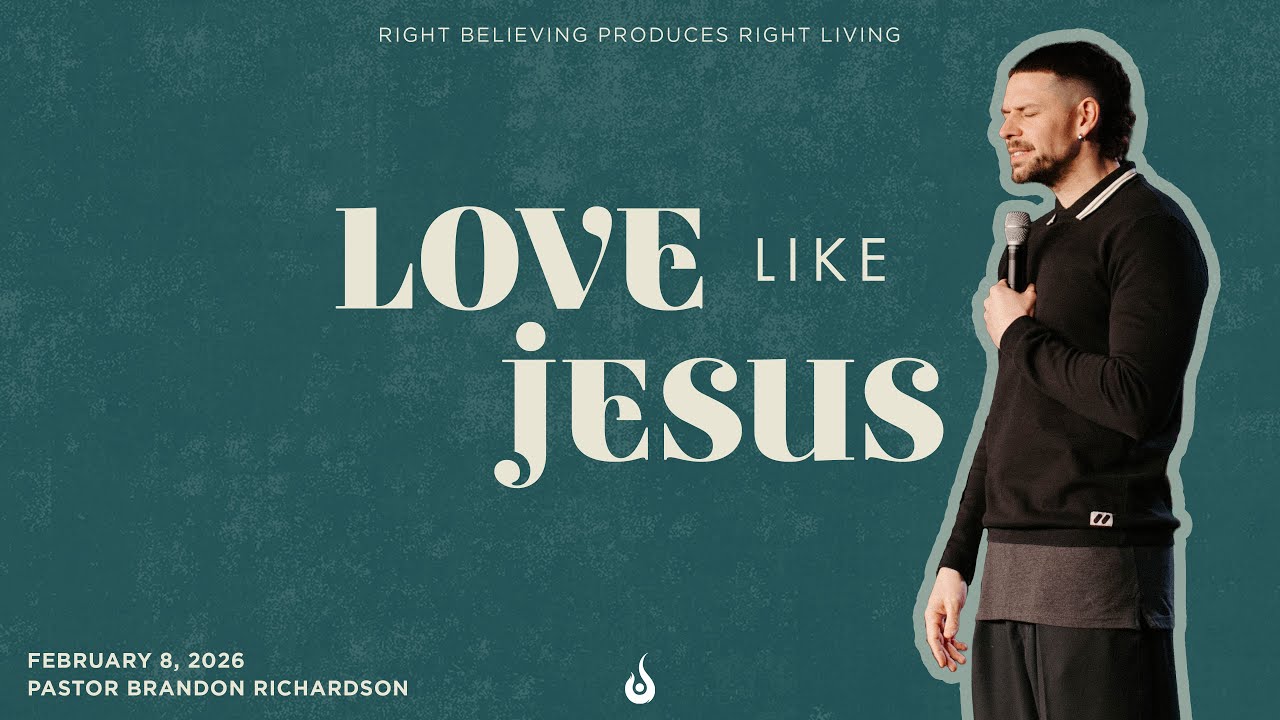
This message from Journey Church in Bend, part of the Love Like Jesus series, opens with greetings to those watching online, an invitation to hold up a Bible, and the sermon title: the King of Kings on Trial. Pastor Keith Kirkpatrick frames the message around a kingdom theme, saying Jesus did not come to establish a religion but a kingdom, and that repentance means changing our thinking because the kingdom of heaven is at hand. He then turns to Paul's charge to Timothy in 1 Timothy 6, which points back to Jesus' testimony before Pontius Pilate, and to Revelation's picture of the Lamb who conquers, setting up the claim that Jesus is sovereign even while he stands accused.
Working through John 18, Pastor Keith argues that although the scene looks like Jesus on trial, it is really the world that is on trial, and the central question is what kind of king Jesus is. Three points structure the text: the world binds what it cannot control, religion questions Jesus while relationship reveals him, and fear makes cowards of the confident. Peter's three denials are held up not as a verdict on him but as a mirror for anyone who has failed, with Pastor Keith insisting that failure is not final and that Jesus does not cancel Peter.
The final movement follows Jesus before Pilate, where Pastor Keith says Jesus' kingdom is not from this world but is still for us, greater rather than weaker. Pilate's question about truth is called the most dangerous question in history because truth was standing in front of him and he walked away, choosing convenience over conviction. The crowd chooses Barabbas, and the message closes with an invitation to believe in Jesus, a prayer of surrender, and words about forgiveness and adoption as God's children.
Take this with you
It is the world that is on trial
Pastor Keith reframes the trial scene in John 18: the question is not whether Jesus is innocent but what kind of king he is and what hearers will do with him. Pilate finds no guilt in Jesus, yet Jesus takes our guilt upon himself, so the trial exposes the heart of the observer as much as the accused.
Religion questions; relationship reveals
Pastor Keith distinguishes honest questions, which he says are welcome, from religious questioning that asks without wanting the true answer. In John 18 Jesus answered the high priest by pointing to his public teaching, saying he had spoken openly and said nothing in secret. Relationship, by contrast, reveals who he is.
Fear makes cowards of the confident
Peter's confident promise collapses under repeated questioning around a charcoal fire in John 18:25-27, including from a relative of the man whose ear he had cut off. Pastor Keith treats Peter not as evil but as afraid, using his story as a mirror for anyone who denies God by words or by silence.
Failure is not final with Jesus
The sermon insists that Jesus does not cancel Peter. Pastor Keith contrasts Peter, whom Jesus had warned in John 13:38 that he would deny him three times and who would later preach in Acts 2, with Judas, who headed down the road of despair. Grace is described as a free gift that cannot be earned, and John's account of Peter is left without commentary so hearers can see themselves in it.
The kingdom is not from here, but it is for you
In John 18:36-38 Jesus tells Pilate his kingdom is not of this world, which Pastor Keith says means greater, not weak. It is not built by violence, sustained by fear, or advanced by manipulation. Pastor Keith stresses that this otherworldly kingdom is still offered to everyone who listens to the king's voice.
The conversation,
in their words.
Transcript from the recording’s captions. Select any timestamp to hear the original audio.
Hey, very special welcome to all those watching online. I saw there's someone from Missouri, Arizona, Texas, uh all over Oregon, from Mount Hood to Jacksonville, Oregon. Come on, that's a pretty place. Uh so we just want to say hello. Can y'all shout hello real quick to those watching online? Hey, we love you and uh glad you're here today. If you brought your Bible, would you get out right now? Uh this is no ordinary book. I want you to hold it up in the air like you care. Keep it up there. And I want all of us, even if you didn't bring your Bible today, you can still participate. We're going to get in the word. I want you to shout word on the count of three. Here we go. 1 2 3. Word. We're getting into God's word. So God's word gets into us. The title of today's sermon is the King of Kings on Trial. The King of Kings on Trial. If you're taking notes, which you should take note, or or else you're going to forget what you've just heard, even if it's mental notes. The title of today's sermon is the King of Kings on Trial.
You know, there are over eight billion people that call planet Earth home. Over eight billion. That's a lot of opinions about a lot of things. It's been said that there are actually thousands of religions, which means that there are so many different people that worship different things or worship in different ways. But there's there's one way that stands out above them all, and that is the way of Jesus. Because Jesus did not come to establish a religion. He came to establish a kingdom. That's our theme this year is kingdom come. It's it's a theme that's important and close to the heart of Jesus. It's it's the first message he preached and the last Matthew tells us in chapter 4 that Jesus began to preach saying repent mean meaning change your thinking.
That's what repent means. We we should all repent. We should all change our thinking daily. And Jesus says repent. Here's why. The kingdom of heaven is at hand. Here's why you should change your thinking. The kingdom is here. Not some other day. Not a better day. that you can experience God's kingdom. Now, now Jesus did not just preach about the kingdom. He practiced it. He demonstrated for us what the kingdom of heaven looks like. Now, now here's where there's some tension in history when it comes down to faith and religion and belief systems. The Jewish people for many millennia. We're talking thousands of years, they waited for God's promised Messiah. God promised an anointed one. one who would rule and reign and bring forth his kingdom here on earth. So God's people were eager with anticipation for the one that would
rule. And when Jesus stepped onto this earth, there was some controversy. Is he Messiah? Is he the Christ? Because he's not ruling in the way that the world thought he should rule. So there are people even to this day who are Jewish people longing for Messiah, waiting for a ruler to reign. There was one particular man in the first century who was a Jewish man who did not believe Jesus was the Christ, the Messiah, the chosen one of God. In fact, he tried to stop Christianity. He did everything in his power to try to stop the way of Jesus until one day Jesus got a hold of his heart. When Jesus gets a hold of your heart, I'll tell you, he can change anyone. And what happens when he really gets a hold of your heart? You can't contain it anymore. You no longer are
the same person you used to be. You are who God says you are. And this particular person I'm referring to is Paul. And he wrote a number of the books we have in the New Testament. He had a spiritual son named Timothy. He took Timothy under his wings. And Timothy was a pastor. And this guy Paul, he just he just poured into Timothy. He wrote two letters to Timothy that we have in the Bible, first and second Timothy. And in his first letter to Timothy, he concludes his letter to Timothy and he says this, and I want to say this to you today as if you're my spiritual sons and daughters because I I I appreciate the passion that that he has. 1 Timothy 6, I want to start with verse 13. 1 Timothy 6:13, I charge you in the presence of God who gives life to all things. I I love the passion of Paul. He doesn't matter how old he is. It's like I'm begging you.
Pay attention to this. I'm charging you like don't live an ordinary life here. What I'm saying is what Paul says to Timothy. And today church, I'm saying it to you of Christ Jesus who in his testimony before Pontius Pilate made the good confession. Let's take a timeout for just a moment. This is very significant because this is where we're going today. In John chapter 18, it's Jesus on trial before the religious leaders and Pontius Pilate. Paul finds it necessary to tell Timothy that what Jesus said before Pilate is important. He he he's charging him. He's encouraging you that according to what Jesus said before Pontius Pilate and then he continues and says this in verse 14. Keep the commandment unstained
and free from reproach until the appearing of our Lord Jesus Christ. If I could just paraphrase this, keep the word of God. Jesus is coming. You don't want to be caught. You don't want to be uh surprised that you ought to get into the word of God and obey the word of God. You you should get into this book. Look at verse 15. Which he will display at the proper time. He referring to Jesus who is the blessed and only sovereign. That word sovereign means completely in control. The king of kings and the lord of lords. Somebody shout amen. Jesus is the king of kings and the lord of lords. John who writes not only about the life of Jesus in the book of John and three short letters first, second and third John, he writes the last book of the Bible, revelation. It is the revelation of Jesus Christ. He tells us
that there's an enemy of Jesus, Satan, along with an army that tries to stop God's plans. If you've ever felt like your life has been war, that's because you have an enemy of your soul. Satan is your adversary. He's the one that wants to stop you from surrendering to King Jesus. He does not want you to know that he is sovereign and supreme and has all control. And John tells us in the book of Revelation that in the end before Satan is locked up for eternity, there will be allout war against Jesus. And Satan is a convincer and he wants to convince even those on this planet not to surrender to King Jesus, but to actually go to war against him. So he says in Revelation 17:14, "They will make war on the lamb." The lamb is
Jesus. He's the one that paid the sacrifice for all of our sins. Like a lamb that would be brought to the temple. Jesus is the lamb of God. They will make war on the lamb. And the lamb will conquer them. We have a conquering king of all kings. I've read the end. He wins every time. For he is the lord of lords and the king of kings. and those with him are called and chosen and faithful. I don't know about you, but I want to be with him. I want to be on his side because in the end, he wins for he is the king of all kings. Today, we come to a text in John chapter 18, the final moments before Jesus goes to the cross. This is the culmination of
history. Everything changes at this point. Jesus has already prayed in the garden. Not because he was hiding, but because he was surrendering to God. And here's where we see who Jesus is. He's arrested. He's bound. And what we're going to see today is he's going to be questioned, mocked, accused. But let me tell you something upfront. Although it might look like Jesus is on trial, it's the world that's on trial. What will you do with Jesus? John 18 today is not a matter of is Jesus innocent or guilty. It's a matter of what kind of a king is he? What kind of a king is this that you would want to give your life to this king? Are you willing to listen to this king and do what this king says to do?
Because the last thing that he says in John chapter 18 is that those who are of the truth will listen to his voice. And so I just propose to you before we get into the text today. The King of Kings still stands before us today. Jesus is standing before you. No longer bound, no longer beaten, but he is the risen king of all kings. He has defeated the devil and he's defeated death. He is a king not because he forces anyone to follow them. He is the king not because he uses swords or power, but he invites you to surrender your life to him. He is the king from the beginning. Here's what we've covered thus far in John chapter 18 and where we're going today. It starts in a garden. They've arrested
Jesus. And today text we'll see they bring him before the religious leaders. They bring him before the political leaders. From religion to politics, from accusation to interrogation. Pilate asks him directly, "Are you the king of the Jews?" Jesus doesn't argue. Jesus doesn't panic. Jesus does not posture himself in fear. Rather, he says, "My kingdom is not of this world. This is the King of Kings. He stood before earthly power without fear because real authority does not have fear. Real authority does not need to shout. Pilate had temporary power. Jesus has eternal authority and power. Pilate asked the question at the end of today's text.
What is truth? Meanwhile, truth is standing right before him. This is the King of Kings. He was arrested but not overpowered. He was questioned but he was never confused. He was accused but he was never guilty. He was beaten but he [clears throat] was never broken. He didn't come with weapons because love was his strategy. This is the King of Kings. He is a king that does not come with force. He advances his kingdom with surrendered hearts. This is the King of Kings. And as we'll see today in John 18, Pilate found no guilt in him because he was innocent and he took upon your guilt upon his life because he loves you. This is the King of Kings. Today you can reject him. You can ignore him.
You could pretend like he doesn't exist, but neutrality is still a decision today. He is the one who stood on trial and today he stands before you. He is the king of all kings. Today, as we come to this text, I want to challenge you to listen to this voice of this king of all kings. If you brought your Bibles, we find ourselves in John chapter 18. We're going to cover the remainder of the chapter. Normally, I would have you stand for the reading of God's word, but we're going to cover so much. We're just going to take it in bite-sized chunks today. So, I'm not going to have you stand. Instead, we'll just take it one section at a time and we'll see what God has to teach us today. Point number one in today's text
before we read it is the world binds what it can't control. The world binds what it can't control. John 18:12. So the band of soldiers and their captain and the officers of the Jews arrested Jesus and bound him. First they led him to Annis for he was the father of Caiaphas who was the high priest that year. It was Caiaphas who had advised the Jews that it would be expedient that one man should die for the people. We're told here of a particular person who's called the captain. In other translations sometimes he's referred to as the commander. He's in charge. More than likely he would have been the executive over the garrison of of soldiers in Jerusalem. This was a very powerful person at this time. We're told
there's a band of soldiers. This would be upwards of 600 soldiers who came to arrest Jesus. Not only were there soldiers there, but there were temple officers. This would be the equivalent of police. These are these are Jewish temple officers to instruct to make sure the the the word and the law of God is practiced appropriately. So here you've got a band of soldiers. You've got militi or you got uh temple police officers here. And we're told that the captain comes in verse 12 and arrested Jesus and bound him. The world binds what it cannot control. They bind him like he's dangerous. They bind him like he's a threat, like he's somehow out of control. There will come times in your life that you're you're wondering, "Why am I being silenced for speaking the truth?" Amen.
Because the world does not understand what this message is about. It was just a few verses earlier in chapter 18 that with just his words, these very soldiers stumbled back and fell down as though dead. He's not being arrested because he's weak, but because he's willing. He willingly gives his life. He willingly gave himself over. Here they have ropes or chains, whatever they use to bind him. and they think that makes them powerful. They think that if they use force that they have control. We still have this same myth today. Most military might think that if we have the biggest missiles and we have the strongest military, then we're the most powerful. Even in our own nation, we we find that our sovereignty is with this great power. But I want you to see very clearly in this text, there is one that is supreme over all and that is Jesus.
He doesn't need missiles and nor does he need military might. Just his words alone will cause you to fall down. As we see he's arrested, we see him willingly laying down his life. And and and John takes an interesting turn in the in the text. And in fact, he introduces us almost to a subplot to another person here as he's telling the story of Jesus on trial. He also tells us about Peter. I think it's significant for you as the reader here, particularly for every one of us today, so that you understand in Peter's life that your failures do not define you. That when you compare your life to Jesus, you might make mistakes, but it was Jesus that went on trial for you. So, so as we better understand why in the world did this author John introduce to us this story of Peter, I think it's
so that you would relate to Peter in this story that you have the same need for Jesus. Let's continue our study in verse 15. Simon Peter followed Jesus and so did another disciple. Scholars would agree that more than likely this is John himself. He never referred to himself by name. He was the one that Jesus loved. He is the other disciple. But he inserts himself in the story along with Peter. Since that disciple John was known to the high priest, he entered with Jesus into the courtyard of the high priest. But Peter stood outside the door. Now the high priest here is the referring to is Annis. He was high priest earlier in the first century for just a few years. Uh his four sons uh preceded him as high priest including the current high priest Caiaphas. But it's really clear who still holds the power. It's Annis.
That's who they bring Jesus to first. So here they are at the home of the high priest. John and Peter enter into enter. But Peter, verse 16 tells us, stood outside the door. The other disciple who was known to the high priest went out and spoke to the servant girl who kept watch at the door and brought Peter in. This would be a young girl probably in her pre-teen to early teens who would just simply be the the door opener. She was in charge of bringing people in and taking them to the appropriate place or to the appropriate room. Uh John goes to talk to her. The verse 17, the servant girl at the door said to Peter, "You also are not one of this man's disciples, are you?" And Peter said, "I am not." The first denial.
Now the servants and officers made a charcoal fire because it was cold and they were standing and warming themselves. Peter also was with them standing and warming himself. This account is found in all four of the gospels. That is the good news of Jesus life. And what you read about this account is that Peter got so frustrated at this little girl, he actually cursed her out. He actually cussed to her. I don't know if you've ever been frustrated that something slips out of your mouth that you know you shouldn't say, but this is Peter in this moment. He he finds himself frustrated. He tried to take matters into his own hands earlier in the chapter when he whipped out a sword while Jesus was being arrested and that didn't work so well. And now he's being confronted. Aren't you one of the students of that teacher?
Are you not one of the disciples of that rabbi? And in that moment, he didn't stop and pause. He didn't minister to this wonderful young girl. Instead, he just simply declared, "I am not." Or as we read in other accounts, he said so much more. I want you to see clearly here what what's happening in this story that Peter's going to deny Jesus, but that never stops God's faithfulness. We'll come back to Peter, but let's continue with the story of Jesus. Here's point number two when it comes to King Jesus. Religion questions Jesus. Relationship reveals him. religion questions and and let me just take a side note here with the legal language at the bottom of this point here that nothing is wrong in asking questions.
Jesus is the king of questions. In fact, you you ought to ask questions. But when we talk about religion asking questions, it's asking and not wanting the true answer. It's it's asking with with wrong motives. Religion questions Jesus, but the but the more you have a relationship with him, it reveals who he is. So the high priest remember Annis then questioned Jesus about his disciples and teaching. That's what religion will do. We we read in the other accounts uh John does not note the exchange that's happening or that happens with both Annis and Caiaphas because uh Matthew, Mark and Luke share so much more that they accuse him and they accuse him and they accuse him. They're trying to find a reason or a fault in him and they're maliciously making stuff up. Jesus answered him in
verse 20,"I have spoken openly to the world. I have always taught in the synagogues and in the temple where all the Jews come together. I've said nothing in secret. Why do you ask me? Ask those who have heard me and what I said to them. They know what I said." When he had said these things, one of the officers standing by struck Jesus with his hand, saying, "Is that how you answer the high priest? Jesus answered him, "If what I have said is wrong, bear witness about the wrong. But if what I said is right, why do you strike me?" Annis then sent him bound to Caiaphas the high priest. Religion always asks questions. It wants to know where did you get these credentials? Where did you learn from?
By what authority do you do the things you do? It's interesting that the same questions that Jesus was asked are still asked of us today. When we do church in the park for the last several years, it's it's been uh just almost ironic or interesting that when we're doing baptisms in the river, some passerby will stop and actually ask, "By what authority is this being done?" And although it's may even be asked naively, it's it's it's of a religious spirit. And we answer the same question with the same answer by the authority of Jesus. We're simply doing what he's instructed us to do. He's given us his authority. And we we've come to to simply proclaim the fame of Jesus Christ to baptize in the name of the father, the son, and the
holy spirit. One God, triune, perfect in power, the one that changes our life, takes us from death to life. And as they they question Jesus, they're not so interested in getting to know Jesus. They're just simply trying to find fault in him. And as Jesus answers this particular uh uh question, he's simply stated, "I have hidden nothing." Under the umbrella of religion, there are secrets. You've always got to be careful if you ask a question and it's you you can't learn that yet or you can't learn that now. In fact, there are many religions that claim to be uh be a part of Christianity, but in truth, they're cults because they they hide
secrets. And Jesus doesn't defend himself emotionally. He responds with clarity and truth. I have spoken openly to the world and I have said nothing in secret. In other words, I'm not hiding anything. I'm not manipulating anyone. I'm not here to create a religion or create secrets. the truth has been out in the open because we know in Jesus own words he is the truth and as a result they slap him. Religion gets violent when it's out of arguments. This is the only result is oh we got to shut you up. You're not respecting. You're not honoring. And Jesus responds in an interesting way because the act that was done was illegal. No sentence
has been passed. He had not been condemned and nor should he have been a subject to abuse or any type of violence. In spite of this, nothing was done. The highest religious power sends them on to Caiaphas. Here's one thing I've learned with religious spirits. And when I say religious spirits, I'm just giving a name to demonic spirits because the devil likes to slip into the church and tries to slip into faith and and it's not of God. But religious spirits always want to control, manipulate, trap you. They sound true. They sound good. But religious spirits aren't of God. They're of the devil. And here's one thing I've learned about religious spirits over the years. And sometimes I've even been trapped myself is that they they rarely do things alone.
If they can't get to you, they're going to send you to another. We've had religious spirits in this church, and when you get them out, other ones come in. So, [snorts] we've got to be in our guard as as Paul would say, test the spirits. You got to see if it's of God or not of God. God is always good. He's not going to manipulate you, control you, or condemn you, or shame you, or trap you. He loves you. He's a good God. And what does Annis do? He sends him on to the next religious spirit. And I'm not talking about the flesh here. I'm talking about a spiritual world. So now we go from Jesus being on trial before Annis and now Caiaphas and we come back to Peter. This is important that we do some self-evaluation in our own hearts because point number three today is fear
makes cowards of the confident. It's amazing what fear will do. You got to be really careful making any type of decisions when you have fear in your heart. Those are emotions which emotions are of God. But it sure certainly shouldn't drive your life or dictate what you should do with your life. It should be the truth. It should be your faith which is founded on the truth. We read in verse 25, now Simon Peter was standing and warming himself. Remember there was a fire. Jerusalem, if you go with us later this year, we're going to Israel. Jerusalem is about 2600 uh feet above sea level. Uh so in this early spring Passover time when these things are happening in the wee early hours of the morning it can get cold. So here they have a fire and the only way to get warm is near the fire which is where Peter goes. So they said to Peter,
"You also are not one of the disciples are you?" He denied it and said, "I am not." Denial number two. One of the servants of the high priest, a relative of the man whose ear Peter had cut off, asked, "Wait, did I not see you in the garden with him?" This was just a few hours earlier, by the way. Peter again denied it, the third denial, and at once a rooster crowed. Fear makes cowards of the confident. Peter, like many of us, is often overly confident in certain areas of his life. He makes promises he can't keep. Like in John chap 12 when Jesus is revealing the things that will take place. It was Peter that said this in John 12:37.
Peter said to Jesus, "I will lay down my life for you." Have you ever made promises you haven't kept with the Lord? God, if you do this and come through, I'm going to do this for you. Or or maybe you say, "This year is going to be different." Or maybe you say, "I'm not going to do the things I've done before, and I I'm going to start doing things that that are are right." Peter makes a promise like many of us have done before. Jesus, I I I will die for you. But but as he's being interrogated himself, wait, weren't you with Jesus? You sound a lot like Jesus. You You have the mannerisms of Jesus. But in the third denial, it it was no longer about suspicion. It was certainty. That sword that's on your hip, that looks a lot like the sword that cut off my cousin Malcus' ear.
And by the way, I'm a soldier. I was right there behind him. I saw you. I looked you in the eyes. I was there. It's with certainty. You You were the one that was there. And what does Peter do? All of his confidence now is gone. And he becomes a coward. I am not. John at this point gives no more further commentary about Peter. It's as if he just drops the mic and leaves it there for you to see yourself in the story. There's no need to say what an idiot or what a coward. There's there's no need to say oh he failed when it mattered most. There there's no need to say like I can't believe he's a denier. There are come moments in our lives that we we've got to decide what defines us.
Are we going to go back to the way things were? Or we going to look forward to what God's going to do? And it's in this particular place, I'm just here to remind you that your failures do not stop God's faithfulness. Fear will cause you to forget what God has promised. But that doesn't stop God's love. That doesn't stop his faithfulness. Peter isn't evil. He's just afraid. And and and I know that all of us can relate to this in some manner or another because you will find yourself afraid in a relationship, afraid when it comes to your finances, afraid when it comes to your kids, afraid when it comes to your health. You will find yourself facing fear. And you've got to understand that your denial does not stop or negate God's faithfulness. He's always faithful. He's
always true. And some of you, you you may not deny God with your words like Peter did. You might do it with your silence. It might be at work when you could have stood up and said the right things. It might be in your home. It it might be in your neighborhood. And and we we'll all come to a point where when when we have denied God, we've got to determine, will I be like Judas that continued to head down the road of despair when he denied Jesus, or will I head back to Jesus? Because this is what you read in the story about Peter and Jesus. He doesn't cancel Peter. Jesus doesn't cancel Peter. Aren't you glad that he's not like a lot of people in our lives? That that when you've done me wrong, I'm going to do you wrong.
I'm going to block you. I'm going to give you a one star. I'm going to talk about you behind your back. I'm going to make sure that you never have access to my life. And then today we call these these things in the psychological world boundaries. But I just want to say Jesus has no boundaries when it comes to grace. You don't have to earn it. You don't deserve it. It's a free gift. God says, "I love you despite you." Somebody slap someone. Say, "Grace." Grace. Thank you, Jesus. Because failure is not final with Jesus. He's so good. He predicted. He predicted in John 13:38. He said, "Peter, are you really going to say you're not going to do this? Because let me just tell you the truth. You will deny me three times before the rooster crows. The rooster has crowed.
And here we have the culmination of our text. This is the turning point for Peter. He will not be defined by this denial. In Acts chapter 2, the first person that preached Jesus crucified and resurrected, Peter. He would be the one that would point people to the grace of God and the power of the Holy Spirit. He would be the one that would go reach the Gentiles, something he never thought he would do. He would be the one that would no longer be defined by his failures. He would be defined by the grace of Jesus. As we come to the last trial now, Jesus is going to be passed on to the politicians. And he's going to teach us
in this text that the kingdom that he preached about is not from here. The kingdom is not from here. It's not like the ways of the world. So when we're trying to compare our government systems of this world to the kingdom of God, there's no comparisons. But just because the kingdom is not from here does not mean it's not for you. The kingdom is not from here. But the kingdom, do not be mistaken, is for you. It's yours if you want it. John 18:28. Then they led Jesus from the house of Caiaphas to the governor's headquarters. It was early morning. They themselves did not enter the governor's headquarters so that they would not def be defiled, but could eat the Passover. The Passover was at hand, and if they went into the home or a place of a Gentile, they would be unclean for seven days. So, they couldn't participate in
Passover. So they pushed Jesus into Pilate's place. Pilate went outside to them and said, "What accusation do you bring against this man?" They answered him, "If this man were not doing evil, we would not have delivered him over to to you." They're tricking. They're trapping. That's what the devil loves to do. Pilate said to them, "Take him yourselves and judge him by your own law." The Jews said to him, "It is not lawful for us to put anyone to death." Which it actually is lawful, but not at this time and in the way that they wanted to be done. This was to fulfill verse 32, the word that Jesus has spoken to show by what kind of death he was going to die. We're going to come back to that. So Pilate entered his headquarters again. He called Jesus and said to him, "Are you the king of the Jews?" Jesus answered, "Do you say this of your own accord or did others say it to you about me?" You've got to answer
that question as well. Your faith cannot be the faith of your parents or a spouse or any other person in your life. What do you say about Jesus? Is he your king? Praise be to God. Mike, good to see you. Uh verse 35, Pilate answered, "Am I a Jew? Your own nation and the chief priests have delivered you over to me. What have you done?" Jesus answered, "My kingdom, here it is, is not of this world. If my kingdom were of this world, my servants would have been fighting that I may not be delivered over to the Jews. But my kingdom is not from the world." Then Pilate said to him, "So you are a king?" Jesus answered, "You say that I am a king. For this purpose I was born, and for this purpose I've come into this world to bear witness to the truth.
Everyone who is of the truth listens to my voice." Pilate said to him, "What is truth?" Jesus has been brought before Pilate to be condemned to death. It's it's clear. They've made their intentions clear. The religious leaders have pushed Jesus to the Roman governor over Judea, which is a huge region, by the way. Normally, Pilate would not even be in Jerusalem because he doesn't like the Jews. He's a harsh man. He's hard on the Jews. But he's in Jerusalem because of Passover. So, he's there to squaltch out any type of political upheaval because the Jews were upset that the Romans were oppressive over them. So, he's simply there to make sure that there's law and order. but just happens to be that while he's there, the Jewish
leaders bring him before Pilate to be put to death. Now, he's just asking a really obvious question. What has he done to deserve death? And their answer is, well, we would never have brought him to you if he didn't deserve it. Just kill him. So, Pilate now has to put him on trial through an interrogation to simply ask, "What is it that you've done?" And this is where we learn about the kingdom. Jesus started off preaching the kingdom and he ends his life speaking of the kingdom. When we look at what the Jewish leaders are doing, they they think they're being wise. They they they think they're being uh really tactful in what they're doing because in the in the Jewish tradition of the day, if you put someone to death, you would typically stone them. They would be on the ground.
Sometimes you would even bury a person up to their waist. And then those that witnessed the wrongdoing and those who had the authority would take rocks and stone someone to death. At the time, the Roman form of execution was on a cross. It was much more harsh. So, so as they're bringing Jesus to Pilate, they think they're doing something on their own will. But ultimately, John notes this was to accomplish what Jesus said earlier. What did Jesus say earlier? John 12:32 when I Jesus said when I am lifted up from the earth will draw all people to myself. He doesn't say he'll be down on the ground when he dies. He says he will be lifted up and not for some people but for all people. That's hope for everyone.
This isn't just for the Jewish people. This is for all people. He will be lifted up. He said this verse 33 to show by what kind of death he was going to die. Now, so the Jewish form of death was stoning. But in the Torah, which is the law of God, the instructions, the commandments of God, Deuteronomy 21:22 and 23 says, "If a man has committed a crime, punishable by death, and he's put to death, and you hang him on a tree." So if someone dies on a tree, his body shall not remain all night, but you shall bury him the same day. For a hanged man is cursed by God. So if people believe Jesus is the Messiah and he dies on a tree according to the laws of God, this discredits him as a Messiah because he's cursed by God, not blessed by God. Right.
So, so they're thinking if we can just get him to die on a tree, it'll prove to the world that he has no authority from God. He can't be the Christ, the Messiah, but he's cursed by God, and we'll just move on. Ironically, they're fulfilling the very promises of God. He did not deserve death, but we do. So the way Paul works this, quoting from this text, he says in Galatians 3 13-4, Christ redeemed us from the curse of the law by becoming a curse for us. For it is written in the Torah, Deuteronomy, that I just read to you, cursed is everyone who is hanged on a tree. [snorts] So that verse 14, in Christ Jesus, the blessings of Abraham might come to the Gentiles, that's anyone who's not Jewish, so that we might receive the promised spirit, that's God himself, through faith. Do you understand how wildly awesome this is?
Jesus, who did not deserve death, Jesus, who never sinned, took our sin on the cross. That's what he did. The Bible says it in 2 Corinthians 5:21. For our sake, he made him to be sin, who knew no sin. So that in Jesus, we might become the righteousness of God. So that by believing in Jesus, you're no longer defined by your failures, your sin, or anything done to you. You're defined by what was done for you in Jesus Christ. You're righteous in Jesus. It looked like Jesus was on trial, but the world's on trial. The most powerful man in all Jerusalem is asking Jesus the question. In verse 33, are you the king of the Jews? And Jesus response is interesting that he explains his kingdom. My kingdom is not of this world, which does not mean it's weak. It means it's greater. It's
different. Don't expect that the ways of God are like the ways of this world. This is not built by violence. It's not sustained by fear. It's not advanced in manipulation. Jesus preached a great sermon and he said, "Blessed are the pure in heart, for theirs is the kingdom." Jesus taught us to pray, "Let your kingdom come here on earth as it is in heaven." So here you you've got Jesus declaring this bomb. For this purpose I was born. For this purpose I've come into the world. He's not like any other man. That's why he came. He's the king of truth to bear witness to the truth. He is truth wrapped in flesh. He came for the truth. And everyone who said he says who is of the truth listens to my voice.
So if we listen to Jesus, we have the truth. If we reject Jesus, we're rebelling against him. And the most qu the most dangerous question in all history is asked by Pilate. What is truth? I call it the most dangerous question because it still reverberates in history. Because truth cannot change which tr truth cannot be different from one generation to another. And what does Pilate do with this question? He walks away. Truth is right in front of him and he doesn't wait for an answer. Pilate chooses convenience over conviction. I will tell you if you choose conviction, it will be hard every time. When you choose not to sin, when you choose to obey God, when you choose to do what's right, it's not going to be easy,
but it will require a core conviction in your heart to do what is true. So, we conclude today with the last few verses after Pilate said this, what is truth? He went back outside to the Jews and he told them, I find no guilt in him, but you have a custom that I should release one man for you at Passover. So, do you want me to release to you the king of the Jews? They cried out, "Not this man, but Barabbus." Now, Barabus was a robber. He could find no guilt in him. And yet, he still chose sin over Jesus as a savior. I'll tell you today, you have a choice. Rebellion against Jesus or you get to choose the redeemer who even if you failed him, he's going
to love you and forgive you. Fruit Pilate, he he knew the people. He knew earlier that week people were chanting Jesus. Hosana, save us. That name was being echoed through Jerusalem. Yeshua. Yeshua. That's the Hebrew for Jesus. So he he believes I can find no guilt in him. How about I let him go for Passover. It's my gift to you. Yet he had miscalculated the crowd. People will do things in crowds they would never do on their own. And the religious spirit has got the crowd all worked up. I was in New York this week and we rode hundreds of subways all week. And subways are interesting places. You never know what you're going to get. And on on one occasion, we were in the subway and there was an African-American man that that proclaimed out loud, "Ladies and
gentlemen, all those who could hear my voice and then he busted into a spoken word." It was powerful. It was extremely intelligent. And he talked about the oppression of the African-American people over the centuries. and he he speaks forth about what's even happening in Africa today. And as he's saying these things, there was there was a group of of white and I could only suppose maybe middle upper class young men who were grouped together, about five of them standing close to our family. And as this man was given a spoken word on the subway, and granted nobody paid to hear the spoken word that day, but as he's sharing this, they they began to mock him. Shut up. That sucks. under their breath. And all I could think of if if they were by themselves, they would never have done that.
But when you got your buddies close by, you sure can act tough and look tough cuz you got a crowd with you. And sometimes we do stupid stuff in crowds. Th this is the place where the crowds chant send out Barabus a Jewish zealot who by force was trying to overcome the Roman Empire. You see many people in religion think that spiritual deliverance will happen through political deliverance. It's it's it's a it's a tool of the enemy to think that somehow if the right person politically was in charge, you would be spiritually set free. But what the world really needs and when I say the world you need, we need is spiritual deliverance from sin.
And that kingdom is not like the kingdom of this world. So as they chant Barabus, they're simply fulfilling the will of God that the King of Kings has surrendered his life to die for your sins. We're going to get to this eventually in the coming weeks, but he's not dead. He's alive. This is the King of Kings. And today I ask you, have you heard his voice? Have you believed in this king? Because when you do, he actually enters in you through the person of the Holy Spirit. God the Father allows you to be his child. You're adopted into his family by simply saying yes to Jesus. John says this in chapter 1, to all who did believe in him and received his name, he gave the right to become a child of God. And when you're a child of God, you get access to all authority. You get every spiritual blessing. You get the hope of heaven. You are forgiven of your sins.
You're redeemed because of King Jesus. You have the anointing of God himself, the Holy Spirit in your life. And if you've never done that, right now is your invitation. If you'll just close your eyes. This is between you and the Lord right now. I'm going to invite you into that decision. The Bible says today is the day of salvation. Don't wait another day. This is a great time for you to surrender your life. In fact, it is the greatest decision you'll ever make. If you want to give your life to Jesus today and believe in him for the forgiveness of your sins, would you s simply slip your hand up and keep your hand up? We're going to give you a booklet that tells you your next next steps. Go ahead and just put your hand up nice and high. This changes everything. Say, "I am a child of God." Praise be to God. Yes. God sees you. He loves you.
You've never been overlooked by God ever. He's been with you the whole time. Anyone else today? [music] Just raise your hand high. You're never too young. You're never too old. You've never sinned so greatly. He won't forgive you, set you free, and redeem your days. Anybody else? Just raise your hand nice and high. I want [music] to see you. What a way to start the year off. Say yes to Jesus. See, going to church doesn't [music] save you. You can't be good enough to get into heaven, but Jesus can get you there. Anyone else? Just raise your hand high. I'm so grateful for the courage of someone to raise their hands because from that day forward, it changes everything.
I want to [music] all you could open up your eyes now. I want you to stand to your feet. I want to pray with those of you who want to believe in Jesus. And we're going to sing one last song together before you leave. See, our our hope and dream and desire is not that you'd hear a message and learn a little bit more about the Bible, but that God's kingdom would come in our lives from this day forward. That you would establish his kingdom in [music] your life. And that starts by just simply saying yes. So for those who want to follow Jesus, doesn't mean you won't fail, but it means his grace will [music] always be sufficient. Would you just pray this short prayer with me? Prayer is talking to God. It's listening to God. you can do anywhere at any time. [music] We're going to do this together as a family. So, if you've believed in Jesus, let's let's join in this prayer together. King Jesus, be the Lord of my
life. Forgive me of my sins. You are my savior. I receive the Holy Spirit. I receive your kingdom. I want your will to be done in my life as it is in heaven in Jesus name. Amen. And amen.
Read · talk · practice
Keep growing.
Together.
Reading the trial rightly
Pastor Keith claims that although John 18 looks like Jesus on trial, it is really the world on trial, and the real question is what kind of king Jesus is. This section invites reflection on how hearers approach the text and what verdict they are personally rendering.
John 18:12-40
- Pastor Keith says neutrality about Jesus is still a decision. Where do you notice yourself staying neutral, and why?
- If the trial scene is really about what kind of king Jesus is, what kind of king have you been expecting?
- What would it look like to listen to the king's voice rather than merely discuss him?
Binding what cannot be controlled
Pastor Keith observes in John 18:12 that the soldiers bound Jesus as if he were dangerous, though earlier his words had caused them to fall back. He emphasizes that Jesus was not arrested because he was weak but because he willingly gave himself over, and that Jesus remains supreme over all.
John 18:12
- Pastor Keith says Jesus was bound not because he was weak but because he was willing. How does that shape the way you read the arrest scene?
- Pastor Keith says there are times you may be silenced for speaking the truth. How have you experienced that, and how did you respond?
- What would change if you believed Jesus is supreme even when circumstances look like he is losing?
Religion versus relationship
Pastor Keith distinguishes asking questions honestly, which he says is welcome, from religious questioning that does not want the true answer. Jesus answered the high priest in John 18 by pointing to his public teaching, saying he had spoken openly and said nothing in secret, and he responded to being struck with clarity rather than emotional self-defense.
John 18:19-24
- What is the difference between a question that seeks truth and a question that seeks to trap or control?
- How does Pastor Keith describe Jesus' response to the high priest and to the officer who struck him?
- Pastor Keith says Jesus hid nothing. How does that openness shape the way you think about relationship with him?
Fear, failure, and Peter
Peter denies Jesus three times, and Pastor Keith frames the story as a mirror rather than a verdict. Fear makes cowards of the confident, but failure does not stop God's faithfulness, and Pastor Keith contrasts Peter's return to Jesus with despair.
John 18:25-27 · John 13:38 · Acts 2
- Where has fear caused you to forget what God has promised?
- Pastor Keith says some deny God not with words but with silence. When has that been true of you?
- What is the difference between Peter's path back to Jesus and Judas's path of despair, as Pastor Keith describes them?
A kingdom not from here
Before Pilate, Jesus says his kingdom is not of this world, which Pastor Keith insists means greater rather than weak. Pilate asks about truth with truth standing in front of him, and the crowd chooses Barabbas instead. Pastor Keith also explains Galatians 3, where Paul says Christ became a curse for us by being hanged on a tree.
John 18:36-38 · John 18:39-40 · Galatians 3:13-14 · Deuteronomy 21:22-23
- Pilate walks away from truth rather than waiting for an answer. Where are you tempted to choose convenience over conviction?
- Pastor Keith says Jesus' kingdom is not built by violence or advanced by manipulation. How does that differ from what you expect from power?
- Pastor Keith explains that Christ became a curse for us. What does it mean to you that Jesus took what we deserved?
Answers from this recording
Start a conversation.
What is the main point of this sermon on John 18?+
Pastor Keith argues that John 18 looks like Jesus on trial, but really the world is on trial, and the central question is what kind of king Jesus is. The sermon unfolds in three points: the world binds what it cannot control, religion questions Jesus while relationship reveals him, and fear makes cowards of the confident. It closes with Jesus before Pilate declaring a kingdom not of this world (John 18:36-38), and Pilate walking away from the truth standing in front of him.
How does Pastor Keith move from the trial scene to an invitation at the end?
What does the sermon say about Peter's denial?+
In John 18:25-27 Peter denies Jesus three times, and Pastor Keith reads the account as a mirror rather than a verdict. He says Peter is not evil but afraid, and that fear makes cowards of the confident. Pastor Keith notes that Jesus had predicted the denial in John 13:38 and did not cancel Peter, and he points to Peter later preaching in Acts 2 as evidence that failure is not final.
How does the sermon distinguish Peter's response from Judas's?
Why does Pastor Keith say religion questions Jesus?+
According to Pastor Keith, religious questioning asks but does not want the true answer, and he distinguishes that from honest questions, which he says are welcome. In John 18:19-24 Jesus answered the high priest by pointing to his public teaching, saying he had spoken openly and said nothing in secret, and an officer struck him for it. Pastor Keith contrasts that questioning with relationship, which reveals who Jesus is.
How does Jesus' response to the high priest model clarity rather than self-defense?
What does it mean that Jesus' kingdom is not of this world?+
In John 18:36-38, Pastor Keith says Jesus' answer to Pilate does not mean his kingdom is weak but that it is greater and different. It is not built by violence, sustained by fear, or advanced by manipulation; it advances through surrendered hearts. At the same time, Pastor Keith insists that just because the kingdom is not from here does not mean it is not for you. Jesus came to bear witness to the truth, and those who are of the truth listen to his voice.
Why does Pastor Keith call Pilate's question about truth dangerous?
What invitation does the sermon end with?+
The sermon closes by asking whether hearers have heard the king's voice and believed in him, describing salvation as a free gift rather than something earned by attending church or being good enough. Pastor Keith cites John 1, that all who believed and received him were given the right to become children of God, and he invites anyone who wants to give their life to Jesus to raise a hand and leads a short prayer acknowledging Jesus as Lord, asking forgiveness, and receiving the Holy Spirit and the kingdom. He then announces a final song before the service ends.
What does Pastor Keith say about becoming a child of God?