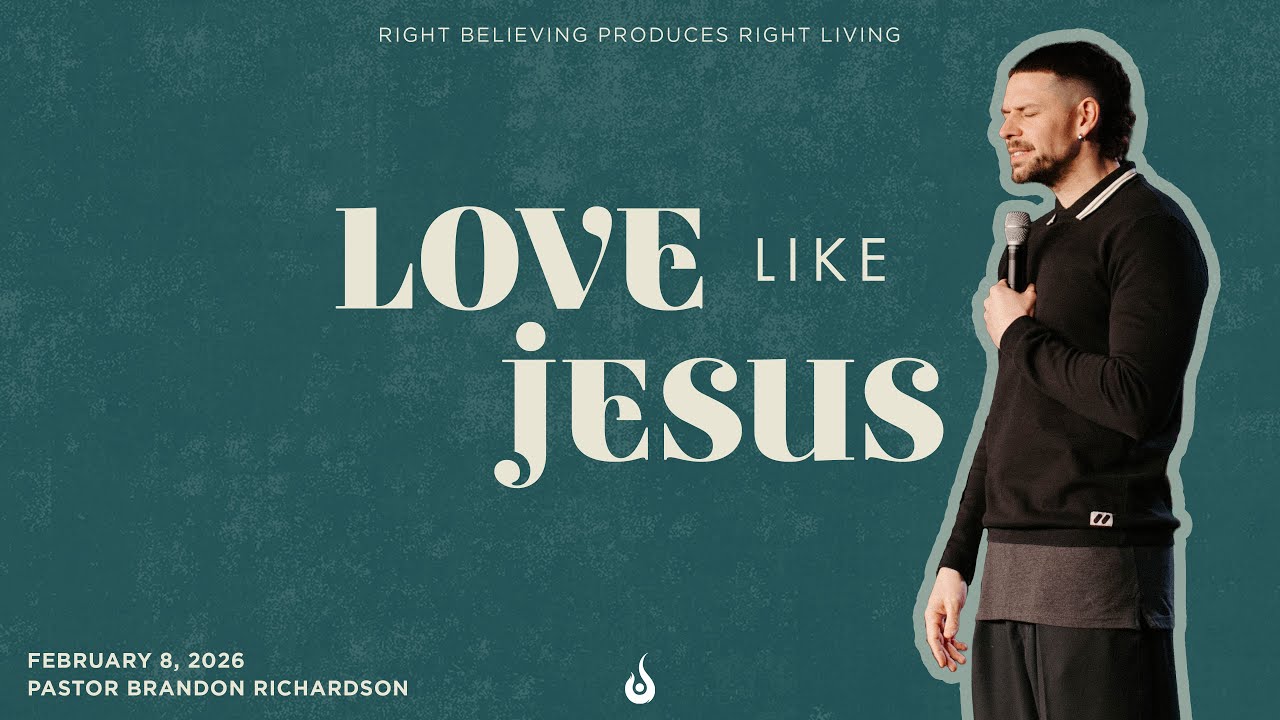

Go a little deeper
Pastor Keith Kirkpatrick closes a year-long walk through the Gospel of John by turning to its final chapter, where Peter—who denied Jesus three times—meets the risen Jesus on a Galilean shore. He frames the scene around a charcoal fire, the same kind of fire beside which Peter had failed, and argues that God is not finished with people who have failed. He notes that the book ends in Galilee rather than Jerusalem and that the last scene of a life or a story matters as much as the beginning.
The middle of the message follows Peter back to fishing as a picture of regression rather than recreation: when he does not know what to do, he returns to what is familiar, and an all-night catch of nothing follows. Pastor Keith treats Jesus's question from the shore, the command to cast the net on the right side, and the catch of 153 fish as a pattern of obedience producing abundance. He argues that Jesus meets the disciples in disappointment without condemnation and that one obedient step can precede breakthrough.
The message ends with Peter throwing himself into the sea, breakfast waiting on shore, and Jesus asking three times whether Peter loves him. Pastor Keith distinguishes agape and phileo love in the exchange and reads Peter's more cautious answer as a man who will not overpromise again. He concludes that love for Jesus is expressed in action—feeding his sheep—and in a simple call to follow. He then invites people to believe, to come out of the boat, and prays with those responding, while noting that following Jesus can cost dearly.
Take this with you
The last scene matters
Pastor Keith insists that how a life ends carries weight, and points to John 21 ending his Gospel with the restoration of a man who had publicly failed. Failure is not treated as the final word about Peter, and the message extends that posture to anyone who has woken up with regrets.
Familiar places can be regression
In John 21:3, Peter's decision to go fishing is read as a return to identity and comfort rather than a hobby. Pastor Keith argues that going back to old patterns produces emptiness, illustrated by an experienced crew catching nothing all night, and that hungering and thirsting for righteousness is where satisfaction is found.
One obedient step
In John 21:6, casting the net on the other side of the same boat is framed as the moment everything changed. Pastor Keith says the breakthrough someone is praying for may be one act of obedience away, and that obedience to Jesus is a blessing rather than a burden.
Grace meets you at the fire
In John 21:9, Jesus has a charcoal fire and breakfast prepared before any conversation about failure. Pastor Keith connects that specific detail to the fire of Peter's denial and says grace invites people to the fire rather than away from it, using what once marked failure as a place of restoration.
Love for Jesus takes shape in action
In John 21:15-17, Jesus's threefold question about love leads to a commission to care for his sheep. Pastor Keith draws the conclusion that loving Jesus shows up in forgiving, serving, and sharing faith, not in staying in the boat.
The conversation,
in their words.
Transcript from the recording’s captions. Select any timestamp to hear the original audio.
Well, now it's time to get in the word. You ready to receive a word from the Lord? If you brought your Bible, hold it up in the air like you care. Come on, somebody keep it up there. All right. Even if you didn't bring your Bible, you could join with us. I want you to shout word on the count of three. Shout it with me. Ready? Here we go. 1 2 3. Word. We're getting into God's word. So, God's word gets into us. So important. I don't know who I'm talking to today, but if you've ever woken up with regrets, this message is for you today. I don't know who I'm talking to, but if you've ever woken up and realized that you've made mistakes, you've failed, you you've done some things you shouldn't do, this message is for you today. If if you came to church, I'm going to take off my glasses.
If you came to church and you're not in the place you want to be, no matter what your age is, no matter where you are spiritually in your journey of faith, if you came here and you're not where you want to be, this message is for you. God has a word for you today. It's in the book of John, chapter 21. If you want to turn there right now, John, chapter 21. It's the last scene of the book of John. It's the very last chapter. In fact, the the the the book ends centering on one particular person. His name is Peter. And he's failed miserably. He's denied Jesus three times. And we discover in this particular chapter that God doesn't care about our past. He cares about where you are presently because he's given you a future and a hope.
And this book is all about the sunrise of life. A sunrise represents a new beginning. A sunrise reminds us of God's new mercies. A a sunrise reminds us that God wants to do a new thing in your life. Have you ever noticed that there are certain senses that just take you back to familiar times? You know, it's like you just smell something. It just takes you back to that moment, maybe your childhood or some particular place. Like you go into an old dusky dank church. Have you ever like been in that place? Is dank a bad word? Uh, okay. I came out of my mouth. I'm like, are you allowed to say that? What does that even mean? But have you ever gone into a church and you realize it smells like that other church in a completely different place? It's like a familiar smell. Well, last week I was in La Hoya and there are all these sea lions and it's pup season. So there's these little puppy sea lions.
They're so cute and the water was crystal clear and it was perfect blue sky 82 degrees and everything was great and you got that salty uh smell in the air. But there was also something else in the air. The smell of fish. It was like a rotting fish. reminded me of going to the wararf in San Francisco as a little child. It just it just brought up these memories. Or how about waking up to the smell of brewing coffee? How many of us over 40 could just remember that good good song? You know, the best part of waking up is folders in your cup. Now, aren't you glad we've come a long ways when it comes to coffee? It ain't folders in our house. But I heard the coffee brewing this morning. It was must have been 4:00 a.m. and I heard I heard this noise. I was like somebody breaking in our house and it was just the coffee. I preset it the night before. I was like turning on.
It's like I I opened my door and I smelled fresh brewed coffee. Oh, it's just wonderful smell. Or how about this one? How about the smell of a campfire? I mean, it's one thing to watch a campfire to see those flames and to hear the crackling of the wood burning. But there's just something else about the smell of a campfire because when you leave the campfire, you still smell like a campfire. Have you ever noticed that? is just something about a campfire. And today we come to a text that's surrounding a campfire. It's a reminder of Peter and where he's been around the fire and what God does in our lives that he'll actually take your failures and and here's the good news of God today is he actually restores us and he empowers us. He just does not want to leave you the same. He loves you right where you are, but he loves you too much to leave you the same. And we come to this last chapter of this incredible book called John. And I just remind you that the last scene matters.
Nothing's worse than watching a movie where you get immersed in the characters only for it to end poorly. You're like, "Whoa, wait. That's not the way it could have ended." So, it is in life. The older I get, the more I realize that it's not how you start your life, it's how you end your life. There are too many uh people who look like they're doing good things and then they fail miserably in the end, and you don't even remember their good things. You remember their failures. And we've got a God that wants to meet us in our failures. He wants to restore us. And as we finish up this journey in the book of John, can you believe we've been studying John for over a year? Hasn't it been a great book? But today, we're going to come to the conclusion of this book. And we see that Jesus is resurrected. And he does not reveal himself now to a crowd. He does not reveal himself and do another miracle or a healing. He does not reveal himself in
the temple. He does not reveal himself in the place that we might expect it. Instead, we find Jesus on the beach with a bonfire. That's my God. He's by the the shore of the Sea of Galilee. John refers to it as the Sea of Tiberius. For back in the day when there would was an emperor of Rome, they would often name things after themselves. I know that's hard to to understand, but when they really believed in themselves, they'd put their name on the side of the building. And and so, uh, Tiberius named the sea after himself. Did anybody get that little joke? No. Okay. Leave politics out of church. Okay, John refers to it as the Sea of Tiberius, but it's also known as the Sea of Galilee. It's a freshwater lake. Today, if you go to Israel, it's also known as David's harp because the body of water is in the shape of an ancient harp. And we find here that Jesus is on
the shore of this water. God often will use water. Water uh spiritually uh speaking is a reference to chaos. You know, you get out on a large body of water, things are out of your control. But from the beginning, we we have a God who's in complete control. The Bible teaches us that God is sovereign, which means he's always in control. Genesis 1:2 tells us that the spirit hovered over the waters. We see that God is always in control. When the Israelites were up against the Red Sea, God parted the waters. When they came up to the Jordan River, he stopped the water. So we see with God's people, both Elijah and Elisha threw their cloaks into the Jordan River and the the river parted.
And so we see even in the New Testament what God would do with water when they were in a storm. Jesus simply had to say, "Be still." And the wind and the waves ceased. He has control over the storms. We see that Jesus walked on water. And once again, we see in the very last scene of this book as John points us to who Jesus is, water. Now, why are they in Galilee? We see that Jesus died in Jerusalem. He was buried in Jerusalem. He rose from the grave in Jerusalem. But now, the book ends in Galilee, almost 80 miles north of Jerusalem. And we pick up in the scene here and we're reminded that when the Lord met with Mary Magdalene, he commissioned her and
sent her out. Matthew tells us, if we go over to that book about Jesus life in Matthew 28:7, here's what Mary was told. Then go quickly and tell his disciples that he's risen from the dead. Now, if you don't know this, it was a scandalous things to tell a woman because women were not credible witnesses. But with God, we see that he does things differently. He doesn't do things like the world. Mary Magdalene was the first one that got to witness the resurrected Jesus Christ. Now, she just wasn't any woman. This is a woman with a past. The Bible tells us that she was tormented by demons, but Jesus actually set her free. And now she's told to go out and tell this message, share the good news that Jesus has risen. But the message goes even further from there. And behold, he is going before you to Galilee. There you will see him. See, I have told you.
And so now we pick up in this story at the Sea of Galilee on the shores where God's going to do a good work. Sometimes the most powerful restoration is not a message of what you've done wrong, but what God's going to do right in your life. The message of restoration is not God coming to condemn you, but to offer you the invitation of his compassion. Hey, let's dive right in. Normally, I would have you stand for the reading of God's word, but today we're going to skim the chapter. I'm going to give you homework that you would go read the entire chapter today. But let's start with the end in mind. Anybody like dessert before they eat their meal? Uh let let's go to the very last verse of the book of John and let's see how he he leaves us in John chapter 21. The very last verse of this incredible book about
Jesus life. Here's what John the writer says. He says, "Now there are also many, everyone shout many, many other things that Jesus did. Were every one of them to be written, I suppose that the world itself could not contain the books that would be written. Oh, I love how John just reminds us, oh, our God has done more than you can imagine. He's done more miracles than are recorded here. He He gave us seven miracles so that we would understand he's the God that can do anything. He told us seven great I am statements about Jesus that came out of his own mouth. But now John tells us, "Lest you actually think that this is what Jesus did." Oh, no, no, no, no. He did more. Oh, let me tell you this today. John wrote this down to remind you, God can do more in your life. If
you think what God's done is finished, he's not done with you yet. He could do more. He could do more than you can imagine. You haven't even You haven't even tasted the best of what God's going to do in your life. We can look at this book and see that we have a God of abundance. We have a God of provision. We have a God of healing. We have a God of salvation. We have a God of restoration. There is nothing that God can't do. And John just reminds us that if we knew it all, the fact is, if you knew everything God was going to do in your life, you'd probably freak out. Sometimes he takes his time to do his work because you got to mature just a little bit. You got to go through some things to realize God always knows what he's doing. So John leaves us just with a glimpse that God is greater than you can imagine. Now, we jump back to the
beginning of this chapter. And there's a question that I believe God is asking every one of us today. It may be the most important question that you can answer in your life. It's the very question we're going to see in the text today. Do you love Jesus? Do you love Jesus? And if you respond to that question, it demands an answer to how. Well, let's dive in. Verse one of chapter 21. After this, Jesus revealed. Everyone shout revealed. Revealed himself again to the disciples by the sea of Tiberius. That word revealed matters. It matters to you, my friends. We have a God that reveals himself. He always has. From the beginning of history, the enemy would like to think
you to have you think small of God. He would like you to come to your own conclusions about who God is. Don't you ever listen to the the the media when maybe a movie says that he's a distant deity to you, that he's the big guy in the sky? No. He's a God that reveals himself. He's a God that loves you so much that he reveals himself to you at the right time. He reveals himself to you not in your perfection, not when you've been better in your life, but he will reveal himself to you even in your failures, even when you've made mistakes. And I need you to know today that God is trying to reveal himself to you. He doesn't want to hide anything from you. He doesn't want you to think that he's just this big guy watching everything you've done wrong with a crooked finger who's getting ready to condemn you when you've done something wrong. No, he's ready to meet with you right where you're at. And I believe
today confidently he's not done with you yet. The fact that you're still breathing and your heart is beating tells me that God still has a plan. Jesus is still revealing himself today. Peter says something painfully human, something that doesn't sound sacred or even spiritually, but it's in the Bible. He simply says this statement. He says,"I am going fishing." I was thinking some of the men might say, "Amen." Uh, but I I've come to find out after the first service, it's not just the men that fish around here. There's some women fishermen. Let's go, ladies. We live in a a place of of of abundant fishing here. fly fishing, regular fishing, all the different fishing. I don't fish, so I can't give you all the fishing phrases, but but I know there's fish around here, and I know that there there's people that fish
around here. And even in this church, you know, that's the truth. I don't even eat fish. I like to look at fish, but just leave them in the water. Peter says, "I'm going fishing." Now, he says this out loud and his friends are like, "Well, we're going fishing with you." Now, I I need you to understand the text here because John includes this in the last scene of Jesus life for a reason. This is not recreation. This was his profession before he followed Jesus. This this was his identity. This is all that he knew. This is something that was so familiar with him. So I I want us to see the spiritual truth behind this. And that is when you don't know what to do, you go back to what's familiar.
When you don't know what to do, you go back to what's familiar. So So the issue here isn't that he went fishing. Because this is not about recreation. This is about regression. This is about him just going back to what he understands, what's comfortable, what what's predictable. This is a guy that's made some miserable mistakes in his life. And he doesn't just impact his own life. He's a leader. Other guys go with him fishing. I know in this church, we've got a lot of fishermen, and as I learned for a service, fisher women, uh, that that that even professionally fish for a living. We've got guys that go up to Alaska and fish. We've got a guide that goes all over the world and takes people fishing at exotic places. We've got a a fly fishing shop. What's the name of your fly fishing shop? The Hook.
The Hook. Okay. I was hoping Josh would be here first service so I could at the hook. Oh, he's at the hook today working at the fly fishing shop. Uh, so we got we got the hook which is in Sun River. Uh, I mean, we've got all kinds of fishing people here at this church. So, I need you to understand this is a metaphor to something more. God will often use things in this life that we understand to understand him even greater. These are called kingdom principles. It's why Jesus often spoke in parables and did not lecture these long theological lectures. He wants us to understand who he is. It's in this place that Peter goes fishing, but we're going to see that his heart is heavy. Uh we we see that spiritually he might be fatigued, but we got to understand where Peter's been at this point. This is a guy, he's failed miserably, but he's been to the tomb himself in Jerusalem. He's gone inside and he knows that it's empty.
Not only does he know that it's empty, Jesus revealed himself to Peter at this point in the story two different times. He's shown him that he's alive. He's shown him that there's there's holes in his hands. And yet, what does Peter still do? He goes back to what's familiar. So, lest you think in your life, "Oh, God, if I could just encounter you. God, if I could just experience your presence, it would change everything. Oh, my friends, every day you got to have a dependence on God. Every day you got to fight for your faith." Jesus said, "Pick up your cross daily and follow me." So here they go out fishing and John tells us by verse three, they went out and got into the boat, but that night they caught nothing. These guys were willing to fish, but they found themselves frustrated. And these are experienced fishermen, by the way. They know where the the hot spots are. They know how to
fish really well. These are guys that know how to fish, but on this particular night, they came up with nothing. They were completely empty. They worked all night. You got to imagine they're exhausted. They knew the right time to fish. They knew the right places to fish. And still it was empty. And church, I need you to hear me. When it comes to following Jesus, if you go back to your old ways of life, it will be empty. You might be motivated or tempted or you might even it might look more appealing than what God is offering you, but I'm here to tell you, you'll never be satisfied. And it doesn't matter what it is. Doesn't matter if it's a pill or a drink or a person or something you're looking at. Let me just tell you, nothing will satisfy you like Jesus.
When you hunger and thirst for righteousness, that's when you're satisfied in your life. We are all empty without him. In fact, in the wisdom of Proverbs, we excuse me, in the wisdom of uh this uh Ecclesiastes, thank you, and the Holy Spirit had to help me. uh in Ecclesiastes in the wisdom of Solomon, he says it's all vanity. It's all just vanity. He had sex. He had money. He had success and power and a career, but he just calls it all vanity. And in Psalm 127:1, we're told, "Unless the Lord builds the house, those who build it labor in vain." I have found that to be one of the favorite verses for our family because no matter who you are, unless you invite God into it, it's vain.
What I mean by that is that it could look like one thing, but it's not the real thing. It's empty. It's like those Easter eggs that are they look big like they're big chocolate only to find out that it's just a shell. You ever been disappointed by that? You're like, "This is a huge ch Oh, it's not huge. It's empty. You're going to go through it quicker be because it's empty." And I'll tell you, if you're married, you need the Lord in in the middle of your marriage. If you're parenting kids, it's not for sissies. You need the help of the Holy Spirit. Unless the Lord builds your house, I I'll tell you, you're going to realize you can't do it. You're raising humans. So So you need God's help. And it doesn't matter if you're married or or divorced or widowed or single. The point of this text is not that you have a family. It's saying if you don't invite God in it, you're going to discover life is empty. You're going
to come to the end and say, "I wish I wish God would have been in it." And we have a great God that doesn't leave us in our disappointments. In fact, John teaches us that Jesus meets us in our disappointment. He meets us in our disappointment. He doesn't say, "Go get your life right first and then we'll go ahead and have a meeting, then you can go to church." No. The Bible says in John 21:4, "Just as day was breaking, it's a sunrise." Have you ever been up early enough to see the beautiful sunrise in central Oregon? It's hard to stay in a bad mood when you see that pink and orange hues of the sunrise. The day is breaking. Jesus stood on the shore. He's there. Yet the disciples did not know that it was Jesus.
He's there, but they didn't recognize that he was there. He's there, but they didn't know he was there. John doesn't tell us why they failed to recognize Jesus. We can only speculate. And when I speculate, I look at my own life. Maybe they were preoccupied with their own failures that they didn't even see Jesus was right there. Anybody ever been there before? You're kind of stuck. And when I say preoccupied with your failures, it's typically somebody else's fault. I told you we shouldn't have started right here. We should have started over there. No, it's your fault. You pull in the net too quickly. No, it's your fault, you dummy. And next thing you know, they don't even know that Jesus is in the midst getting ready to offer them grace.
I don't know what you're preoccupied with, but your busyiness might be making you miss Jesus. You know what it could have been? Did y'all see the morning fog this morning? You couldn't even see very far because of the fog. Maybe there was a mist in the air and Jesus was there, but they couldn't see it because of the fog. And some of you can't see God right now, but it's not because he's not there. God always keeps his promises. And it's the Lord God Jesus. He told us, "I will never leave you. I will never forsake you. I will be with you always to the end of the age. Even if you can't see it or feel it, he is there." And it's in this place that Jesus doesn't leave them in their wandering. He doesn't allow them to stay lost. Jesus asked them a question. Children, do you have any fish?
Don't you love the kindness of God? You see, if I was there, I would have been like, "Hey, losers, where's your fish?" You know, like Jesus knows that they're empty. He knows they have nothing. He knows there's nothing in their nets. But like God asking Adam in the garden, "Where are you?" It's not like God lost Adam. He wants Adam to come to the reality, you have sinned and your sin separates you from God and your hiding doesn't work any longer. So when Jesus asks a question, he attributes the fact that when you believe in him, you're not an orphan anymore. You're a child of God. The Bible says in John chapter 1, to all who do believe in Jesus and receive his name, he gave the right to become children of God. And he's asking children, h, how'd that go going back to your old ways? How'd that go going back to what's familiar? have
that go trying to be comfortable instead of coming out and saying Lord wherever you want me to go I'm going and it's in that place that Jesus meets them not with condemnation he does not bring any shame or even accusation what in the world are you guys doing Jesus simply tells them in verse six cast the net on the right side of the boat and you will find some same boat, same water, different obedience. Many times when it comes to following Jesus, you're the same person. I don't care if you move across the country, where you go, there you are.
A lot of people think if I move to Idaho, it'll be better. No, you're taking yourself with you. If I move to Tennessee, if I move to Texas, I know we got some Texas friends here watching online today, but let me just tell you, wherever you go, there you are. Same boat, same water. Jesus is telling them, just take it from that side of the boat to that side of the boat. And I don't know about you, but fish tend to swim, right? Doesn't seem that far away. Right now, you got an option. When God gives you a word, you have a choice. Do you obey or do your own thing? Do you obey and and discover that you're going to abide in his word even if it makes no sense? Because Jesus said, "If you abide in my word, you're truly my disciples. And if you abide in my word, you know the truth, and the truth will set you free." But that freedom comes at a cost that it it often doesn't make sense.
He's going to tell you to do something that you've been trying to do on your own, but now you actually have to do what he says to do, even though you've been trying to do it. Does that make sense? So, you're trying to do it on your own strength, but now God says, "Now, I want you to try it again, just a little bit different. Same boat, same water." And I want to just tell somebody today, friends, sometimes the breakthrough you're praying for is just one obedient step away. You've got one foot in the world. You got one foot with Jesus, but he's just saying, "Now take that other foot and bring it right back with Jesus." And when you do that one obedient step, which they did by the way, they threw the net on the right side. The Bible tells us in verse 6, they were not able to haul it in. They couldn't even get the fish into the boat. It was so heavy.
We later learn they counted 153 fish. It was so heavy they couldn't haul it in because of the quantity of the fish. So they go from empty to all of a sudden overflowing. That's my God. You could be empty your whole life in just one moment of obedience. Oh, I tell you today, you may have shown up here spiritually empty today, but you're going to leave with an overflow today. You might have come in here today with a pain, but God can heal you in just one moment. I'll testify to the goodness of God. We've been declaring this a cancer-free zone. I will never be ashamed of the fact that my God is greater than any sickness. He tells us that we have all authority over it. I know we're going to die someday. So, I'm not dumb about this fact that once you get healed, you might get sick again. But just even in the
last week, we've heard of two testimonies of cancer disappearing. That doesn't make sense at this church. So, we will always testify and we will not stop. You can go from empty to overflowing in obedience. Now, lately I' I I I've followed Jesus for a long time, but isn't it interesting that you always learn more about God in your journey of faith? My wife and I have been talking a lot about obedience. And a lot of times when we think of obedience, we we think of it in a place of shame, like your parents tell you something to do because you're doing something wrong. And it doesn't always feel good to be obedient when someone tells you you're doing something wrong and you got to do it right. Or even a coach, you know, like the coach that tells you you got to uh you got to do all the runs until you throw up. you know th those coaches. So like the sign of obedience when when when I talk about
obedience I realize that it doesn't stimulate inside of you like yeah this sounds great to obey Jesus because you're thinking if I do I might end up throwing up or if I do I might end up getting a spanking because I didn't do it right. I don't know what kind of family you grew up in or what type of way you grew up but let me tell you obedience to Jesus is obedience to the ways of the king which means these are kingdom ways which means there's no burden to obeying Jesus. It means that his ways are always the right way, which which this will start to pro make it profound here. Where when you obey Jesus, it's a blessing. He's the God of abundance. Where you think this makes no sense. I've been fishing all night, but he's telling me to do the right side. You shouldn't do it with exhaustion. You should be thinking breakthrough is coming. There's a blessing coming because I'm being obedient. This isn't hard. That this isn't requiring me to suffer when I
obey. It's a blessing that I'm fulfilling God's ways. Does that make sense? So the kingdom ways of obedience are always good. Jesus said in John 15:5, "Apart from me, you can do nothing." Every good gift comes from God. So my encouragement to you today, it's time to throw yourself in. It's time to throw yourself in. John tells us something fascinating. He did not need to include this fact, but he chose to put this in the last scene of the last chapter about the life of Jesus. Listen at verse seven. That disciple whom Jesus loved. Do you guys remember who that is? John is the author. That's the kind of confidence you need to have in your life. I am the one Jesus loved.
The one whom Jesus loved. John John tells Peter, "It's the Lord." That's why we have this fish. It's the Lord. When Simon Peter heard that it was the Lord, he put on his outer garment, for he was stripped for work, and then he threw himself into the sea. That That's my picture. He threw himself in. He He threw himself into the sea. Listen, John did not need to include this fact, but he chose to tell us that I love Peter. John is analyzing. It's the Lord. Peter just acts on it. There's no analyzing. There's I love that that Peter doesn't do what many of us do. Oh, it's the Lord. Well, Lord, I'll be there in a few minutes.
I'll get there as quick as I can soon as my friends help me. Now, Peter didn't think about it. He didn't contemplate it. He didn't touch the waters to see how cold it was. He didn't do what some of us do, which is like slowly get in the water to your ankles to your knees. Then the moment it hits your junk, you turn around. Come on. Y'all know what I'm talking about. So many of us are playing with faith the same way. God, I'll go as far as you tell me to go, but the moment it starts to feel uncomfortable, the moment I can't see where it's going, the moment I can't see it, I I I I can't believe it. Peter doesn't ask any question, he just goes all in. He threw himself in. I like how Pastor Jesse said earlier this week
as a staff, we always read the text. We pray about it. We wrestle together. Pastor Jesse said, "Listen, Peter was the only one that walked on water. What if he just like a boss put on his robe and was like, "I'm going to do it again, Lord. Here we go." And he steps out on the boat, you know, like. And John's like, "He threw himself in." You know, like, we don't know exactly, but here's what we do know. He wanted to get to Jesus as quickly as he could. He wasn't filled with fear. He didn't stay in the boat where everybody else stayed. He didn't stall. Here's a guy that had publicly failed and now he publicly goes loud with his faith. I I need to let you know that if you really want to follow Jesus, listen, if you're call yourself a Christian, if you're going to be a Christian, you will get wet. So if you if you're going to
follow Jesus, you have to recognize that it will require you to do things that sometimes don't even make sense. You go all in. In just two weeks, we're going to have baptisms right here. And if you have believed in Jesus and you've not been baptized, this is your opportunity. Now, baptism is literally that, going allin. It's publicly letting the world know that you follow Jesus. But the word baptism comes from the Greek word baptiso, which means to immerse under water. So, you get completely wet. You act a little bit like Peter. You're willing to say, "I'm not going to stay the same. I'm going to do things differently." And Jesus commanded us that we ought to be baptized in the name of the Father, the Son, and the Holy Spirit. So, if you've not been baptized and you have believed in Jesus, just two weeks, go all in. For some of you, you have believed in Jesus, but you're still in the boat.
You're still contemplating, what does God want for me to do? What does his will for me to do? What does this actually look like? And I want you to know that sometimes you may not even know when you throw yourself in. You could try to stay comfortable, but you can't be obedient at the same time. There's going to be moments that God's going to call you to do things that you've never done before. you're going to have to surrender your control of your life and you have have to give it up. This story is reminiscent to the first time that Jesus asked Peter to follow him. In Matthew chapter 4, Peter had just gotten done fishing with his uh fishing buddies. In Matthew 4:19, Jesus gave an invitation. Follow me and instead of a fishing career, I'm going to make you fishers of men. Now, the Bible tells us that Peter has always been impulsive. This is not a new thing with him. He has both ADD and ADHD.
He was not on Ridlin. And Matthew 4:20 tells us, "Immediately they left their nets and followed him." He's always been impulsive. But here's what I love. Jesus doesn't tell Peter, "Could you calm down your passion just a little bit?" He doesn't condemn him for denying him three times. Here's what Jesus does, and we can learn from this in the age in which we live in. He redirects his passion. We're living in a western world where we try to get everyone to conform to the same type of learning. So we tell little children, you need to come into the classroom. You need to sit the same way as everyone else. You need to learn the same way as everyone else. And then when one kid is squirly like a Peter and they're a ready, fire aim, then we tell them something's wrong with them. We tell them they need to calm down. But maybe we actually just need to redirect that passion a little bit. Maybe we actually need to point them to Jesus.
Maybe we need to let them know that God made you this way and he does not make mistakes. So instead of settling down, we got to just say, "Hey, it's time to throw yourself all in for Jesus. Your your failures no longer define you. Your present reality with Jesus is that he's given you a hope. He's not going to keep you in this way." And it will always stretch you. It will take you to a place that you're not sure what's going to happen. And if you're uncertain of what I mean, I mean, some of you need to forgive somebody that you haven't forgiven. Some of you need to confess a sin so that you can be forgiven and healed. Others of you need to stretch and start sharing your faith even though you don't know enough about the Bible. Let God show up. You need to start serving where you haven't served before. You need to start giving financially where you've never given financially before. You need to start trusting the Lord in every area of your life. Because here here's the good news today. Here's
here's the beauty. Peter throws himself in the water and when he gets to the shore, there's breakfast. That's my God. This reminds me of David in Psalm 23. He says, "My shepherd prepares a table. That table represents a feast." And do you know where he does that table? In front of my enemies. Where the devil's trying to accuse me of my past, where the devil's trying to say where I failed. Jesus, he he's got a bonfire right there ready for you in this particular case with fish and bread. And so here's what I need you to understand with your disappointment. Grace always invites you to the fire, not away from it. The Bible tells us our God is an all-consuming fire. Grace always invites you to the fire, not away from it. God God's not going to go tell you to go figure it out and then you get to follow
him. He's going to invite you to this place. Look at John 20 21:9. When they got out on the land, they saw a say it with me, charcoal fire in place. Why did John know it was a charcoal fire? He could have just said there was a fire on the beach, but he distinguishes it was not a wood fire. It was not a gas fire. This was a charcoal fire. The last time we see John note a charcoal fire was when Peter was cold. Jesus had been arrested and he went over. John tells us very specifically to a charcoal fire. It really represents his failures because it was at that fire that he denied Jesus. This is the place of his failure. And what we see with Jesus is he didn't bring him back to his failure. He would use the very thing that failed Peter as a place of restoration.
You see, God just wants you to be honest. He doesn't want you to leave you in your wounds. He wants you to heal and he will take the very thing that actually you thought defined you and he will use it for good. Jesus loves you too much to leave you where you are. Somebody say, "I'm all in. I want it all." Because Jesus restores. Isaiah 1:18 gives us a beautiful picture. Though your sins are like scarlet, once you believe in Jesus, they shall be as white as snow. You no longer defined in your sin. I I love how Pastor Brandon so eloquently said it last week that right believing produces right thinking and right thinking produces right living. Many of us have it backwards. We're trying harder with right living. We're trying harder with right thinking. And then we say, "Oh, our relationship with
Jesus will be better." But yet with Jesus, it always starts by believing in him. And when you understand who he is and what he's done for you, it reshapes everything. And here comes the most important question Jesus ever asks. He asks it three times here. He asked Peter three times. Do you love me? I'll tell you why it's the most important question. Three times Jesus asked, "Do you love me?" The first two times Jesus asked Peter this question, he said in the in the original Greek language, he said, "Do you agapa me?" Agapa is what we call agape love today. It means an unconditional love that I'll love you not because you did something for me, not because I get something from you.
I'm just going to love you because I love you. The Bible says God is love. He loves not because you did something good. It's it's it's his very presence. It's his personhood. It's his character, his love. The old English for this agape love is the word translated charity. You know, when you give to the poor, you don't say, "Well, now you owe me. I want you to give it back to me. You're giving something without getting anything back." That's agape love. And so Jesus asks Peter, "Do you agap me? Do you agape me? Will you love me at all costs no matter what happens?" And Peter answers Jesus two times with I do love you. And the word he uses in the Greek the it's translated for us love it's it's called it's a brotherly love. It's fileo. I do fileo you Jesus. I do fileo
you. Now why would Jesus not or why would Peter not respond to Jesus with I do agape you? Well remember Peter the last time he was overly confident. I will die for you Jesus. I will never let anything happen to you, Jesus. I would never deny you, Jesus. And in that moment of confidence, he quickly turned into a coward. And it appears that he's filled with some insecurity here where I'm not going to overpromise this time. You're asking me, do I agap you? Yes. You know, we're friends. I I will jump out of a boat for you, Jesus. And the third time Jesus asked the question, he says, well, do you fileo me? If I could use my own vernacular, do you really brotherly love me? Are are we really brothers? Are we friends? And and this hurt Peter because Jesus got to his level. And every time that Peter answered Jesus, he
responded, "Love responds the same way that he loved." Remember back in John 11, it's been our theme for over a year. Love like Jesus. He said, "A new commandment I give you. Love one another as I have loved you." What Jesus says, "If you love me, you'll feed my lambs. If you love me, you'll tend my sheep. If you love me, you'll feed my sheep." So Jesus is now commissioning what he started in John chapter 20 when he says, "As the father sent me, so I'm sending you empowered by the Holy Spirit. You're going to go do what I've done. You're going to love what I love. You're going to see the potential in people. So if you love me, you will feed my sheep. You will forgive someone. You will serve someone. you will love in the same manner of Jesus. Meaning, you can't keep living the same way or you're going to
keep getting the same results. Jesus empowers Peter with a restoration. Doesn't leave him there, but empowers him now to go fulfill and do what he's done, which is what God is calling us to here today. That we would love like him. John would later say in 1 John 4:19, "We love. I'll tell you how. Because he loved us." It demands an action. It It's why all of our core values here at Journey Church are actions. We're gracegivers. You receive God's grace. Give God's grace. We're gorilla lovers, which is stolen from a principle of war. When you surprise your enemy when they least expect it, where you love somebody when they least expect it, and they least deserve it. One of our pillars here is love and compassion. Coming from faith, hope, and love. It's three pillars that build this church. Love and compassion means if you see a problem, you're moved to action.
You do something with it. Compassion says, "I'm going to be a part of it. I'm not going to criticize and say they don't do this or they don't do this. I'm going to do it." And lastly, we are restored. But we're also sent, Jesus said in John 21:19, "Follow me." Two words with the greatest invitation. He doesn't say, "Sit in your shame. Go ahead and sit in your failure. I I want you to prove to me. I want you to live better. I want you to act better. Nope, that's not what he says. He simply gives you an invitation today. Follow me. Go after Jesus with all your heart. Throw yourself in. It reminds us of the great commission of God. Matthew 28:19 and 20. Go therefore and make disciples of all the nations, baptizing them in the name of the Father, Son, and the Holy Spirit, and teach them all that Jesus has commanded. So this year, we've looked at what does it mean to love like Jesus? But now the question
that ought to motivate each of our lives is do you love Jesus? John said in chapter 20 31, these are written so that you may believe that Jesus is the Christ. He is the Messiah and that by believing you may have life in his name. Pastor Brandon shared this last week. It's not just any life. It's life abundantly. When you obey, you don't just get like a pleasure from the father. No, the father is actually going to bless you with abundant life. That's what you're made for today. Metaphorically speaking. If you've gone back to fishing, it's time to renew your faith. Jesus is here. He's revealed himself to you. If you have failed, you are not defined by your failure. God has given you a breakfast buffet of grace in this place today.
It's yours. And now he's calling you. Do you love me? Because if you love Jesus, you're going to go do what Jesus did. You are going to go out. You are sent out by Jesus today. And if you've never believed in Jesus, today is your day. Romans 10:9 simply says this. If you confess with your mouth Jesus is Lord and believe in your heart that he rose from the grave, you will be saved. See, the Bible made it really simple to have a right relationship with God. But it's not the end of your story. It's the beginning. In the seriousness of this moment, would you close your eyes? I want to just ask you right now, are you certain of your salvation? Are you certain what happens when you die? Because when you believe in Jesus, you get the hope of eternal life. You have the hope of heaven. My friends, God doesn't leave you there. He empowers you with the person of God himself, the Holy
Spirit. And I want to give you that invitation to surrender your life. Not just some of it, but to go all in today to believe for the first time. Just because you came to church doesn't mean that you're saved. You've got to believe in Jesus. Oh, and my friend, this is the greatest decision you will ever make. Let me just say that again. Believing in Jesus [music] is the greatest decision you will ever make. If you want to believe in Jesus today, would you just with your eyes closed [music] and your head bowed, would you just raise your hand nice and high? We want to give you a booklet to say this. There's next steps. Praise be to God. Keep your hand up. We We got a booklet for you all over. Praise God. Praise God. Yes. God sees you. He loves you. Praise God. If you keep [music] your hand up, we'll get you a booklet for your next steps. Yes. Praise God. You're never too young to believe in Jesus.
Never too young to receive the fullness [music] of God, the Holy Spirit. Praise be to God. Yes. All over the place today. There's freedom in this place. You're no longer the same. [music] You're set free from your sins. Praise be to God. He's loved you your whole life. You may not even have recognized him. You may not have seen it. But today, he's let you know from this day forward, you're his. You're a child of God. I want to now speak to those who have believed in Jesus. You could put your hands down for a moment today. If you have already believed in Jesus, [music] but maybe it was decades ago, maybe it was as a child, a teenager, maybe today, wherever you are, you you you've been [music] staying in the boat, you're complacent, maybe, as the Bible explains, you're you're lukewarm. If you're in that place today that you're ready to throw yourself in and saying, "God, I know you made me for more. I want more. I don't know what it's going to look like, but I'm going
to go all in today." There's a stake in the ground that from this day forward, [music] everything changes. If that's you, would you just throw your hands up? Come on, put your hands up if that's you. [music] You're willing to go all in. I know there's some people here today, you've been in the boat a long time. There's no judgment. There's no condemnation today. If if if you know there's more in your life than [music] what you've experienced, I want you just to throw your hands up as a testimony. God, I'm going all in. I'm getting out of that boat. [music] I cannot stay any longer. I might look foolish. I might be the only one, but I'm willing to go where you call me to go. [music] All I got to know is it's you, Lord Jesus. Praise be to God. He's been calling you your entire life. You're made for more, my friend. You are not made [music] for an ordinary life, a boring life. You're not meant to settle back. God has given you the keys of his kingdom, and he wants you to start operating in it. Anybody [music] else?
This This is your moment forward. See, see, as I'm inviting you into this place, I want to warn you. Jesus told [music] Peter, "Things will get difficult for you, Peter." But Peter was now a man on mission and it was worth [music] it. And Peter died exactly as Jesus said in John chapter 21. He was crucified. But he simply said, "I [music] cannot be crucified the same way as my Lord. Crucify me upside down." And history tells [music] us that ge that Peter was crucified upside down for his faith in Jesus. He lived for something worth dying for. The Bible also tells us he was a family man and his wife even died for her faith in Jesus. It [music] comes at a cost, my friends.
And it's all worth it. Anyone else today, you didn't raise your hand, but you're like, "Yes, [music] I'm going to throw myself in. I'm going to throw myself in no matter what it looks like." Praise be to God. I want to pray with [music] you now. on for all those who have believed in Jesus. And if you're if you're still doubting today and you're questioning whether this is real in your heart, I want to just tell you [music] that God hasn't given up on you. It's his kindness that wants to lead you to repentance, which means turning to him. I want to pray a prayer and it's not a prayer that saves you. It's Jesus. If you want to believe this prayer, I want you just to [music] repeat after me. All those who believe in Jesus, repeat after me. Lord Jesus, I believe in you. I am forgiven. I am forgiven. I go all in. I go all in. I receive the Holy [music] Spirit. I receive the Holy Spirit. Send me Lord.
Wherever you take me, I will go in Jesus name. I'll just shout amen. That means it's true. It's true.
Read · talk · practice
Keep growing.
Together.
Returning to What Is Familiar
The message reads Peter's decision to go fishing in John 21:3 as a return to the life and identity he knew before following Jesus, not as a recreational outing. After a night of experienced work, the nets are empty. Pastor Keith uses that emptiness as a picture of what happens when someone drifts back to old patterns instead of depending on God daily, and he cites the wisdom of Psalm 127 about labor apart from the Lord.
John 21:3 · Psalm 127:1
- Where in your life have you noticed a return to something familiar that quietly became a step backward?
- Pastor Keith says nothing satisfies like Jesus and points to hungering and thirsting for righteousness. What keeps you from seeking that satisfaction in him?
- What would daily dependence on God look like in a season when old patterns feel easier?
Seeing Jesus When You Cannot Feel Him
In John 21:4, Jesus stands on the shore while the disciples are in the boat, and they do not recognize him. Pastor Keith offers only speculation about why—preoccupation with failure, morning fog—and anchors his confidence in God's promise never to leave or forsake his people. He also notes that Jesus addresses them as children, connecting this to the promise in John 1 that believers become children of God.
John 21:4 · John 1:12
- What tends to occupy your attention so fully that you stop noticing God at work?
- How do you hold God's promise of presence together with seasons when he feels absent?
- Pastor Keith says preoccupation with failure can keep someone from seeing Jesus. Where have you experienced that?
The One Obedient Step
In John 21:6, Jesus tells the exhausted fishermen to cast on the right side of the same boat, in the same water. The result is a catch too heavy to haul in. Pastor Keith treats this as a paradigm for obedience: God often asks for a small, specific step that does not fully make sense, and breakthrough can be closer than it feels. He adds that apart from Jesus a person can do nothing, so obedience is a blessing rather than a burden.
John 21:6 · John 15:5
- What is one specific step of obedience you sense you have been postponing, and what makes it difficult?
- Pastor Keith reframes obedience as a blessing rather than a burden. Does that ring true for you, and where does it not?
- Where have you been trying to do something in your own strength that Jesus is asking you to do his way?
Grace at the Charcoal Fire
In John 21:9, the disciples find a charcoal fire with fish and bread already prepared. Pastor Keith notices that John specifies charcoal, the same detail tied to the fire where Peter denied Jesus. Rather than returning Peter to his failure, Jesus uses that setting as the place of restoration, and the message insists that grace invites people toward the fire rather than away from it. He also cites Isaiah's picture of sins made white as snow for those who believe.
John 21:9 · Isaiah 1:18
- What memory of failure still shapes how you see yourself, and how might Jesus meet you there rather than avoid it?
- Pastor Keith says right believing reshapes thinking and living. Where have you tried to work from the outside in instead?
- Where does the message's claim that Jesus restores rather than leaves people defined by failure challenge or comfort you?
The Question of Love and the Call That Follows
In John 21:15-17, Jesus asks Peter three times whether he loves him, and the exchange moves between words for love in the Greek. Pastor Keith reads Peter's more cautious answer as a man who will not overpromise again, and Jesus responds not with shame but with a commission to feed his lambs and tend his sheep. Love for Jesus is then described as action—forgiving, serving, sharing faith, going out—echoing the command in John 13 to love as Jesus loved and the sending in Matthew 28.
John 21:15-17 · John 13:34 · Matthew 28:19-20
- If Jesus asked you directly whether you love him, how would you answer without overpromising?
- What would caring for Jesus's sheep look like in your actual week—at home, at work, or in a friendship?
- Pastor Keith says love for Jesus shows up in forgiving, serving, and sharing faith. Where is that challenging you, and where is it comforting?
Answers from this recording
Start a conversation.
Why does the Gospel of John end with Peter on a beach instead of something more dramatic?+
The message argues that the final scene is deliberately intimate rather than public. Jesus does not reveal himself to a crowd, in the temple, or through another public miracle; he appears on a shore with a fire, fish, and bread. That setting matters because the person at the center is Peter, who had denied Jesus three times. Pastor Keith emphasizes that this final chapter centers on Peter's restoration rather than on a spectacle.
Why does Peter go back to fishing?+
Pastor Keith is careful to say this was not a hobby. Fishing was Peter's profession and identity before he followed Jesus, so going back to it is described as regression rather than recreation. When he does not know what to do, he returns to what is familiar. The message notes that Peter had already seen the empty tomb and had already encountered the risen Jesus twice, which makes the return more significant rather than less.
Why does John mention that it was a charcoal fire?+
Pastor Keith finds the detail deliberate. John could have said a fire was burning, but he specifies charcoal, which points back to the fire where Peter denied Jesus. On the shore, Jesus brings Peter to a charcoal fire again, but this time breakfast is already prepared and restoration follows rather than accusation. The message frames this as God using the very place of failure as the setting for healing rather than returning someone to shame.
What is the difference between the two words for love in the exchange with Peter?+
Pastor Keith explains that Jesus asks twice whether Peter loves him with agape love, an unconditional love given without expectation of return. Peter answers with phileo, a brotherly or friendship love. The message suggests Peter is deliberately not overpromising this time, having boasted before that he would never deny Jesus. On the third question, Jesus meets Peter at that level and asks about the friendship love Peter offered.
What does it mean in this message to "throw yourself in"?+
The image comes from Peter putting on his outer garment and plunging into the sea to reach Jesus quickly. Pastor Keith uses it for wholehearted obedience: not testing the water, not stalling in the boat, not negotiating how far to go. Concrete examples include forgiving someone, confessing sin, sharing faith without feeling qualified, serving somewhere new, and giving generously. The message ties it to the invitation to follow Jesus and to baptism as a public, all-in step.