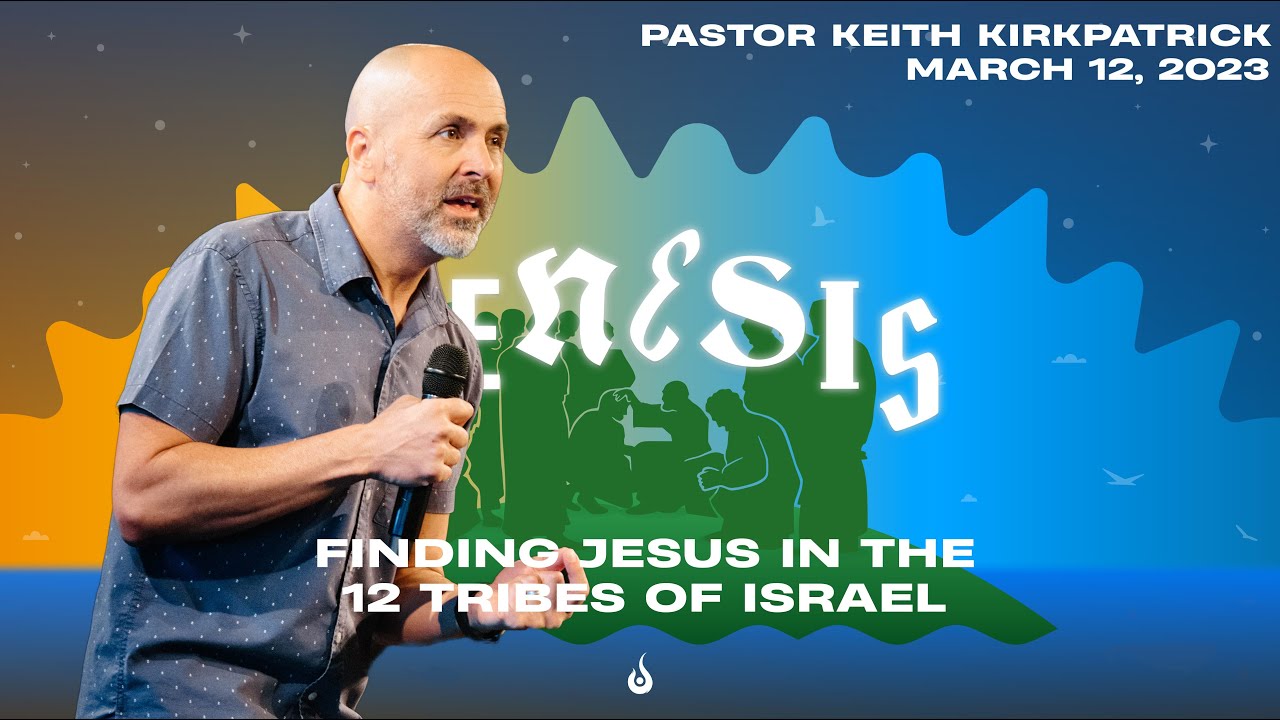

Go a little deeper
The message opens with a show-of-hands survey about where people were born and what languages they speak, turning the congregation's diversity into a live illustration. Pastor Keith Kirkpatrick then frames Genesis as the Bible's book of beginnings, arguing that people are made for more than work, school, social media, or the daily grind—made by God and for God. To explain why humanity struggles to live for more, he walks through Genesis's opening movements: creation, the fall, the flood, and now Babel.
After the prayer and the reading of Genesis 11:1–9, the teaching centers on the settlers' motivation: they want to build a city and a tower to make a name for themselves. Pastor Keith contrasts this self-centered unity with unity under God, reading the tower as an early ziggurat-style worship structure for human-made gods. Nimrod and the eastward migration are discussed as symbols of movement away from God. The core claim is that being united is powerful but morally neutral—people can unite for good or for evil, and Babel represents unity that leaves God out.
The message then connects Babel to Jesus's prayer for unity in John 17, to Paul's one-body language, and to the Sermon on the Mount's wise and foolish builders. Pastor Keith argues the enemy tries to divide the church and also to unite people without Jesus. Acts 2 is presented as a reversal of Babel—different languages understood when people are united under Christ. The service closes with a call to surrender, a prayer, and an invitation for prayer ministry as the band returns.
Take this with you
Unity is powerful but not automatically good
Pastor Keith insists God is not threatened by human cooperation; the concern at Babel is that unified people can accomplish enormous things with the wrong motivation. Unity can serve great good or great evil. The question is not whether a group is united but what name it is building and whether Jesus is at the center.
Motivation is the thread from Cain to Babel
Pastor Keith observes that Cain and Abel knew and served the same God, yet the outcome was entirely different, and he locates the difference in motivation—Cain's being to serve himself. That same question carries into Genesis 11, where the builders' stated aim is a name for themselves rather than glory for God.
We become our own god when we leave God out
Pastor Keith describes Babel as a declaration of independence from God, where people take the role of God without using the title. He connects Babel with Babylon, a counterfeit kingdom, and with confusion or folly. Turning to Jesus's teaching in Matthew 5, he says the kingdom begins with being poor in spirit—knowing your need for dependence on God.
Communication breakdown disperses people
In Genesis 11:7–9, Pastor Keith applies the confusion of language practically: if we don't understand each other, we won't work together, and we tend to go find someone who does understand us. He applies this to marriages, families, and church life, treating communication as key to the unity God intends, and urging that hearing God's word rather than forming our own conclusions shapes how we live.
Everyone is building something
Using Jesus's parable of the wise and foolish builders, the message says storms will test what we have built. Building on Jesus—the rock and cornerstone—is not a promise of no storms but a foundation that holds. Pastor Keith describes surrender as God rewriting a person's story and exchanging sin for righteousness.
The conversation,
in their words.
Transcript from the recording’s captions. Select any timestamp to hear the original audio.
[Music] Hey, let's start off today with a scientific poll. I promise to use this data well. I'll send it to all the right sources. The government, CNN, Fox, whoever your choice is. Scientific poll. I want everyone to participate today. So, if this is a yes for you, it's going to be a show of hands. Even those watching online, hey, get out that hand emoji and get ready. Put that in the comment section. We want you to participate as well. Here's the first question. How many of you today, well, actually not today, the day you were born were born outside of the state of Oregon by show hands. Outside of the state of Oregon, keep your hands up by high. Hey, we outnumber the real Orgonians. All right. Come on. We have taken over the state. All right. All right. Let's go a little broader. A little broader. How many of you were born outside of the United States? Uh,
nice and high. Keep keep it up. Outside of the United States. All right. We keep loud and proud. Outside the United States of America. Man, we got hands all over the place. That would be really fun. Look at those people. Ask them where they were born after church. That would be fun. Great conversation. You put your hands down. How many of you, by a show of hands, can speak more than just one language? more than just one language. Nice and high. Nice and high. Come on. These are the smart people right there. Smart people. Speaking in tongues. Maybe that counts. All right, we're going to see. I see. Today, we come to a text that answers the question, why is there so much diversity? Why are there so many language, so many different types of people? And I want to just say it's because of God. Diversity is good. It's of God. In fact, everything we need to know is found right here in the Bible.
We're studying a a book of the Bible called Genesis. Everyone shout Genesis. Genesis. It means beginning. And we've got so much to learn from the beginning. It is the first of 66 books that make up the Bible. And what we're doing is we're going to this book to understand who we are. You are made for more. That's right. You are made for more parents. You're made for more than just picking up after your kids. Kids, you're made for more than just going to school day after day, not knowing why you're doing this because you won't even use most of what you learn. Listen, you adulting people, you're made for more than just going to work for the grind to be exhausted at the end of the day to do it all again tomorrow.
You are made for more than social media. That just stung somebody deep, pastor. You don't need to get personal. I say all that because you are made for God. You are made for God. You are made by God. You are made for God. That means God's plan for your life is so much more superior than you could dream or fathom. Paul says to the Ephesians, when when you pray, he could actually do more than you could ask or imagine. He can do more than you can even dream up or pray. You are made for God. Now, here's a problem. It's not a unique problem to you. It's not even a new problem. It's actually a problem that we book of Genesis. Why aren't we living for more?
We find four major events right at the beginning of the book of Genesis that really explains why. The first major event is creation. Then there's the fall. Then there's the flood. And today we're going to cover the Tower of Babel. The first verse of the first chapter of the first book of the Bible tells us in the beginning God God created. There's nothing that God can't do. He was before anything was and he will forever be there. He is the creator of matter. He is the creator of time. So therefore, if we have any problems in our life, we should come back to the beginning. If there's one verse you should really know, it's the first verse of the Bible. In the beginning, God, he can do anything at any time.
Our God is able. He's the creator. He's the sustainer. Now, if you don't come back to this, you'll actually believe that you can do something. It wouldn't take very long. Just chapter 3, when Adam and Eve, the first man and woman, were tempted by Satan. Satan slithers into the story. God was so gracious. He gave them everything in the garden. You can do so much. Yet God puts some boundaries, some parameters in our lives, and somehow we always think we got to go outside of those boundaries to real experience life. You all know what Adam and Eve went through. We do the same thing in our lives today. God said, "I just have some boundaries for you. You stay within those, your life's going to be good." But man, I just got to try that fruit God told me not to try. And so they did, and sin entered the story. And we are still experiencing that same fall of sin in Genesis chapter
3. It wouldn't take very long before we actually see this worked out in the first family. Cain and Abel, they have the same problems we have today. Cain seemed to be jealous of his brother Abel. He was angry. They they both knew the same God. They both served the same God. But the outcome was entirely different. So what was it about Cain and Abel? It's the very thing that I want to talk about today. motivation. What is your motivation? What is your motivation to worship? What is your motivation to live? What is your motivation for life? Because Cain and Abel, they they knew the same God. They both worship and gave an offering to God. But the reality is the outcome was different. So Cain murdered Abel because his motivation was to serve himself.
The earth continued to multiply. Mankind continued to reproduce. And as they multiplied on the earth, so did evil. Ultimately, evil reigned on the earth. And God looked and he recognized that this was not his divine design for humanity. And because God is perfect because God is the righteous, good judge that he is, he brought forth a flood on the earth. Yet we see one man that according to the book of Hebrews in chapter 11 by faith trusted God. His motivation was to take God at his word and he built an ark. And God is so gracious in that he preserved life not just for Noah but also for his entire family for his son sons Shim, Ham, and Japheth along with their wives. They were preserved along with the creation
of of the animals. And so we see that God is good. It wouldn't be long until after the flood. If you read this story, which by the way, you should be reading the book of Genesis as we study it. You'll find out that this strange world we live in has always been strange. I mean, y'all have some weird families, but you're going to see there's weird families in the Bible, too. Noah decides to go all Napa Valley on us, and he creates a vineyard. He makes his own wine. And on one particular night, he has too much to drink and he falls asleep naked. And one of his sons, Ham, finds him naked. Now, you got to understand that the Bible has so much to teach us about life that nakedness is symbolic of of so much more than what Hollywood does by slapping it on a screen for a form of
entertainment. Because prior to sin, there was no shame in nakedness. But because of sin, we see nakedness is sacred. It's something you cover up. You don't just show it to the world. You're not meant to look at other people naked. And Ham sees his father naked. and he goes tells his brothers and and we see this this symbolism here of you're stepping into some place you shouldn't go and Shim and Japheth they go and they they cover up their father they they cover him up and as a result this is why that's important to know this in the story is blessed and Ham is cursed. There's really only two ways in life. There's your way and there's God's way. Right? I can make it more personal so I I I don't shame you. there's my way or there's God's ways.
So, I have to look at what's my motivation to life. What's my motivation to what I do? And which leads us to today's text in Genesis 11. I would like to read the entirety of the text and then what I'm going to do is dissect it so that we can find the application. If you just read the Bible for information, it will not change your life. You want to look for the application. That's where the transformation comes. How do you hear God's word and then how do you obey God's word? If you hear God's word and still live the same, there will be a consequence. And so we read in Genesis 11 starting with verse 1. I'm going to read through verse 9. So stick with me. Let's work together here. Now the whole earth had one language and the same words. And as people migrated from the east, they found a plain in the
land of Shinar and settled there. And they said to one another, "Come, let us make bricks and burn them thoroughly." And they had a brick for stone and bammen for mortar. That's atar. Then they said, "Come, let us build for ourselves a city and a tower with its top in the heavens. and let us make a name for ourselves, lest we be dispersed over the face of the whole earth." And the Lord came down to see the city and the tower which the children of man had built. And the Lord said, "Behold, they are one people, and they all have one language, and this is only the beginning of what they will do, and nothing that they propose to do will now be impossible for them. Come, let us go
down there and confuse their language so that they may not understand one another's speech. So the Lord dispersed them from there over the face of all the earth, and they left off building the city. Therefore, its name was called Babel, because there the Lord confused the language of all the earth, and there the Lord dispersed them over the face of the whole earth. Let's pray together. God, I thank you for your word. And now I ask that you would speak to us, to every heart, recognizing that we're all at different seasons, that there might be some chaos, some confusion happening in lives that even hear this today. I pray that you would enlighten our hearts, that your word would speak for you are active and alive. And I say, God, have your way today. Transform us.
Make us more like you. You, the creator, are good in all that you do. Help us, Lord, to know you. Forgive us of our sins. May we be set free, born again, new creations, becoming who you want us to be in Jesus mighty name. So be it and amen and amen. So we have a picture here in Genesis 11 that really continues off of what we read in chapter 10. You can read a book like Genesis and think the entire thing is chronological. And there are times in the scriptures that we jump back and forth. And in chapter 10, we see an example of that. We find an example in chapter 10 of a leader named Nimrod. Yes, that's his actual name, Nimrod. And contrary to the slang or the vernacular we use for the name Nimrod, Nimrod was actually a mighty warrior. He was a leader.
I imagine Nimrod was not only good-looking, he was strong, and he had a charisma that was contagious. And people were following Nimrod wherever they went. And so we find under the leadership of Nimrod in chapter 11, they settle in this region of Shinar, which is modern-day Iraq, they settle in this region. They come from the east, which is an important part of the story thus far in the book of Genesis. East represents a rebellion from God, and the west represents this movement towards God. So, so this picture of the east is this journey away from God. The west represents a journey to God, which is I just have to declare today why the
west coast is the best coast. I'm just saying as in the Bible, I didn't make this stuff up. All right, for those watching online, I know there's people watching from Hawaii today. Several. Hey, aloha. And that's about as west as you can get. So, Hawaii's blessed. But we really do see this with Adam and Eve. when they sinned, God sent them out of the garden to go east. So, so we see this that God would push them out. He sent them east. After Cain killed Abel, he too went east. So, we see this symbolism. It's not just east and west. We also see it woven through the Bible. This symbolism of north, going up in obedience to God. We see going south, down, disobedience to God. This is just symbolic of what we see here. All this takes place in the east.
It was here that they decide to to create a city unlike any other city. They're unified in this purpose. And the centerpiece of this city will be a tower unlike any other tower. Look at verse four. Then they said, "Come, there's this great invitation. Let's do this together." Why? We are better together. It sounds so good at this point. Come, let us build ourselves a city and a tower with this top to the heavens and let us make a name for ourselves. So here we see the motivation of not only this city but we see this tower is not to give God glory. It's not to grow closer to God. It's not to create a space and a place where hey how can we get closer to God. It's not it's not so that we would say all these good things are of God. It's not to reflect the
creativity of the creator. Let's do this to make a name for ourselves. We are made to worship. And whether you know it or not, you're worshiping something or someone. And this particular place, we see what happens when you worship outside of God. You can be unified. You could do great things and you can do them all for the wrong reasons. I mean, the motivation was there. the the precision, the architecture. We we see it's all right here that they would go do something, but they want to do it so that they would make a name for ourselves. We would call this a declaration of independence, an independence from God, apart from
God. We don't need God. Look what we can do without God. Why do we even need God? We can do this together. And their efforts, as we see in the story, are man-c centered. They're not God- centered. So, they would create a tower. The tower we now call a a ziggurat. A ziggurat is actually a it's looks a lot like a pyramid. We can find these even in the same region. Archaeologists have dated some going back past 4,000 years. these towers that are created much like a ladder one block on top of another with staircases going to each level. Now these these these ziggurats were actually built in a in a fashion as a place of worship but not itself as a place of worship but they would create
multiple towers for gods for the for man created gods in his image instead of recognizing that humankind was created in God's image. So they would create these tower for gods to come down through this ladder to a place of worship down below. And up above would sit the place for the priests of that particular god to call upon the gods to give offerings or sacrifices to that god. So there would be different gods of prosperity or gods of fertility. And so you would call upon that particular god lowercase G, not the one true god. And we see this still today. We can see this through the the archaeology and the study of history that these towers are real. And the
purpose of this particular place and this particular tower was not to try to find God or to serve God. It was to see what they could do. And in this life that we live today, much like the ways in which we look in this story, there's either our way, my way, or God's way. And it sounds so simple. I wish it was so simple that I could just tell you this today. You have the revelation and we leave here all living for God's way. But it's not so simple. This is a matter of life or death. If you think you can live life apart from God, here's what happens. You take the role of God. You may not call yourself God, but what we see in the scriptures in the case of this story is you play the role of God.
They thought they can do it apart from God. And there are a lot of things that we think we can do in our lives as well apart from God. And so we see in Genesis 11:5, the Lord came down to see the city and the tower which the children of man had built. God is so good and gracious. This is what I would call a christophony. A christophony is an image of Jesus in the Old Testament before the birth of Jesus. We read in the New Testament Jesus although he has a beginning born of a virgin, born of a woman, he died on the cross. What we actually discover is that Jesus is eternal. He has no beginning and no end. When he came to this earth and stepped into time, the very time that he created, we can actually get an idea and an understanding that we have one God in three persons from the
beginning. Before anything was, there was the father, the son, and the holy spirit perfectly united in one. And just like what John tells us in chapter 1 that God Almighty came to this earth and wrapped himself in flesh and dwelt among us. So we see that same language and imagery used here in Genesis 11:5. God decided not just to kick us out and leave us on our own. He decided to see what are you guys up to? This would be the great opportunity for the children of God to say, "Oh, dad, look at me. Am I doing it right?" And the father say, "Nope. You might think this is good. You might think this is great. I mean, in our world, we always think bigger is better. Oh, the bigger cell phone, bigger house, bigger car, bigger bank account. Oh, it's better. We still do this in
architecture today. New York used to be the centerpiece of what man can do. Look at these towers that just go into the sky, these skyscrapers. till Dubai comes along and the United Arab Emirates and overnight they create the same thing. What took you decades we'll just do in a day. We just think bigger is better. There's no place where God looks at us and says, "Oh man, I hadn't thought of that one. That is so big and beautiful. Look how high that goes. Oh, wait. Mount Everest. I forgot about that one that I made. Oh, I forgot about that mountain and that mountain. There's no I mean there there's a place where we reflect the creator but there's also a place where we stand apart and God comes and he he looks what man does much like what Jesus did. And the verse six says the Lord
said behold they are one people they have one language. Come on someone say one. One. This is only the beginning. Jesus said of what they will do and nothing that they do that they propose to do will now be impossible for them. Now let's just be really clear as Moses writes this book along with the first five books of the Bible. Genesis, Exodus, Leviticus, Numbers, and Deuteronomy. He is not saying that God is threatened like oh no, what's going to happen if the people take over? God is not threatened by the people. What Moses is articulating through the words of God is that when man gets together and does not include God, it is absolutely awful. and incredible what they're able to do as one. Are you tracking with me here?
Whether it's one government system or or whether it is it's one education system and we could take this all the way down to the micro. So here's what God is saying. There is nothing that a united people can't build. So God says this, there's nothing that a united people can't build, but this is either for good or for evil. So united people can certainly do tremendous things for evil. Let me just take this on the micro scale. Something that I've experienced many times. I've officiated many, many, many weddings. And on the wedding day, almost always two people are united. They're united with one good cause. I love you. I love you.
I'm going to be with you through sickness. No, I'm going to be with you through sickness. I'm going to be with you through poverty. I'mma be with you through they're like united. They're s they're making vows to each other. We can do anything together and everybody's watching. The mothers are crying and everybody's watching this and the pastor's like, "This sounds good." Cuz how many of y'all know it's easy to say words once that poverty hits, once that sickness hits, it's a lot harder. But when you're united, you can do anything. Now, statistically today, just just about 50% of all marriages don't end the way they start and they're totally united, but not for good anymore. I hate you. I hate you.
Well, you're disrespectful. You think I'm You're disrespectful. There's no one more evil than you. Oh, you think I'm evil? You're evil. You're your mother was a devil. I'll tell you. You know who you are. I'll tell you who you are. They are totally united for evil. Jesus said, "Hey, hey, what God put together, let not man separate, but you be united for that cause. Even a judge will say, "I'm in agreement. I'm one with this. You guys shouldn't be together. That's a micro skill. Follow me. And I realize, let me just preface this because there's such diversity at journey. I absolutely Listen, listen. If you're abused, misused. God never never intends for you to stay in a marriage where it is absolutely unhealthy for your body, your soul, your mind. Listen.
Listen. But the reality is most marriages end because of what we see in this story. It's my way. It's my way. Now, we we can keep going out gangs. Why do gangs exist? Here we are in the 21st century, in the 2020s, and you think, why are there still gangs today? And gangs, they can do crazy things when they're united together. Crazy things. Gangs can do things that our government can't do. I mean, the artwork that gangs do, it's amazing. I just was in San Francisco a week ago, and I saw artwork everywhere. One particular place I saw artwork on a bridge that was hundreds of miles high and it was like on the scaffolding under the bridge where there was nothing for
hundreds of feet underneath. And I'm thinking to myself, the ingenuity of these gangs that are doing this artwork. Can we like put that to good? But instead it's for evil. And of course that that that can span that. I mean, drug trafficking and human trafficking and all the evil that can happen when you're united for one cause. Human trafficking today is arguably at the highest peak of slavery that any time in history because the networks, the systems, the technology that that people they're they're working together. Now, you keep going on the scale, the government. I need you to see that being united could be either used for evil or it can be used for good. And Jesus wants us not to just be dispersed without purpose. He wants us to be united. Right before he went to the cross, he knew he was on a mission. He did not just die in vain. He
died so that you would be forgiven of your friend your sins. That you would be set free that you would actually live the life that he destined for you to be one with him and one with each other. And we see that his heart when he's praying John 17:11 Jesus is praying holy father keep them in your name with which you've given me that they may be one even as we are one God and three persons the father son and holy spirit perfectly united Jesus is praying that we would be one with him just like that he continued to pray verse 22 the glory Jesus said the glory that you've given me I have given to them You are made for more. You're made to reflect the glory of God in all that you do. Whether you build with your hands or whether it's in your
heart, you would reflect God's glory that they may be one. Jesus prayed, "Even as we are one, I in them and you in me, that they may become perfectly one, so that the world may know that you sent me and love them even as you loved me." Jesus loves you. The father loves you. So that you wouldn't just live your life apart from him, but you would discover your purpose. That you would be united in him. that when you love Jesus, you can't help but love people because how great is it that Jesus loves you in your mess? How great is it that Jesus doesn't leave you right where you are? How great is it that our God sees where you are is not where he wants you to be. So if he has
to disperse you, if he has to dispose of this unity so that he can get a greater unity, God will go to any length so that he gets the glory. So that you don't play the role of God because that never ends up well. Paul when he writes to the church, he powerfully points out this picture of unity. He says, "There is one body and one spirit." That's the Holy Spirit, God himself. Just as you were called to the one hope that belongs to your call, one Lord, one faith, one baptism, one God. Someone shout one. One. And he is the father of all who is over all and through all and in all. This is God's purpose and plan that we would be one. But the devil has a plan as well. And the devil would do one of two things in your life and in the church. Here's the first thing the devil would do. That
when the church starts getting united, which is absolutely wonderful. It's our theme this year. We should be united. God wants the church to be united. We just read that. One faith, one baptism, one Lord. Oh, it sounds so good. Let's be united. How many of y'all know there's a lot of different churches around the world? Why are there so many different denomination distinctions? Because the devil knows that if we are united, we are unstoppable. But let's just go ahead and argue about music or about the carpet color or about the no carpet or about whatever it might be. If the devil can divide us, we are destroyed. Jesus even said this, a a house against each other cannot stand. So here's what the devil tries to do. He wants to divide you and destroy you. This happens in the church. It happens in families.
It happens all over the place. If we are divided, we're destroyed. Here's the second thing the devil tries to do. He actually tries to unite us without Jesus. He's been trying this tactic for a long time. That's what Genesis 11 is all about. As long as you're united and you don't give God the glory, then the devil wins. We see this all the time. Even in our own community, there are places of religious gatherings. I dare to call them worship, but they called it worship. They use the very words we read about without Jesus. Unity community, unitarian. The these are the same images that we see in the scriptures that God desires for his church, but Jesus is absent. The picture here is we can do anything. We can worship anyone any way we want.
And I'm not saying that that these people are evil or wrong because the scriptures are really clear. We do not battle against flesh and blood. So our battle is not with other people. Our battle is against the devil. He's a thief and he's come to steal, kill, and destroy. Jesus warned us that lying is his native tongue. He's the father of lies. In fact, what he does is he disguises himself in light. He was created to worship God. And now instead of giving all glory and worship to God, he wants to deflect that on anything other than Jesus. But Jesus promises us. He says, "I am the way and the truth and the life." That he's the only way to get to the father. There's no other way you can get to God but through Jesus. There's one way. It's through the son, Jesus Christ.
Perfectly united with God. This is the mission we ought to be on to let the whole world know Jesus is for you. Doesn't matter what your tribe is, what your tongue is. Doesn't matter where you are. Jesus loves you. He made you. He has a purpose and a plan for you. You have sinned. I have sin. I've got great news. Jesus is a great savior. There's no sin he won't forgive. And when he forgives you, now we're united. We should reconcile. We should forgive as Jesus forgives. This is not easy to do, but it's exactly what God says to do. When we don't do that, it's totally okay to golf clap that for Jesus. Ah, come on. You can give it up for Jesus. He wants us to be one. He wants us to be one. When we don't do that, look what happens though. Genesis 11:7, come let us go down. Now we see
Jesus came down. Now he brings the father and the holy spirit. Come, let us go down. They're confused their language so that they may not understand one another's speech. So, we have a transition from the Lord to the triune God. And here's what we see here. God confuses them with language. Here's the reality. If we don't understand each other, we won't work together. If we don't understand one another, we will not be united. This was true then and it's true now. Communication is key. It's key. This is true in marriage. It's true in families. It's true in church. If we cannot communicate, here's what will happen. And this happened at the end here in verse 9. If we don't understand each other, we will go find someone who does understand me.
So yeah, I know we were united in marriage at first, but you don't understand me. This person does understand me. So I'm leaving you for this person. I love this church. It's the best church ever, but you know what? We don't understand each other. I got to go find a church that does do that. And next thing you know is it's the little by little we're dispersed. Communication is key to absolutely everything we do. In fact, if we're not hearing from the word of God, we'll come up with our own conclusions how to live our life. And in this place, this is why in verse 11, we see they're confused by their language. But then in verse 9, therefore this name shall be called Babel because there the Lord confused the language of all the earth. This is a play on words here. Babel is short for Babylon. It's the same word in Hebrew.
Babylon is mentioned from not only the book of Genesis but all the way to the book of Revelation. It is so important that you understand what Babyl Babylon is because Babylon is a counterfeit kingdom of God. Babylon unites for the wrong reasons not for the right reasons. And Babylon slips into our lives and sometimes we don't even know it. And I just confess that it'll happen to all of us. It happens to me. Babel literally the word means gate of God. And it sounds good, but God is lowercase G. You make your own god. Now, you may not be worshiping pagan gods of old and the ancient Middle East as we see in this text, but you may become your own god. You're serving yourself.
The word babel could be translated this way to confuse or folly. And often when we're being confused, we don't even know we're being confused because it's foolishness. It's naivity. So what the enemy seeks to do is to bring a counterfeit kingdom of God in our lives. And Babel says it's all about what I can do, but the kingdom of God is all about what God can do. Jesus in his opening line of the sermon on the mount in Matthew chapter 5 says, "Blessed are the poor in spirit, for theirs is the kingdom of heaven." What Jesus is saying is if you know you need a dependence on God, guess what? You get God. If you know that your way is not the right way, but you need God, he's going to give you his kingdom so that you follow him and his ways. If you know this, you're going to listen to God's word and you're going to put God's word into practice. At the very end of the same sermon, Jesus said this. Everyone
who then hears these words of mine. So Jesus is speaking. If you hear my word and you do them. So anyone who hears my words and does them will be like a wise man who built his house on the rock. We could replace that with tower. So you hear God's word, you obey God's word. You are building your life. You are building your tower on the rock. Now the Bible says Jesus is the cornerstone. You build your life on Jesus. He's the rock that you build your life on. But if you don't, there's an opposite. When you build your life on Jesus, here's the good news. Jesus warns. The rain fell, the floods came, the winds blew, and beat on the house. But when you hear God's word and you obey God's word, it does not fall because it had been founded on the rock. Jesus warned you in this world, you will have tribulation.
But take heart. Jesus said, I've overcome the world. So you will have storms of life. You will have financial collapse. You will have you will have real estate collapse. You will have relationship problems. You will have you will have health crisis like cancer. We will have worldwide pandemics. Not again, Lord. But we will have these storms of life that will come and beat against you. And the answer of your soul is what have you been building? What's been your motivation? If it's on Jesus, he's going to get you through it. This is just a journey. What what you're building is going to last for eternity. But he warns us in verse 26, everyone who hears these words of mine and does not do them. He's like
a foolish man. He's like Babylon. He's like Babel who built his house on the sand. It looks the same as the house on the rock. In fact, truth is, I'm jealous of the one that made it on the sand. I'm totally jealous. I used to live down in Ventura County, which is just north of LA County. And there's this little cute little town called Malibu in LA County. And Malibu, I don't know if you ever heard of Malibu, but they got some money there. And what they do is they build the most gorgeous houses. Guess where? On the sand. I mean, right? But it doesn't look like the sand. They're actually cliffs. I don't know when, but every 3, five, 10 years, these like 10, 20 million homes, the storms come and the waves are bigger and the rain comes. And guess where those houses go? Right into the sea. And I think to myself, I'm glad I'm not rich.
I mean, year after year, I say, I want that until all of a sudden the storms come, they're not ready for the storm. And Jesus uses that principle to our lives. And he says this, when the rain fell, verse 27, the floods came and the winds blew, it fell and great was the fall of it. Now, I need to warn you of this. We are all building something. You are building a tower. You are building a house. This is symbolic of your life. You have a start. And maybe you didn't choose your start. But here's what's so great about God. He is the author of life. So when you surrender your life to him, he starts to rewrite your story. He starts to rebuild your story. You aren't happy with your foundation. You've got no excuse any longer. God says, "I would love to exchange your life with my life.
I'm going to take your sin. I'm going to take your filthiness. I'm going to exchange it with my righteousness. And now instead of being just an orphan, you're adopted into my family. And I want you to see that you are made for more. It's not just this life. If it is when the storms come, guess who you blame? God. Then your house gets swept up and you don't see how God's going to work good in it. But I'm here to tell you, God will always work good if you see who Jesus is and you surrender your life to him. You don't have to have it figured out. He does. Jesus came to this earth to show you who God is. He lived a life that none of us have ever lived before. And no person before Jesus after Jesus done it. He lived a perfect sinless life. He died on the cross for your sin once and for all. There's no sin that he
wasn't crucified for. He loves you so much. He doesn't want you to live in your sin or the sin that was done to you. He was crucified. He died. He was buried. But on the third day by the power of the Holy Spirit, he rose from the grave. He is glorified, resurrected. He shows us the potential of what it means to believe in him. That you no longer are the same. One day you get to be with God forever. And what Jesus did is he left us with a mission. He said, "Listen, you don't live for yourself. You go be my witnesses in Jerusalem, Judea, Samaria, to the ends of the earth." Meaning, start where you are. Then I'm going to take you further. You're never meant to be a holy huddle. It's not us for and no more. Go where you are. Bring my message of hope to the world. This is hope for everyone. You go make disciples of all the nations of the earth, baptizing them in the name of the father, the son, and holy spirit. He gives us his mission and then he ascends into heaven.
Amen. And he says, "It's better that I leave because now you get the holy spirit." And those who were there when Jesus ascends into heaven in Acts 1:14, "All these shout one with one accord." They were united and they were devoting themselves to prayer. Men, women, united, one praying. What happens when we're united under Jesus, praying together? Chapter 2. And suddenly there came from heaven a sound like a mighty rushing wind, and it filled the entire house where they were sitting, and divided tongues of fire appeared to them and rested on each one of them. And they were all filled with the Holy Spirit, and began to speak in other tongues, as the Spirit gave them utterance.
Just like what happened in Babel in just a moment they spoke many different languages. And when they spoke many different languages in Genesis 11 they could not understand each other. But when we are united under Jesus Christ if there are different languages spoken you can understand. It's all about Jesus. So although they were speaking different languages look at just if you kept going I'll just give you a peak of this. Now, there was in Jerusalem because this is a holy city. This is the city of God. It's often referred to as Zion, unlike Babel, which is the absence of God. There were all kinds of people. Look at this in verse 5. From every nation under heaven. And this sound was the multitude that came together. And they were bewildered because each one was hearing them speak in his own language. And they were
amazed and astonished, saying, "Are not all these who are speaking Galileans?" So I need you to get this glimpse. People from all over the world were in Jerusalem. Each of them spoke different languages. If they saw each other, they would be asking, "Hey, do you speak English?" It's like, "No, you don't. I'm going to somebody else." And they would go and they would try to talk to one another. They couldn't. And out of nowhere, they hear their language. They hear their own language. What is this? and they look at the color of the skin of the person speaking saying, "You don't look like me. How can you speak my language?" Now, here's what the enemy tried to do. He tried to divide them. He says, "Here's the deal. They're drunk." That's why
this is the craziness happened with all these languages. And Peter stands up under the power and the authority of the Holy Spirit. And he preaches and says, "No, it's Jesus. That's why we come before you in so many different languages to speak to so many different people. It's the reversal of what we see in Genesis 11 that when we are united with one cause, with one prayer, with one Lord, with one faith, this message goes out to all people. God God did not confuse them and send them out because he was angry and he was hard on them. He's a gracious God that wants every single one of us to have hope. He wants you to have hope today. But you're building something in your life. Like Peter, you can courageously point every person to Jesus Christ. See, I love Peter. He was a failure.
Y'all may not believe this, but this pastor makes mistakes all the time. I make mistakes in my marriage, in my parenting, in my leadership at the church. I make mistakes in my finances. I make mistakes in my health. I make mistakes in where I put my hope. Thankfully, Peter did all those things, too. Peter can get up and say, "This isn't about me. This is about Jesus." And today, I have to ask you, what is your motivation? Why do you wake up every day? You're made for more. You're made for more than just uniting for a cause without purpose. You're made for the purpose of Jesus Christ. And today, if you don't have a relationship
with Jesus, now is your moment. The Bible says today is the day of salvation. Don't wait another day. Not a better day. The Bible says you don't have to go get your life right to be right with God. When you believe in Jesus, he starts to make you right. It's one day at a time, one decision at a time, one breath at a time. But when you believe in Jesus, you're sealed with the Holy Spirit. God loves you. Because you surrendered your life to him. You get the gift of eternal life, salvation. You are no longer your own. You are a child of God. Doesn't matter where you were born, what language you speak, what the color of your skin is. God loves you. He's got a purpose and a plan for your life. If that's you today, I want to invite you into that relationship right now. Don't wait another day. Your life is a gift. Every day is new mercies, but you don't know if you have tomorrow. So, just with every eye closed, I want to know if that's you.
You want to surrender your life to Jesus. You're so tired of living on your own. You know, you've been building your life of success or trying to do things on your own way. If you're done with that, would you just slip up your hand? Say, "I need Jesus." Praise God. Praise God. So proud of you. Praise God. Who else today? You're saying yes to Jesus. Just slip your hand up. Just This is a surrender to God. Praise God. Praise God. You know, you're not hidden by God. Doesn't matter where you're sitting right now. If you say yes to Jesus, he sees you. I want to know if that's you. Your heart is racing right now. You say yes to Jesus. The greatest decision you could ever make. You did not come here by accident. You're not hearing me by accident. Just raise your hand. Say yes.
Yes, Lord. Amen. Praise God. Marriages are going to be changed today. The whole trajectory of your life ahead of you is going to change today. Your finances are going to change today. You're surrendering your life to Jesus right now. I want you to pray with me if you've ever believed in Jesus. We're going to pray with those doing this for the first time. Just repeat after me. This is going to be a simple prayer. It's not the prayer that saves you. These are not magic words. You're surrendering your life to Jesus. He saves you. Pray this with me. Anyone that's believed in Jesus. Lord Jesus, I give you my life. I repent of my sins. Forgive me for living alone. I now trust you.
fill me with your Holy Spirit. I hope in you in Jesus name. Amen. And amen. Amen. Listen friends, that is the most important decision you could ever make in your life. If you made that decision today, please tell someone, whether it's someone you came with or at the end of this service, we're about to sing just one last song together. There's going to be a prayer team on either side. Come get some prayer. Some of you have believed in Jesus and you're in a a deep place of difficulty. You need someone to pray with you. You come get prayer today. You know, in the in the old days, they would have an altar that they would present before God as an offering, an animal sacrifice, a reminder that I deserve to die, but in God's graciousness, he helps me live.
The animal in some sense atoned or took the price of my sin. And when Jesus died on the cross, he did it for one last and final time. What I'm going to ask of you in just this last minute that we're even together, would you present your life on the altar? Would you be a living sacrifice? Here's what's interesting about a living sacrifice. You can get off the altar at any time and run away. Some of you have done that with God. You've run away from God. You've been in the east. It's time to come home. It's time to surrender it all. It's time for some of us to be praying for unity. We've been wondering why this world is a mess. It's time for us to unite, to repent and ask God, forgive us of our sins. If you're able, would you stand to your feet? Let's sing together. Lord, we surrender our hearts and our all.
[Music] We come before the altar today and say, Jesus, because of what you've done, we can be a worship and a sacrifice to you. Use our lives. use those who are here today in any ways. For the mom that wonders if she's doing any good. Oh, I thank you for the painters and the builders and the construction workers. I thank you for the teachers and the nurses and the doctors. Oh God, we know that the church is not a building, but this week you want us to be the church to the world. I just pray for the engineers in this room, for those that are working at the city. Oh Lord, I just say, would we be a salt and a light to the world? May what people see is you, Jesus. May your grace upon grace flow into our lives that we would give grace to others. Oh, we love you, Jesus. And your name we pray. So be it. Come on, church. Amen. And amen. Let's sing to him.
Answers from this recording
Start a conversation.
Why does Pastor Keith say the Tower of Babel was a problem if the people were unified?+
The message argues that unity itself is not the issue; motivation is. In Genesis 11 the builders wanted a city and a tower to make a name for themselves, not to give God glory or draw near to him. Pastor Keith reads this as a declaration of independence from God and stresses that God is not threatened by human achievement. A united people can build something magnificent for the wrong reasons, and that is what Babel represents.
What does Pastor Keith mean by calling Babel a counterfeit kingdom?+
Pastor Keith links Babel to Babylon, a name that runs from Genesis to Revelation. Babylon is described as uniting people for the wrong reasons—a copy of the kingdom of God that slips unnoticed into ordinary life. The word is connected to "gate of God" and to confusion or folly. The contrast is between a kingdom that says it is all about what I can do and God's kingdom, which is about what God can do.
How does Pastor Keith apply the confusion of languages to everyday relationships?+
The application is that understanding is the foundation of working together. If people cannot communicate, they drift toward someone who does understand them—whether that means leaving a marriage or changing churches. Pastor Keith treats the Babel scattering as a warning about small breakdowns in communication that accumulate over time, and urges hearing and obeying God's word rather than forming our own conclusions about how to live.
What does the sermon say about division within the church?+
Pastor Keith observes that the church is meant to be united around one Lord and one faith, and that division over small preferences—music, carpet color, and the like—destroys what could otherwise stand. He cites Jesus's teaching that a house divided against itself cannot stand, and applies it to churches and families alike. He also notes that the battle is not against people but against the devil, described as a thief and the father of lies who disguises himself in light.
How does the sermon connect Genesis 11 to the New Testament church?+
Pastor Keith presents Acts 2 as a reversal of Babel. At Babel, one people with one language were scattered and could not understand each other. In Acts, followers of Jesus are united in prayer, the Spirit fills them, and people from many nations hear the message in their own languages. Pastor Keith highlights Peter's preaching as pointing beyond the moment to Jesus, and sees in this a picture of hope for every tribe and tongue.