
Go a little deeper
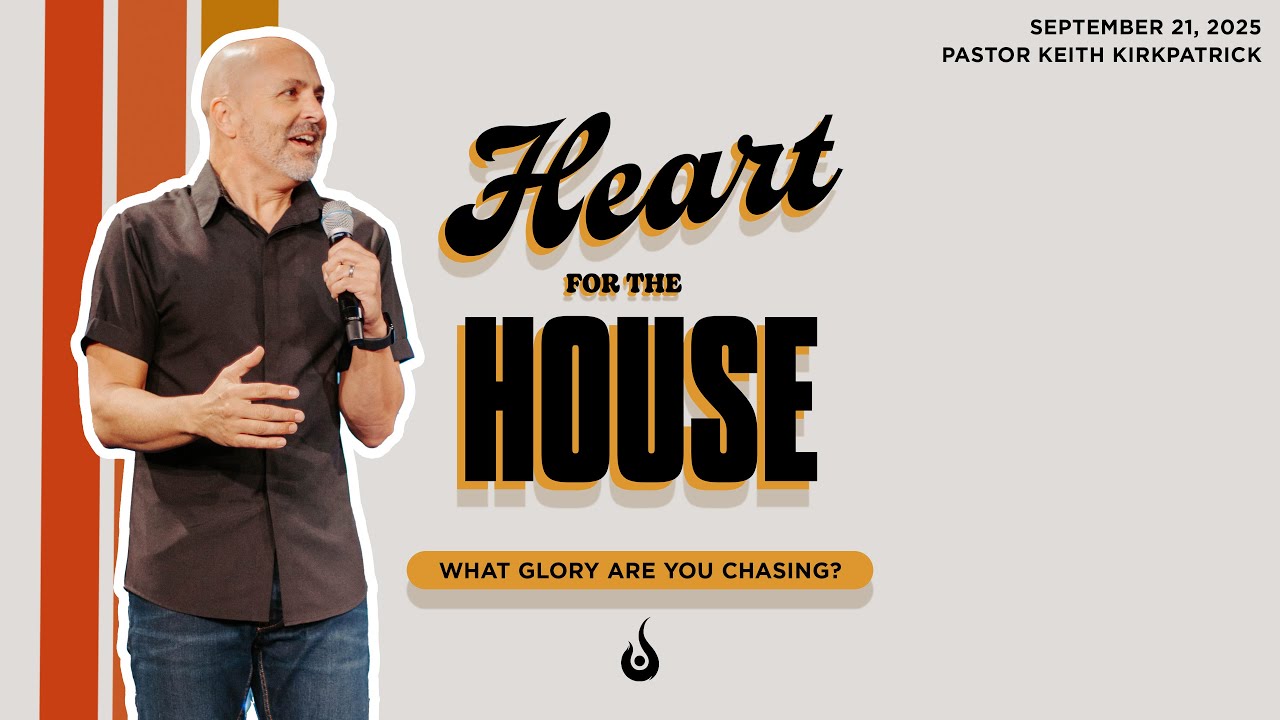
In this message from the Heart For The House series, Pastor Keith Kirkpatrick reads John 12:1-11, the dinner at Bethany six days before Passover, and works through the scene person by person. He begins near the end of the passage, where crowds come to see Lazarus and the chief priests plot to kill him too, and warns that a miracle can bring opposition along with celebration.
Pastor Keith presents Martha’s service as worship rooted in faith. He interprets Lazarus’s place at the dinner and the crowds’ interest in him as testimony to what Jesus had done, encouraging listeners to share their stories. He reads Mary’s costly anointing as sacrificial devotion and connects its fragrance with worship affecting a gathering.
Judas' objection about the poor is exposed by John as thievery, and Pastor Keith uses the contrast to press toward repentance, cheerful generosity, and whole-hearted worship. He recounts criticism he received over the expense of a church outreach event and speaks of cost in relation to changed lives. The message closes with a prayer and an invitation to believe in Jesus.
Take this with you
Service can be worship
Pastor Keith presents Martha’s service in John 12 as worship rooted in her faith in Jesus’ identity and power. He encourages practical work in the church and connects this with 1 Corinthians 10:31 as a call to honor God through ordinary activities.
Presence and testimony count
Pastor Keith interprets Lazarus’s place at the dinner in John 12:2 as worship through time with Jesus. He connects the crowds’ interest in Lazarus in John 12:9-11 with testimony to what Jesus has done and encourages listeners to share their own stories.
Sacrificial worship is costly and often misunderstood
Pastor Keith presents Mary’s costly anointing in John 12:3 as sacrificial devotion that others may misunderstand. He connects it with Jesus’ explanation about his burial and David’s insistence on paying for an offering in 1 Chronicles 21:24, urging worship that involves genuine sacrifice.
Watch out for the Judas posture
Judas raises a religious-sounding objection in John 12:4-8 that John later identifies as theft, and Pastor Keith uses it to warn that criticism of costly worship and generosity can come from hearts that look right on Sundays. He affirms God's real concern for the poor while insisting that meeting needs without pointing people to Jesus misses what matters most.
Cheerful, willing generosity
Drawing on 2 Corinthians 9, Pastor Keith urges willing, joyful giving rather than pressure or resentment. He leaves the decision with each person, says he is not promoting prosperity teaching, and does not collect an offering during the message.
The conversation,
in their words.
Transcript from the recording’s captions. Select any timestamp to hear the original audio.
Praise God. Well, get out your Bibles right now as we get ready to get into God's word. If you if you have your Bible, would you wave in the air and show me? Come on. Like you care, somebody. All right, here we go. If you don't have your Bible, that's okay. I want you to still shout word on the count of three. Here we go. Together on the count of three. 1 2 3. Word. We're getting into God's word so that God's word gets into us today. We want to receive from God what he has for us. Last week, I proposed the question, what would you do if today was your last day on earth? I mean, what would matter the most to you if you knew like this was it? By midnight, you're you're done. And maybe it's not what would matter most. What would not matter at all? We would probably live our lives differently. And today we're we're reminded of a guy in
the Bible who actually his last day on earth was like 4 days earlier and he was stuck in a tomb and then Jesus called him out and said, "I'm going to give you another chance." I mean, wouldn't life be a little more valuable if you were like Lazarus and you were called out of a tomb? I mean, if you if you knew that that on one particular day you heard your name and and you listened to it and then you realized that you were stuck in something and then you stumbled out of a tomb in your grave clothes and everybody is screaming and crying and Jesus says, "Take off his grave clothes and you knew that something was different because you had been buried for four days." Come on, somebody. You would probably live a little differently. Maybe not so stressed about bills. Maybe you'd forgive a little more.
I I don't know what that would be like for you, but I do know in this story we're picking up today in John chapter 12, we're going to see three responses to Jesus that really ought to be done in our lives as well, every single one of us. And so let let's together if you can, would you stand for the reading of God's word if you are able? I'm going to read John 12 starting with verse 1 and read through verse 11. John 12:es 1-1 11 and then God's going to speak to us the application for our lives today. Six days before the Passover, Jesus therefore came to Bethany where Lazarus was whom Jesus had raised from the dead. So they gave a dinner for him there. Martha served. Lazarus was one of those reclining at the table. And Mary therefore took a pound of expensive ointment made from pure nard and
anointed the feet of Jesus and wiped his feet with her hair. The house was filled with the fragrance of the perfume. But Judas the scariot, one of his disciples, he who was about to betray him said, "Why was this ointment not sold for 300 dinari and given to the poor?" He said this not because he cared for the poor, but because he was a thief. And having charged the money bag, he used to help himself to what was put into it. And Jesus said, "Leave her alone so that she may keep it for the day of my burial. For the poor you will always have with you, but you do not always have me." When the large crowd of the Jews learned that Jesus was there,
they came. not only on account of him but also to see Lazarus whom he had raised from the dead. So the chief priests made plans to put Lazarus to death as well because on account of him many of the Jews were going away and believing in Jesus. This is the word of the Lord. You may be seated. Let me start today with the ending and then we're going to go back to the beginning. So, I'll start with verses 9- 11. Follow with me and then we'll come back to verse one. I want to remind you today that some of us we we truly desire for Jesus to do big miracles in our lives. Maybe you need a breakthrough or maybe you need God to do
something that's bigger than you could ever do on your own. Maybe you want that miracle in your life. But I want to warn you to count the cost. That some of us want the miracle, but I want you to see the stewardship of what happens to Lazarus. that things do not always appear the way they are. As we looked several weeks ago, it's not what you think. You might get that big miracle, but some people won't celebrate the miracle in your life. They'll want to put you to death. Some people won't be for you. They'll actually be opposed to you, as is the case with Lazarus. So many people were coming to him to see the testimony of his life. I mean, is there any bigger miracle than that? being buried in a tomb, not for one day, two days, or three days, but four days in a tomb, and he's brought back to life. And I'm imagining people want to touch him. They
they want to hear him talk. They want to hear his story. And and as they're coming, they're believing in Jesus. So the religious leaders say, "Enough is enough. Let's not only put Jesus to death, let's put Lazarus to death. Let's put one of his followers to death." And so we'll even see in history after the resurrection of Jesus, the enemy is always trying to put the followers of Jesus to death. The devil does not like you. We learned that in John chapter 10. Jesus called him a thief who wants to steal, kill, and destroy. He's going after you. So my warning is to you today. My God is able to do the big miracle in your life. He could bring the dead back to life. But I also want to warn you, count the cost. It's worth the miracle. And when God works in your
life, you've got to be willing to continue to live for Jesus. So, let's go back to the beginning. John chap 12, looking at verse one. Somebody's got to see today that what Jesus was doing 2,000 years ago, he's still doing today. He's bringing the dead back to life. That's so many people in here because this church is not just an ordinary church. This church is all about Jesus. And when it's all about Jesus, he can do absolutely anything. And some of you were dead. You were stuck in a tomb. You heard his voice. Your name was called and you stepped out of that tomb. So today, I want you to see what he did long ago. He's still doing today. John tells us in chapter 12:1 that 6 days before Passover. He's not just giving you this historical timeline of when these things happened. He's pointing to
something greater. Passover is all about Jesus. It's a religious rituals Jews still celebrate today. You can learn the origins in the book of Exodus. It's the story of God delivering the Israelites out of Egypt when they were slaves. He delivered them from Egypt. He he he led them to the promised land and he did all of that through the slaughter of a lamb and the blood of the lamb was on the doorpost of a home and the spirit of death passed over that home. So they were eventually delivered after this last and final pre plague with with Pharaoh. John points out that this is happening during Passover so that you would see that Jesus is the greater Passover lamb. Jesus is the blood that if you believe in him, you will will uh pass over death.
Jesus wants you to know that during this time that that he is the great deliverer that people are still stuck in slavery, the slavery of sin and he still sets people free. He's still pointing people to the promised land. So John notes that these things are happening at Passover just days away before he's crucified. And he's noting that right before Passover, Jesus came back to Bethany where this great miracle happened of Lazarus coming back to life. And they gave him, it says in verse two, they gave him a dinner there. They're celebrating Jesus. May I tell you, it's okay to celebrate Jesus. I know some churches don't look like they're celebrating. and they look like they're having funerals. But I want you to know it's okay to celebrate.
It's okay to celebrate that you're not who you used to be. You were dead in your sin, but now you're alive in Christ. And and they they bring Jesus to a dinner to celebrate that Lazarus was dead, but now he's alive. So Jesus is the center of this story, just like he should be the center of our lives. They want to celebrate. And today here in person, if you came through the lobby or you got to look at that new Journey Kids space, we we tried to make it look a little bit like a party. We got something to celebrate, somebody. We had 145 baptisms last week. We had over 200 salvations last week. We're seeing the dead come back to life. So, so the scene is set here. They're at a home. They're having dinner. Now, the dining tables aren't like the dining tables of today, these large tables with
with chairs. The dining tables would be close to the ground. And to eat at these these tables, you would have to lean on the table. You would literally recline on the table with your elbows. You would sit on a cushion and your feet would be extended away from the table. So, I need you to see the scene here. They're all reclining on the table. They're eating good food. They're drinking good wine. And here we have the stage set. John's telling us what happened. He was undoubtedly there. And then he tells us in verse two in only two words, Martha served. Martha is the sister of Lazarus. We know she's a servant. This is who she is. Luke tells us this. Luke tells a a great story where Jesus heads over to the home of Mary, Martha, and Lazarus. And Martha was so busy serving and Mary was sitting at the feet of Jesus.
And Martha was so frustrated with Mary, she actually tattletales to Jesus and says, "Don't you see that I'm doing all the work and Mary's just sitting right there." And Jesus tells her, "She has chosen the good portion." One translation says, "She has chosen the better thing." Now, Jesus is not condemning Martha for serving. He's just simply saying, "This is never going to be taken away from Mary. She's investing in something that's going to last. you you never regret spending time with Jesus. He's not condemning Martha for serving, saying, "You shouldn't serve Martha because here she is now, maybe years later, maybe months later. Here she's doing what she did earlier. She's serving. That's who she is. She's a servant. God made her that way." And
some of you, God made you that way to serve. And I want to say that's a good thing because what Martha did here, I believe she's worshiping. She's worshiping Jesus through her service. Now, is she just serving Jesus because her brother was brought back to life? Oh, no. I propose to you something far greater. Because John tells us in chapter 11 that when she goes to Jesus and said, "If you were here, Jesus, my brother wouldn't have died." And Jesus said to her, don't miss this. Jesus said to Martha, "I am the resurrection and the life. Whoever believes in me, Jesus said, though he die, yet shall he live. And everyone who lives and believes in me shall never die. And then Jesus leans
into Martha and says, "Do you believe this?" Listen to Martha's response. Martha says this to Jesus. "Yes, Lord. I believe that you are the Christ, the son of God who is coming into the world. This woman Martha took Jesus at his word. She believed Jesus and now she's here. And what's her response to Jesus? Martha served. This woman's doing what God put inside of her. Some of you here today are Martha's. And I know it well because this church exists because of an army of people that helped make this place church. And there's Martha's that made the lobby like Britney who was even here in the early hours of the morning before the sun was even up. She was out there serving making this place look like a
celebration so you'd be here. That's a Martha spirit. I tell you the Martha spirit comes in many forms. Like like those who are in her Journey Kids church right now. I I just slipped over there while the worship was happening. I heard a baby screaming and there's a superhero having to hold the screaming baby. And I'll tell you what they're doing right now. They're letting the mama come in here so that she can sit at the feet of Jesus for at least an hour. That's a Martha service. The Martha service is the hospitality that made you coffee and made sure that there's water for the tea. The Martha service is the greeters at the front door just wanting to give you a warm welcome when you came into church today. the Martha service or the the parking team that's that's just trying to help grumpy people on a Sunday morning get to church to find hope. Come on, somebody. I tell you, there's a lot of unsung heroes here. They're Marthas that serve.
And when you serve, you ought to do it not just because God did something good and easy for you, like like raising your brother back to life, but you do it because you take Jesus at his word. And Martha did what she always did. She served. It's a reminder that whatever you do, I like how Paul writes to the church in Corinth in 1 Corinthians 10:31. He says, "So whether you eat or drink," and then he just clarifies, "By the way, whatever you do, whatever you do, do it all for the glory of God." You can honor God on Sundays after the last service by picking up chairs. You can do it for God. You can honor God when you see a piece of trash in the parking lot and you decide to pick that up even though nobody else will see. You're doing it to glorify God. You glorify God when whatever you do as a service to God, you do it unto him. You do it all
for the glory of God. Martha served Jesus because she loved Jesus. But it wasn't just Martha. John says Martha served, but then next he goes on to tell us about her brother Lazarus. John 12:2, Lazarus was one of those reclining with him at table. My friends, may I just tell you today, spending time with Jesus is worship. Sometimes you just need to recline at the table with Jesus, hang out with Jesus. Our theme this year is love like Jesus. But how can you love like Jesus unless you're loved by Jesus? So, you got to prioritize this. We're not going to ask you to do something that you hasn't been done to you. And I I love that Lazarus is doing this here because here's what I really mean by Lazarus leaning into Jesus as worship.
Here here's what I mean by this. If you look at verses 9- 11, huge crowds were coming now, not just to see Jesus, but also to see Lazarus. He had a story to tell. Let me put it another way since some of you aren't getting this. Lazarus was testifying to Jesus. He could have been hidden out in his home. He could have stayed and said, "Listen, I don't want to be famous. I didn't ask to be famous." But here's the deal. When God does something in your life, people are looking at you. So, I want to just say when you testify to the goodness of God, you're letting the world know that what he did with me, he could do with you. I was in the tomb, but I heard the voice of Jesus. Now, I've come out today. And some of you, your neighbors need to hear this. Your
family needs to hear this. I want somebody to testify that I was in the tomb of addiction, but I stepped out and I've been set free in Jesus. Somebody needs to testify. I was stuck in the tomb of fear, but I heard the voice of Jesus. And now I have faith. I was stuck in the voice of of the tomb of depression. I was stuck in the tomb of doubt. Whatever it is, listen, he's calling your name today. And when you step out of that tomb, you get to let the world know, I've taken off my grave clothes. I am alive today because of Jesus. So I need you to know today that when you come spend time with Jesus, it's not wasted. It is worship. Lazarus is leaning in. And I could just imagine this. Could you picture the scene? They're they're all sitting at the table and Lazarus like a boss is
just leaning. He knows where he was a week earlier. And he's leaning in. He's looking in the eyes of Jesus and he's wearing the t-shirt raised to life, right? And he's just listening to the voice of Jesus, that sweet voice of Jesus. He just wants more of Jesus. and his mind continues to replay when Jesus called his name. Sometimes you got to look back to look forward to to to to look at what God's going to do. And each of you, may I just testify, each of us has a place at the table. That's what I love about Journey Church. I love that this is not like a a one age church. Some people want to say, "Well, that's a young people church." No, look around. There's some people that aren't so young. Seriously, I had someone ask me this morning how how they can give financially to the church, but she just clarified, "Listen, I'm still the check
kind of writing person." You know, kids today don't they don't know how to uh balance a checkbook. That that doesn't even make sense in the verbiage of this generation. But I'll tell you, if you look around, there's a lot of people not like you. And that that's what it looks like to hang out at the table of Jesus. You're going to have people who aren't like each other. And let me just tell you, that's worship. So, we got Martha that served. We got Lazarus that just testified. And then we have in verse number three, Mary. I love Mary. I want to spend just a little bit of time telling you about Mary because Mary did everything contrary to what you should be doing in life, but I love it. Let's have some more Marys at this church. Mary therefore took a pound of expensive ointment. This is expensive perfume.
This isn't like Gucci. This is the kind of stuff you can't even like you can't pronounce it. It's like French or Italian or something. You don't even know the name of this perfume. It's so expensive. You can't afford this. It's made from pure nard. Now, nard was a spice that was found in the Himalayan mountains near Nepal. So, this was not your easygo spice that your grandma raises in her garden. No, this was exported. This was very expensive. This is the kind of perfumes that kings would use to be anointed. So very few people use nard because of how hard it was to get this particular spice to create this ointment or this perfume. So John notes here this
this was expensive stuff. Now they're in Bethany which the name Bethany means the house of the poor. So so this would have been a sacrifice. We don't know if this was a an heirloom that was passed on or if this was this was her um retirement someday. I is is Mary a widow and this is what her husband left behind. We we don't know the backstory but we do know this. It was expensive. And what she do with this expensive perfume? She came, it says in verse three, and anointed the feet of Jesus and wiped his feet with her hair. And then John says there was a shift in the atmosphere. The house was filled with fragrance. This is worship.
When you sacrifice, when you let down your guard, when you're in a posture of intimacy, when you trust God with your finances, when you see that God is worthy of it all, but what could you actually give God that has it all? It is worship. And something happens with sacrificial worship. It changes the atmosphere. We see this here at Journey Church. Every Sunday morning, and by the way, you're invited to this. Every Sunday at 8 a.m., we do prayer. And it's just the preparation for the day at Journey. Uh the superheroes that come serve at the 9:00 service and some that come for 9 and 11. Uh they come and it's open to anyone that's right here. And I'll tell you what happens at the 8 a.m. prayer. There's a shift that happens in the room. There's a fragrance that's released out in the atmosphere that wasn't there just minutes earlier. Now, if this sounds weird, I I'll try to
explain it more because I realize even as I'm saying this, if if I'm hearing this for the first time, it might sound weird. Let me like this morning. I I mean, no exaggeration with this, but when people came into the church this morning, they kind of look like zombies. Uh they they looked tired and people were scattered. They weren't talking to each other. So, you know what happens when you don't want to talk to somebody? try to sit away from somebody and then you hate it when they come and sit next to you and then so people were like that at 8 a.m. we were right here. But there was a shift that happened. Andrea who was leading worship today, she just started worshiping. She just started saying, "How great is our God? How beautiful is the name of Jesus?" And it's not a literal smell, but a fragrance hit the room. Attitudes changed.
All of a sudden, people that came in that looked dead were now alive. And by the time of our prayer time, I mean, it was just there was something that changed in the environment because there was just some sacrifice there. It was like, I showed up. I wanted Jesus. I wasn't sure what it looked like, but I'm just going to lay it on the line through prayer, through the sacrificial worship, and there's just a shift that happens. It's why we sing here at Journey Church. If you wonder why why do we put these words up on the screen? Why why do we pray? Why does pastor get excited in prayer sometimes? I realize when I'm closing my eyes in prayer and I'm talking to God, I'm like, "Wait, how long have I been praying?" Like, I should probably like realize there's more of us than just me and the Lord right now. But I'll tell you what happens when you do that. There's a shift. Like, we're not just singing songs. This is not Christian karaoke.
The words are on the screen to help you to usher you into the presence of God so that you can come to the feet of Jesus like Mary did and worship. And what does that look like in worship? Well, did she just come and bring this gift of expensive perfume to Jesus because her brother was brought back from the grave? I believe she brought this to Jesus because of Jesus. You know, when Mary was upset that her brother had died, she came to Jesus and she said, "Jesus, if you were here, he would not have died." And then the Bible tells us in only two words, John 11:35, do you know what he did with Mary? Jesus wept. That's my God. He meets you in your grief. He doesn't just give you a cliche answer. This is Mary anointing his feet
because she has a Jesus that walks with her. She has a God that that weeps with her. Here she's laying out her sacrifice because she knows exactly who Jesus is. And what's her response to the mighty lavish love of Jesus? Worship. This offering was not a cheap offering. It was a year's worth of wages. Jesus. We're going to learn in just a moment. But what do you get with a lavish sacrifice? She smells like Jesus. And Jesus smells like her. And today, if God's called you to be Mary, I want to just tell you, worship, because sometimes it gets a little bit weird when you let down your hair, metaphorically speaking, because you got to know this that people are watching you and you will be judged.
People are watching you and it will look a little weird. It will look a little lavish. They won't always understand why you're doing this and you can't really even explain it. But it's in this place that we remember the heart of God that he's he's going after your heart. Remember King David in the Bible, he's described as a man after God's own heart. And it's not because he didn't make mistakes because he made plenty of them. And one time he made a big mistake where he counted his army where he really wasn't trusting God. He was trusting in man. I don't know if you've ever done that before, but you're like, I I'll just take it into my own hands. And he did that. And then he realized that he had displeased the Lord instead of just trusting in him. And so he wanted to give an offering to God. And
there was a man who was willing to not only give the land for the offering to King David, but he said, "I'll give you the oxen for free." This is the response of of King David. 1st Chronicles 21:24, King David said to Ordinan, "No, but I will buy them for full price. I will not take for the Lord what is yours, nor offer burnt offerings that cost me nothing." Like, if I'm going to give worship to God, I I want it to have a a sacrifice. I want it to cost me something. I don't want this just to be easy. Too many times today, we make church easy. You just show up and you sing, you hear a sermon, and you just It should cost you something. Amen. You should trust God. And we see Mary uses this perfume. She uses this ointment that that's expensive. It was exported that that that other people are
watching what she's doing. And she's willing to give God the best no matter what. Now, I know one thing is true. If you're looking for an excuse not to give financially, you'll find one. We all have them. If you're looking for an excuse ever not to grow in your faith, you will find it. I hear excuses all the time at church. You know, I don't give financially to the church because um I just don't have enough money to do that. I want to warn you what the Bible says that if you can't be trusted with a little, you probably can't be trusted with much. It's no downer to poverty or what you're struggling with is simply saying, can you trust God with what he's given you? It's all his. I hear people make excuses all the time when it comes to money. And in fact, it happens all the time and probably will be some here undoubtedly right now, but
couples that are not married that are living together. And the number one reason I hear those couples live together is because it's to save money. I mean, why would we live apart when we could live together and save money and not pay rent on two places or mortgages on two? So, we're together to save money and one day we'll get married. But I want to warn you that that marriage is a covenant before God. and you're playing marriage wi without the commitment of marriage. And and if you can't trust God in separate places, it's going to be hard to trust God together in one place. And so God has a good plan and a good purpose. And if you're looking for an excuse, you can find it. But when you trust God, you get to see that you've got a multiplying miracle working God of abundance in your life.
That we don't trust God because we have enough money. We trust God because it's all his. Holding on to money is just self-reliance. Releasing your money says I trust God. When you worship God through money, you're simply saying that I see you as valuable God. It's Jesus that talked often about money because he knew it would be a hindrance. And he didn't do it because money's bad because it's not bad. It's only when you make money more of a priority than God. And Jesus said, "Where your treasure is, there your heart is also." You could see what you're investing in and releasing money just as God, I trust you. The one thing that gets me about money is none of us are taking it with us when we die. And if today was the last day here on earth, I'll tell you right now, you would not care about money. And I know it takes money to pay bills. We've got a lot of bills here at Journey Church.
We've got a large mortgage on a a property that we're going to build a campus unlike anything the Pacific Northwest has ever seen. I tell you, that takes money. But we're not investing in things that can just rust or be broken or the thieves can steal. We want to see more lives saved for the glory of God. Do you know what Jesus has done for you? Because when you know what he's done for you, it will show what you do for him. And of all the people, I love that Martha served. That was worship. I love that Lazarus was linging there with lingering with Jesus. That's worship. But Mary, she laid it all on the line. It's like she had that that woman discernment that women have. Come on, men. You know what I'm talking about.
That that wisdom and discernment, you know, is you just know that God gave women something that most men miss, right? And it's like Mary, she knew something greater was coming because Jesus said it. This was a prophetic picture of his burial. And today, if you know what Jesus has done, he has revealed himself to you. That alone is a miracle because before the New Testament, all those people in the Bible long for what we have. We have what the the book of Daniel calls the ancient of days. God who's always existed. He's revealed himself in the flesh and his name is Jesus. Hallelujah. The fulfillment of every prophetic word ever given about a Messiah is found in Jesus. And Jesus loves you. He heals. He sets people free. He teaches. And he preaches. He serves and he blesses. He
prays. He calls out the lies of the enemy. He confronts religious oppression. He flips tables when necessary. And he was willing to lay down his life for you. And it wasn't easy. He was mocked. He was scorned. He was spit upon. His beard was ripped out. He was slapped. He was stripped naked. A crown of thorns thrust upon his head. He was flogged over and over and eventually he was crucified. And he did this because he loves you. So what's our response to the lavish mighty love of God? I need you to see today that some of you need to serve
because that is worship. Some of you need to sit with Jesus. That is worship. And some of you need to sacrifice because that is worship. And we have Mary's and Martha's and Lazarus here at Journey Church. And I'm calling some out that haven't done it yet because we believe that Central Oregon shall be saved. And we've seen it. I've heard the testimonies. Uh I heard the testimony today of someone who said they would never go to church ever, ever, ever. I don't know if he's here, so I'm not going to say the name, but I'll never go to church and I'll never get married. And then I heard the testimony. There was 145, so someone's going to guess if it's them or not if you're here. I heard the testimony that not only did he start coming to Journey Church, but last week he got baptized and he's also engaged. So all the nevers have become a but God.
So I say to you this, what's stopping Central Oregon from being saved? If Central Oregon shall be saved, why don't we see Central Oregon save? I'll tell you why, and this is going to be the end of the sermon, and it's going to get only harder from here. It's because there was one other person there who looked like he was worshiping, who looked like he had the right answers. And his name is Judas. And John looks back at the story and he can put all the puzzle pieces together and he writes after the fact, he says, "Oh, Judas was a thief." But it says after Martha served, after Lazarus testified, after Mary gave this sacrifice, Judas the Scariot, one of his disciples, he who was about to betray him, John notes, said, "Why was this ointment not sold for 300 dinari and
given to the poor?" Now, Judas was on to something because it's a biblical mandate to take care of the poor. It's God's idea to take care of the poor. So, a lot of what the government does today was actually God's idea. It's just the church should be doing it, not the government. In Leviticus 19, God had made a rule. We could call this a law, an instruction that if you have a field and you go to harvest that field at harvest time, you leave the outside of your field, the gleaning for the poor. So, a person that does not have a field, a a a person who is orphaned or a widow does not have a provider, God's always going to make a way for the poor. He cares for the poor. Proverbs 19 in the wisdom of God's word says, "Whoever is generous to the poor lends to the Lord, and he will repay him
for his deed." But do not be mistaken here. The Bible is very clear that we're not just to help the poor, to help the poor. If someone's able to work and they're just lazy or they're apathetic, then we're not to just have a whole world of entitlement like a lot of the things we see in our society today. 2 Thessalonians 3:10 says, "If anyone's not willing to work, let him not eat." So, you don't just give to somebody who's able to work, you give to those who who are in poverty because you care about what God cares about. And the Bible says that we have a God that's a father to the fatherless and we have a protector of widows in the Lord Almighty. Jesus loved the least of these and he displays it often. But Judas, his heart was not like Mary.
Jesus knew what was in Judas's heart because he defends Mary. John tells us he said this not because Judas cared for the poor, but because he was a thief and he knew that the more money they got, he would take a little from the top. And Jesus said, "Leave her alone. He's a defender. He's a protector." And then he makes this statement, "For the poor you will always have with you, but you will not always have me with you." You see, the reason we have poverty today is because of sin. It's a sin issue. So we don't need to shame those who are in poverty. We look at Jesus who is the solution to sin. We look at Jesus and say if we just help the poor and we don't point them to Jesus, we've missed what matters most.
Because Jesus gives us hope for eternal life. It's not a handout. Jesus helps us not just now, but he will help us later. And this is such a beautiful story of Martha, Lazarus, and Mary, but it has such a tragic ending because what happened long ago is still happening today. Today in the church, I know we have Martha's and I know we have Mary's. I know we have Lazarus, but I also know that we have Judas. Sacrificial worship. When you really go after God, and I I've learned this the hard way. You will be criticized. People will be confused. They will tell you, "You could have done this and you could have done that." Just one year ago, we had Church in the Park, just
like we celebrated last week. And leading up to the Church in the Park last year, we we did some bigger things that we've never done before. So, it costs more money than it's ever cost before. So, I decided to tell the church how much Church in the Park cost. And I said that not to boast how much it cost. It was, "Hey, we're a church. We're a family. We all pitch in. Let's all pay for this." And it was a great church in the park last year. It was a lot like what we experienced last week. But shortly after church in the park, I found myself at a pursuit night alone with a couple out in the lobby. Everyone else had left and I'm alone with this couple and they're churchgoing people and they'd been in ministry and I'm I'm not exaggerating this. They looked at me and said, "Oh, we love you." And they gave me hugs.
And within a few minutes of saying, "We love you." And giving me a hug, they looked at me and they actually made this statement, "You don't love people." And they said this to me in the lobby. And they they they gave proof to this point when they said, "You spent $80,000 on Church in the Park. That could have been used differently." And it stung. You know, sometimes the enemy will even get in your head and they think, you know, maybe oh boy, maybe I shouldn't tell what what maybe I shouldn't have done that. Maybe I and I went home and I talk with my family and I'm I'm sharing this story. I'm in my kitchen and I'm telling the story to my wife and my son is there and he's very analytical. God just gave him a gift of intelligence and he's listening carefully to the story and he's like, "Dad, uh, $80,000. How many people got baptized?" And I said, "164." and he starts doing the math and he divides
this up and he literally said, "Dad, that's $487 per baptism. That's a pretty good return on investment." I'm like, "That's a good word. What are we willing to invest in a changed life?" So, I looked this year. We paid about the same thing this year, $80,000, even though we did it bigger and better this year. And we had we had more than 200 people give their lives to Jesus. We're guessing 250 because we had counters all over the place, but the counters were crying when they were counting and so many hands went up and uh it was an awesome day. And if we had 250 people give their lives to Jesus and we spent $80,000 on that event, that's $320 per salvation. Now, let me just ask you
this. What is the cost of your family member, your neighbor, your coworker, some stranger that needs the hope of Jesus Christ? What does that cost? And I know it might sound like a lot of money. Oh, $80,000 on on one event. But let me just tell you this. My God is faithful. And if some of you are wondering, "Well, Journey Church, what are you doing to take care of the poor?" Let me just tell you, ask some of our young people, our high schoolers, and our young adults that just went to Africa last month. You asked them about this when they went and they got to meet with the families that we helped disabled children in Uganda. Uganda is one of the poorest countries in the world. And they went to the slums of these families, homes that have no running water, no electricity. And on behalf of Journey Church, they brought beans and rice and soap. And they got to say, "We see you and we love you." Oh,
you you just talked to some of those locally. We've got the giving plate right here in town that does a much greater job than we can do as a church. We're so thankful for organizations like that right here in our community that have no prejudice, that help those who are hungry. I just want to say we're not here to toot any horns of how we're helping the poor. We just want to be a part of what Jesus is doing and we want to worship. And John 12 teaches us metaphorically speaking, if you serve, let me just tell you today, be strengthened in your service. That can be worship. today. If you're here just checking out Jesus, if you know that your life has been changed by Jesus and all you got to do is testify to what God's done in your life and you can't even articulate it. All I know is I was dead and I'm alive and you don't know the Bible yet and you're like Lazarus, let me just tell you, be strengthened
today. That is worship. And for those of you every 11 o'clock service that are willing to come up here and jump up and down and get on your knees and weep with one another and pour out your perfume to the feet of Jesus. Let me just tell you that is worship and we need each other. Some of you have never given here at Journey Church financially. It's time for you to step up and give for the first time. Some of you do give, but it's not sacrificial. It doesn't hurt anything. What would it look like for you to sacrifice? Unless you think we're about to take a big offering, I'm not going to pass a bag or a plate or a bucket or any other thing right now. I just need you to know this is between you and God. And our vision at Journey Church can only run at the pace of our generosity. And there are some Judas's that are going to ask questions and they're going to take and they're going to take and they're going to take and
they're going to look good on Sundays and they're going to have the spiritual questions and they're going to know the Bible upside down and backwards. But I just want to warn the Judas's in this room. God sees your selfishness. And I'm not to be your judge and nor is any other person here, but I would just say we have a faithful God. In the book of Romans, it says it's God's kindness that leads to repentance. I dream of a spirit of repentance over this house. A spirit of repentance means you change your thinking. I'm no longer going to live for myself. I'm going to live for Jesus. When we do that and we repent, everything changes. This is a house of gratitude, of joy, of thanksgiving, a place of grace. One of our core values
is to be gracegivers. So I close with the words of Paul as he speaks to the church specifically about financial giving. He says this, the point is this 1 Corinthians 9, whoever sows sparingly will also reap sparingly. Whoever sws bountifully will also reap bountifully. This is the principle of sewing that when you trust God with your finances, you get to see God work in your finances. This is not a prosperity message. It's the promise of God's word. In Malachi, the last book of the Old Testament, God was frustrated with his people because they were not trusting him with their tithes, the first fruit of their offerings. They were trusting with with some of the leftovers. And God said, "Hey, just just test me in this. Try me out. Give me the best and see if I won't open up the floodgates of heaven. And whatever the enemy, the
devour has destroyed, I'm going to multiply. I'm going to bring back what the devil has destroyed. So the point is this. When you sow, you get to reap. Look at verse seven. Each one though must give as he has decided in his heart. Not reluctantly or under compulsion. For God loves a cheerful giver. That's why I'm not here to take an offering. God loves a cheerful giver. That word cheerful in the original Greek is hilario. It's where we get the word hilarious. It's when you say, "This doesn't even make sense, but I'm trusting God." And God loves your heart when you just trust him because you trust him because he's God. He He doesn't love begrudging givers that say, "Well, the pastor said it, so I'm going to do it." He loves it when you trust him. And God, verse 8 says, he is able to make all grace
abound to you. So that having all sufficiency in all things at all times, you may abound in every good work. We need all sorts of worshippers, but the one focus is always Jesus. And today, we start the celebration of September with the heart for this house that we got this grand opening with this space. We get to see God doing so much. And this is just the beginning of more. He is able. I want to pray with you before we leave today. If you just close your eyes right where you are. And you know, you don't need to close your eyes to pray. I only ask you to do that to focus right now your mind, your heart. Would you focus on the Lord? It's in this moment that I just want to turn our attention to the Lord and say thank you, God. We thank you for everything you're
doing at Journey Church and we give you the glory. We only want to go where you go. We want to go when your presence is with us. God, we're we're humbled at the fact that you would use some of us here. We're grateful. We're overwhelmed. And all I can even think to say right now is thank you. Thank you for this grand opening Sunday. Thank you for the stories that I've even heard today of baptisms changed lives. I heard a healing earlier of diabetes. I've heard the healing of cancer twice today. And I heard the healing of a brother that just heard he's going to have not gonna have that he has bladder cancer. So Lord, I want to already testify to the goodness of God that bladder cancer is not the end of the story.
You rewrite stories. And so I thank you that the Bible teaches us your story. Would you just join me in faith right now for that person I'm speaking of? Just that bladder cancer is not the end. We declare healing. We declare hope. We declare miracles. I don't know always how you work. I don't even always know why you work, but I do know it's all for your glory, God. So, I thank you for your word today. May it go deep into our hearts and bear much fruit. In this moment of prayer, eyes are closed. I just I believe today that some of you came into church and I can't assume that because you came to church that you're saved. The Bible made it a really simple way for you to have the gift of eternal life. And that is simply to believe in Jesus.
See, the Bible says, "Today is the day of salvation. Do not wait, for you do not know if you have tomorrow. You can have hope today if you would believe in your heart that Jesus died on the cross and that he rose from the grave for your sins. You will be forgiven of every single sin. If you would confess the name of Jesus today, if that's you and you know that you need to believe, if you know you want to be saved, if you want the hope of eternal life that's found in Jesus, that's the hope of heaven, would you just slip your hand up in this moment of prayer? Praise God. Amen. Praise God. Yes. Praise God. More. Praise God. Yes. Keep your hands up. We're going to get you a booklet. We're going to let you know there's next steps. This is the beginning of the greatest journey of your life anymore. Praise God. Yes. He's
changing families right now. He's changing your future right now. You are forgiven in the name of Jesus. When your heart stops beating, if you truly mean this today and you believe Jesus, you are saved. But I want you to testify out loud. So, I'm going to ask you to pray out loud with me. Prayer is talking to God. It's listening to God. You can pray anywhere at any time. God's not asking for the right words or even eloquent words. He's just asking for your heart. So, pray wherever you go. You can pray out loud in your car. Pray in the shower. Pray in your bed. Come on. Pray everywhere. And I'm just going to ask with eyes closed. For those that said yes with their hands raised, you you just crossed over from death to life. I want to just pray with you really short prayer. All of those who have ever believed in Jesus before, let's join those who are doing this for the first time, pray with me. Lord Jesus, Lord Jesus, I believe in you.
I believe in you. Forgive me of my sins. I am alive in you. I receive the Holy Spirit. Holy. In you. I have hope. In you I have. Thank you, Jesus. Thank you, Jesus. In your name I pray. Amen. And amen. Can someone thank the Lord today? Praise God. Hallelujah.
Read · talk · practice
Keep growing.
Together.
Serving as worship
Pastor Keith reads Martha's serving at the Bethany dinner as genuine worship rooted in her confession of Jesus in John 11, not as a lesser role beside Mary's devotion. He applies this to the volunteers who quietly make a church gathering possible and calls them unsung heroes of the house.
John 12:2 · John 11:27 · 1 Corinthians 10:31
- How does Pastor Keith connect Martha’s faith in Jesus with her service?
- What unnoticed task around you could become an act of worship, done for the glory of God?
Sitting with Jesus and telling the story
Pastor Keith interprets Lazarus’s place at the dinner as worship through time with Jesus. He connects the crowds’ interest in him with testimony to what Jesus has done and encourages listeners to share their own stories.
John 12:2 · John 12:9-11
- What currently competes most for the time you would need to simply sit with Jesus?
- Pastor Keith says your neighbors and family need to hear your story of what God has done. What keeps you from telling it?
Lavish sacrifice and Mary's worship
Mary anoints Jesus' feet with expensive nard and wipes them with her hair. Pastor Keith ties the act to her grief being met by Jesus, who wept, and to Jesus' coming burial, and describes sacrificial worship as something that costs the worshiper and is often misunderstood by observers.
John 12:3 · John 11:35 · 1 Chronicles 21:24
- Mary's gift was costly and public. What would a sacrificial act of worship look like for you in this season?
- Pastor Keith notes that people will watch and judge costly worship. Whose opinions most shape how freely you worship?
Judas, the poor, and the heart behind objection
Judas' objection about selling the ointment sounds devout, but John calls him a thief. Pastor Keith holds together genuine biblical care for the poor, drawn from the gleaning instruction and the wisdom of Proverbs, with vigilance about hearts that criticize costly worship, and insists that material help without pointing people to Jesus misses what matters most.
John 12:4-8 · Proverbs 19:17 · 2 Thessalonians 3:10
- What contrast does Pastor Keith draw between Judas’s stated concern and the motive John identifies?
- Pastor Keith says meeting needs without pointing people to Jesus misses what matters most. How does that shape the way you care for others?
Whole-hearted, cheerful generosity
Pastor Keith connects Romans 2:4 with changed thinking and uses 2 Corinthians 9 to urge willing, joyful generosity. He leaves giving as a personal decision before God and contrasts trust in God with self-reliance.
2 Corinthians 9:6-8 · Malachi 3:10 · Romans 2:4
- Pastor Keith distinguishes cheerful giving from giving under pressure. How can you tell which one is actually motivating you right now?
- Where might you be relying on yourself rather than trusting God, and how does that show up in your money?
Answers from this recording
Start a conversation.
What does it mean to worship with a 'Martha spirit'?+
Pastor Keith presents Martha’s service as worship rooted in her faith in Jesus. He encourages practical work in the church that makes gatherings possible, connecting 1 Corinthians 10:31 with honoring God through ordinary activities.
Why did Pastor Keith spend so much time on Mary's expensive perfume?+
Pastor Keith presents Mary’s costly perfume as sacrificial devotion. He connects it with Jesus sharing her grief in John 11:35 and Jesus’ explanation that the anointing anticipates his burial. He warns that others may misunderstand costly worship and relates it to David’s insistence on paying for an offering in 1 Chronicles 21:24.
How does the sermon handle Judas and concerns about the poor?+
Pastor Keith acknowledges that Judas' objection in John 12:4-8 about selling the ointment and giving to the poor sounds biblically sound, and he affirms God's real concern for the poor, citing the gleaning instruction and wisdom literature. But John identifies Judas as a thief, so Pastor Keith warns that criticism of costly worship can come from self-protective hearts. His conclusion is that meeting material needs without pointing people to Jesus misses what matters most, since sin is the deeper problem.